

Investors should not discount yen’s impact on performance of Asian markets, economies: observers
The Japanese currency has continued to tumble against the greenback amid a widening interest rate gap

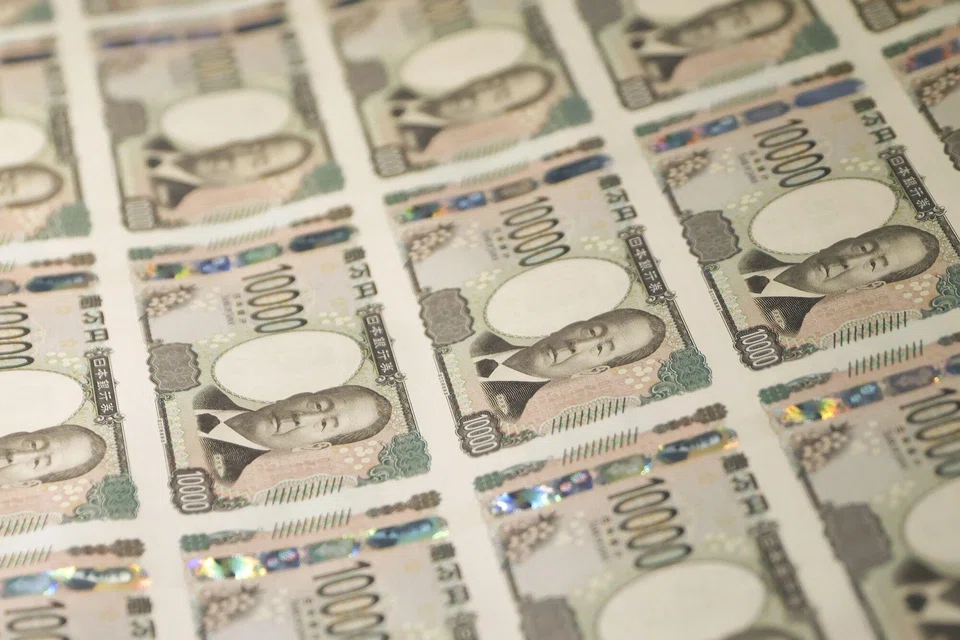
INVESTORS should not ignore the impact that the weak Japanese yen has on Asian markets and economies, given how integral Japan’s economy is in the region, market observers said.
The yen’s weakness is a major reason why currencies in Asia have not moved much, which in turn has weighed on regional markets and economic growth, they added.
“I would not discount the distortions that the yen is causing right now. That is often a point that’s missed by markets, given how Japan’s presence in Asian currency trade baskets is significant,” said Geoffrey Yu, senior Europe, Middle East and Africa market strategist at BNY. “No matter how we look at it, Japan is a major trading partner for all of the countries in the region, and the yen is tremendously undervalued right now,” he said.
The yen has continued to tumble against the US dollar, amid a widening interest rate gap between Japan and the US. Last month, the yen hit 161.96 against the US dollar – its weakest level in 38 years.
As a result, Asian currencies are under pressure to depreciate, to maintain their export competitiveness, said Nigel Green, CEO of financial consultancy deVere Group.
Affected markets include South Korea and Taiwan, which export chips and tech, similar to Japan.
Green said that this would affect the stability and growth prospects of these economies, and could lead to a cycle of competitive devaluations, destabilising regional economies.
“The interconnected nature of global markets means that currency movements in one major economy can have far-reaching consequences,” he said.
China’s performance
For most Asian economies, China’s economic performance still remains a key area to watch, given that it is a large trading partner.
UOB’s global economics and market research team noted that a brighter economic outlook for China in the second half of 2024 should boost recovery in the yuan and Asian currencies as a whole.
But while China is currently facing strong disinflation pressures, its currency on a basket basis has actually become stronger this year due to the yen weakness, BNY’s Yu said.
“If the yen is not going to move… that causes a chain reaction – no one is going to move. So if you allow your currency to rise a little bit, then you really stand out,” he said.
Meanwhile, the weak yen may be diverting tourism towards Japan.
Chinese tourists represent a large market for several countries in the region, such as Thailand, but tourism numbers have not matched expectations even after borders were lifted following the Covid-19 pandemic.
While Thailand saw more than 3.5 million Chinese tourist arrivals in 2023, it was short of its target of five million, which was later lowered to four million.
Yet, Japan has seen a surge of tourists, with 11.6 million visitors in the first four months of this year, up 56 per cent on year, according to Japan National Tourism Organization statistics.
Of the total figure, an estimated 1.9 million tourists are from mainland China.
Yu expects this may be because Japan is more affordable to Chinese tourists now, due to its weak yen.
Furthermore, luxury spending in Japan is seeing a boost from the yen weakness, even as several large luxury brand houses expect slowing growth in the rest of the region.
Companies including LVMH and Kering – which owns Gucci – have posted a rise in sales in Japan in their first quarter results, despite slowing growth elsewhere in the Asia-Pacific region.
Intervention on the cards?
As the yen continues to test new lows, market observers expect Japanese regulators will need to intervene to prevent further declines.
The UOB team noted that the Japanese central bank is cognisant of the effects of a weaker currency on inflation and the broader economy, despite a worsening economic environment.
It expects weak yen pressure could peak in the coming months, given expectations of a rate hike by the Bank of Japan towards the end of this year, coupled with interest rate cuts in the US.
As for Yu, he expects three trends have to align for valuations in Asia-Pacific markets to improve – a fall in US rates, a rise in Japanese rates and the yen, as well as enough cuts in Chinese rates to reach a desirable level of growth.
“It’s a clear case of needing a very large domino to shift a bit, to open up policy space for other central banks in the region to hike rates or allow your currency to strengthen,” he said.






