

Iron ore rises as China property support counters Covid worries
 Add BT as a preferred source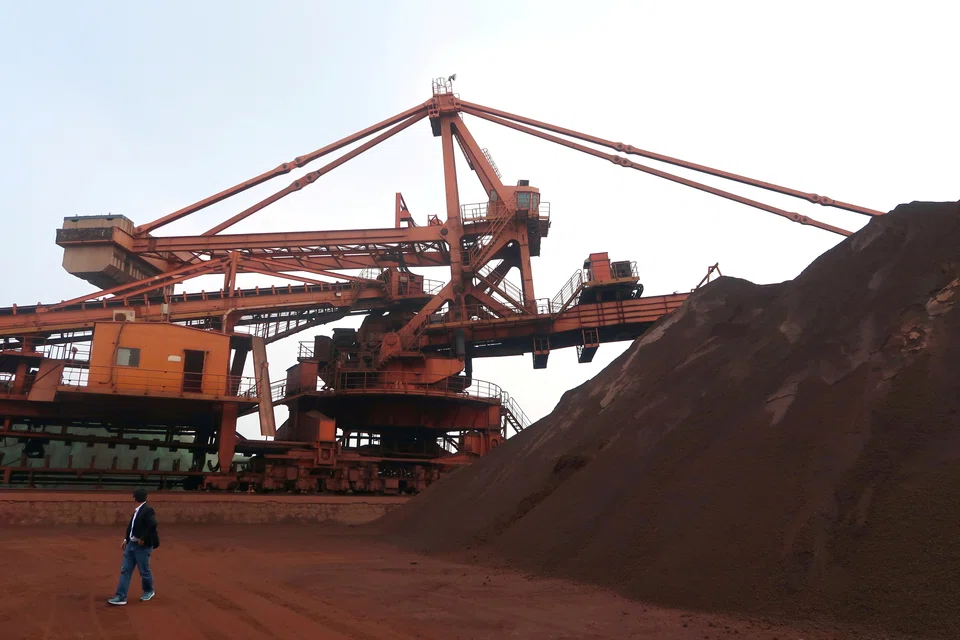
DeeperDive is a beta AI feature. Refer to full articles for the facts.
IRON ore prices rose on Friday (Jan 6) on optimism around China’s stepped-up policy support for the ailing domestic property sector, but persistent worries about local Covid-19 outbreaks kept the steelmaking ingredient on track for a weekly fall.
The most-traded May iron ore on China’s Dalian Commodity Exchange ended daytime trade 1.9 per cent higher at US$124.72 a tonne.
But with the first week of 2023 dominated by news about surging Covid infections in top steel producer China, the benchmark Dalian contract is down 1.3 per cent for the week so far.
On the Singapore Exchange, benchmark February iron ore was up 1.9 per cent at US$117.30 a tonne, as of 0755 GMT.
China is planning to relax restrictions on borrowing for property developers, Bloomberg News reported on Friday.
On Thursday, Chinese regulators said they had established a dynamic adjustment mechanism on mortgage rates for first-time home buyers.
Navigate Asia in
a new global order
Get the insights delivered to your inbox.
Rebar and hot-rolled coil on the Shanghai Futures Exchange both rose 2.7 per cent, wire rod gained 2 per cent and stainless steel climbed 0.2 per cent.
Other Dalian steelmaking inputs also rose, with coking coal and coke up 1.9 per cent and 2.8 per cent, respectively, as supply concerns remain despite China’s move to resume coal imports from Australia.
But weak market fundamentals, combined with a challenging macroeconomic environment due to Covid outbreaks, will likely keep prices volatile ahead of China’s week-long Spring Festival celebration from Jan 21, and even beyond, analysts said.

Industrial and construction activities in China usually grind to a halt during winter and holiday breaks.
“In the near-term, a potential ‘super spike’ in Covid-19 infections could prompt a sharp downturn,” HSBC economists said in a note, anticipating heightened caution among China’s citizens even as pandemic control measures are being relaxed.
“By the second quarter of 2023, pent-up consumer demand should drive a strong recovery, lifting mainland China’s economy more broadly,” they said. REUTERS
Decoding Asia newsletter: your guide to navigating Asia in a new global order. Sign up here to get Decoding Asia newsletter. Delivered to your inbox. Free.
Share with us your feedback on BT's products and services
TRENDING NOW

Shelving S$5 billion office redevelopment plan proved ‘wise’ as geopolitical risks mount: OCBC chairman

Eurokars Group introduces rental car franchises Enterprise Rent-A-Car, National Car Rental, and Alamo to Singapore
20 photos that show how dramatically Singapore has changed in two decades

Singapore’s key exports up 15.3% in March from electronics surge, exceeding forecasts

