

Is property development in Singapore becoming an unsustainable business?
Facing further cooling measures, boards of major developers should think deeply about what benefits their businesses deliver to society

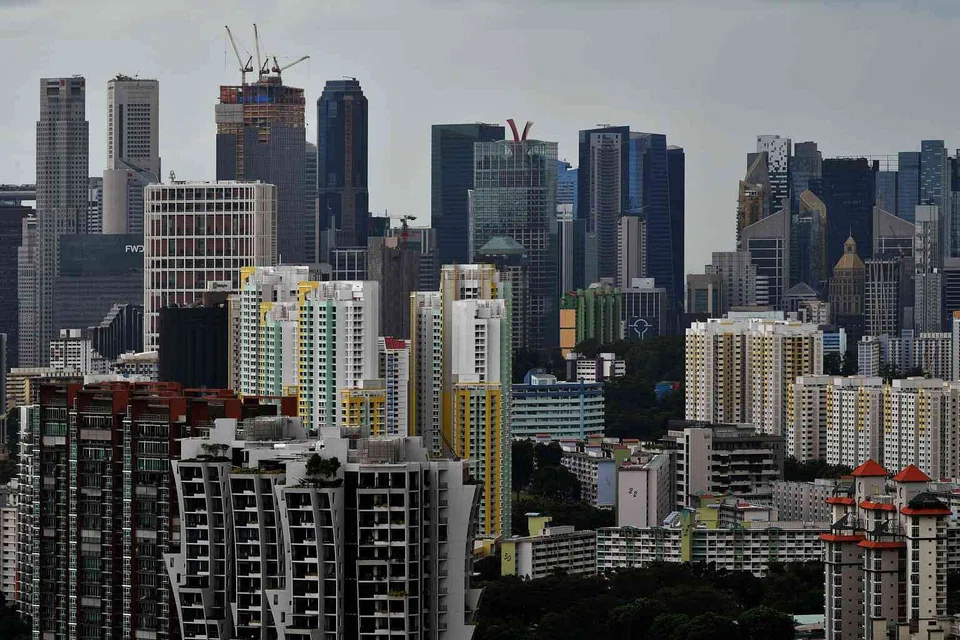
FOLLOWING comments by top government officials and analysts this past week about the resurgent property market, some investors will understandably be bracing themselves for another round of cooling measures.
They should perhaps also begin asking whether the standard business model of residential property developers is becoming unsustainable because of the negative externalities they create for society.
For their part, the local property developers ought to explain how they plan to adapt to seemingly persistent and prescriptive government intervention in the property market, and whether this will permanently depress their profitability.
Owning a home has arguably been one of the best ways to ride Singapore's growth and development. With grants and subsidies, the HDB has put generation after generation of Singaporeans on the property ladder early in life, and many of them have upgraded to private property.
Property developers play an important role in all of this, by expanding and renewing the stock of private residential properties in Singapore.
Importantly, through collective sales - also known as en bloc transactions - ageing properties are monetised for more than they would otherwise fetch in the resale market, and brand new properties with increased gross floor areas spring up on those same sites.
In the process, decaying leaseholds are topped back up to 99 years, and the proceeds from the collective sales are channelled back into the property market as the original owners purchase new homes.
This system has the advantage of being market-driven. The pace of collective sales would naturally accelerate as home prices rise, resulting in an increased supply of new homes to meet rising demand.
Conversely, when home prices weaken, the pace of collective sales would automatically slow down.
Like any other asset class, however, residential properties are prone to periodic booms and busts. This makes regulatory intervention in the property market necessary.
The authorities have been especially aggressive in keeping a lid on home prices following the US subprime mortgage bust in 2008, which sent Singapore interest rates through the floor even as local residential property prices were still rising.
Indeed, it took several successive rounds of cooling measures from 2009 to 2013 to bring residential property prices under control. In 2018, following a resurgence in collective sales, the authorities introduced yet another round of cooling measures, demonstrating their determination to prevent the property market from rising too fast.
Negative externalities
Yet, low interest rates were not the only reason property prices have stayed aloft over the past decade. The entire property development sector is hardwired to push prices ever higher.
Property developers tend to launch new projects at prices that are well above comparable resale properties in the same area.
The prices at which property developers acquire development land - whether through government land sales or collective sales - tend to then become benchmarks for the resale market.
Supported by legions of agents, for whom achieving sales at record prices is something of a badge of honour, property developers thrive on the notion that equilibrium will always be re-established by resale prices rising to catch up with prices of their new launches - and, rarely the other way around.
Over the years, property developers have resorted to building "shoebox" apartments to further boost their profitability and make their relentless push for higher selling prices more palatable to local homebuyers.
They have also been known to ignore local homebuyers altogether, designing and pricing some developments with only wealthy foreigners in mind.
In short, the business model of Singapore property developers has a tendency to create negative externalities for society. Their profitability effectively turns on the public being burdened with increasingly expensive housing, and potentially crushing mortgage debt.
More cooling measures?
Tellingly, some analysts are now expecting that further cooling measures could directly target the strategies developers use to profit at the expense of the public.
DBS Group Research said last week that the authorities might increase the minimum average home size within new developments.
It noted that robust pre-sales were recorded at the recent launch of Normanton Park. Some 600 units out of an available 1,862 units were sold at an average of S$1,752 psf - a new high for comparable properties in the area.
But some 80 per cent of the units sold were one-bedroom and two-bedroom units spanning between 49 sqm and 68 sqm, DBS Research noted. "While the overall price quantum appears affordable at S$1 million to S$1.3 million, we cannot help but think how a household (a couple or a couple with one child) can be comfortably living, working and playing in these confined spaces," DBS Research said.
According to the URA's Development Control Handbook for residential properties, the minimum average size for "dwelling units" in apartments and condominiums located outside the central area is currently 85 sqm.
The handbook also stipulates 9 specific areas across Singapore where the minimum average size of dwelling units in apartments and condominiums has been set at a more stringent 100 sqm.
DBS Group Research also suggested that stamp duties could be raised further, and mortgage rules might be tightened even more. Given the escalation in property sales and prices in the face of the recession last year, the authorities need to act in a pre-emptive manner, the research house said.
This came after Deputy Prime Minister Heng Swee Keat said in a speech last week that the government is closely watching the local real estate market. "We do not want to see the property market run ahead of the underlying economic fundamentals," he added.
National Development Minister Desmond Lee had also indicated at a separate event last week that the government would adjust its policies in order to maintain a stable property market.
Sustainability risks
The big question for investors is whether any additional cooling measures will trigger a significant sell-off in the major property developers such as CapitaLand, City Developments (CDL) and UOL Group. And, would that sell-off be a buying opportunity for long-term investors, or a harbinger of trouble to come?
On the face of it, with all three stocks already trading at steep discounts to their book values, it seems unlikely that they will fall too much. Moreover, all three companies have robust balance sheets and diversified businesses.
Yet, with the growing focus on sustainability risks, the boards and senior executives of these developers should perhaps think deeply about what benefits they really bring to their various stakeholders.
Can their business model be adjusted to eliminate the negative externalities to the broader economy and society without destroying shareholder returns? Or, are we on the way to discovering that residential property development in a land-scarce city-state such as Singapore is best left to a competent public sector body such as HDB?
As it is, CapitaLand and CDL have been long-term underperformers. During the 10-year period from end-2010 to end-2020, they delivered total returns (on a dividend reinvested basis) of 16.6 per cent and minus 24.9 per cent, respectively.
UOL generated a much stronger total return of 107.8 per cent over the same period.
By comparison, the benchmark Straits Times Index chalked up a total return of 25.4 per cent.
- For more analysis and insight on market trends and corporate issues, listen to the Mark to Market podcast at bt.sg/mark2mkt.
TRENDING NOW

Things to know about DBS’ incoming chairman Anthony Lim
DBS eyes prime brokerage business as Q3 profit falls 5% on weaker trading income

Royal Group and Sunset Hospitality abandon plans to open Casa Mett hotel off Orchard Road

George Yeo adds 100,000 Wilmar shares at S$2.97 apiece, taking stake to over 1 million shares

