Isetan could pay dearly for dragging its heels on sale of Wisma Atria space

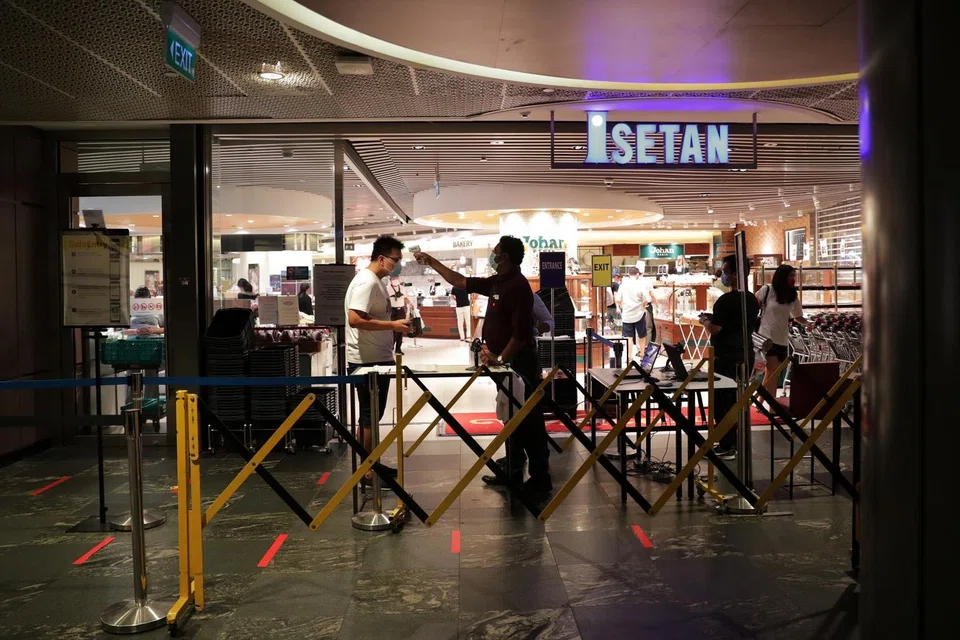
ISETAN Singapore, controlled by Japan's largest department store chain Isetan Mitsukoshi, surely took its own sweet time.
The Singapore-listed retailer, hard hit by slipping sales and less footfall traffic owing to the Covid-19 pandemic, called for a trading halt last Friday and subsequently said it was exploring options on its investment property at Wisma Atria. Isetan also said that it may appoint property agents and valuers to assist in "commencing exploratory discussions on the matter with third parties".
On Monday, investors popped the sparkling sake on the long-awaited news and chased the stock all the way to S$4.72 or 35 per cent higher within minutes of its trading resumption. The counter eventually settled at S$4.20 - 20 per cent or 70 Singapore cents up at the day's close.
Here's the thing about Isetan's latest move - what took the Japanese so long?
Wish come true
For long, disenchanted Isetan shareholders have lobbied hard for Isetan to unlock the value of its investment in Wisma Atria - a prime asset in Singapore's busiest shopping belt. With the proceeds from the sale - they hoped - the company would reward them by way of a capital distribution and make good on years of disappointing returns.
There was an added sense of urgency to such calls as the asset has a 99-year lease which expires in March 2061 and hence, faces the risks of value erosion.
Note that Isetan ceased its own retail activities at Isetan Wisma Atria in 2015 and converted the store into an investment property for earning rental income. Since then, its flagship store Isetan Scotts at Shaw House has marked its presence in the Orchard strip as a department store.
While the sting from the outbreak has worsened Isetan's financials, its waning performance preceded the pandemic.
The retailer's topline has more than halved over five years to S$112 million in FY2019. (see clarification note) Earnings have also declined over the same period with the last two spent in the red. Losses in the retail business have been widening - S$36 million in 2019 from S$21.2 million in 2018 and S$9.4 million in 2017.
If first half ended June 2020 is a gauge, annualised revenue could tumble to S$68 million. Isetan made a loss of S$317,000 for the first six months from a profit of S$1.6 million a year ago on the back of a 40 per cent drop in revenue to S$34 million.
And so, it's easy to appreciate the stock's giddy reaction to the news. A sale - if it happens - could be sweet. For one, as at end-2018, the fair value of Isetan's stake in Wisma Atria as determined by an independent valuer stood at S$290.7 million - higher than Isetan's market capitalisation of S$144 million on Monday's close.
Ardent suitor
Isetan Wisma Atria has had one long-standing suitor - YTL's Starhill Global Reit (SGReit) which has a portfolio of assets in Singapore, Australia, Malaysia, China and Japan worth some S$3 billion. SGReit, which also counts another prized Orchard property Ngee Ann City as an asset, owns nearly 74 per cent of Wisma Atria's total share value of strata lots while the rest is owned by Isetan.
After eyeing the asset for some time, SGReit's manager made a direct overture two years ago and plonked a non-binding expression of interest (EOI) to acquire Isetan's share of the leasehold asset. Isetan had said then that it was reviewing the EOI contents and evaluating whether the proposal was in line with its long-term strategy. Nothing came out of it. It isn't clear if SGReit is still keen on the asset or if that ship has sailed.
Those were better days - pre-pandemic - when Isetan, with zero debt and some S$39 million in cash (as at end-2019) deemed it had options. It was also widely known then that Isetan's parent Isetan Mitsukoshi was more keen to hold on to the "strategic asset" as part of a long-term strategy rather than part with it.
Isetan also reiterated last July that the upcoming Orchard Station on the Thomson-East Coast MRT Line interchange (expected to be completed in 2021) would improve the valuation of the property and its leasing opportunities.
So, what led to the change of heart?
Times are a-changing
The brick and mortar retail sector, already faced with headwinds from online rivals, has been upended by the pandemic.
Cautious spending and the worst recession on record (Singapore's GDP shrank 5.8 per cent in 2020) has dealt a big blow to Singapore's retail sector. The fallout has led to the collapse of Robinsons, the "grande dame" of the city state's department stores with a history of 162 years.
Singapore is projected to have a long and uneven recovery and as much depends on the vaccine rollout globally, the travel outlook remains uncertain. For malls like Wisma Atria which derive a chunk of total receipts from tourists (one analyst said this could be as much as 30 per cent), the prognosis is unclear for now.
Isetan faces other immediate challenges - it needs to find a replacement tenant for Level 4 of Isetan Wisma Atria after it terminated the food and beverage anchor tenant. Its parent company is not spared from the pandemic pains as the outbreak flares up in Japan and has prompted lockdowns and travel bans.
The retailer's full year ended Dec 2020 results could shed some light on what had led the Japanese to finally budge. In its latest statement, Isetan said it was evaluating all options regarding Isetan Wisma Atria and no definitive decision or agreement has been made or entered into.
The real estate mantra "location, location, location" could hold Isetan in good stead as it puts the asset on the block, not least as malls in Singapore's prime location Orchard remain an attractive, long-term business proposition. But bear in mind - Isetan Wisma Atria has a ticking clock. The retailer should be aware - now more than ever - that its options are narrowing.
Clarification note: Isetan has clarified that the company has adopted the Singapore Financial Reporting Standards (International) 15 Revenue from Contracts with Customers since FY2018, whereby its consignment sales are no longer included in the topline but in the form of net consignment income.