Jaguar to become electric-only niche luxury brand, and make under 60,000 cars a year
The British marque will no longer compete with BMW and Mercedes-Benz in mainstream luxury

THIS big cat is going to change its spots. British car brand Jaguar will no longer compete with mainstream luxury rivals such as BMW and Mercedes-Benz, transforming instead into a low-volume, niche brand that will churn out only electric vehicles (EVs).
Under its new strategy, it will stop producing its entire current model range and create a smaller range of entirely new models to reduce costs and increase profits.
Its representatives did not say how long the rebranding will take, or disclose the number of models it will have in its stable when the exercise is complete.
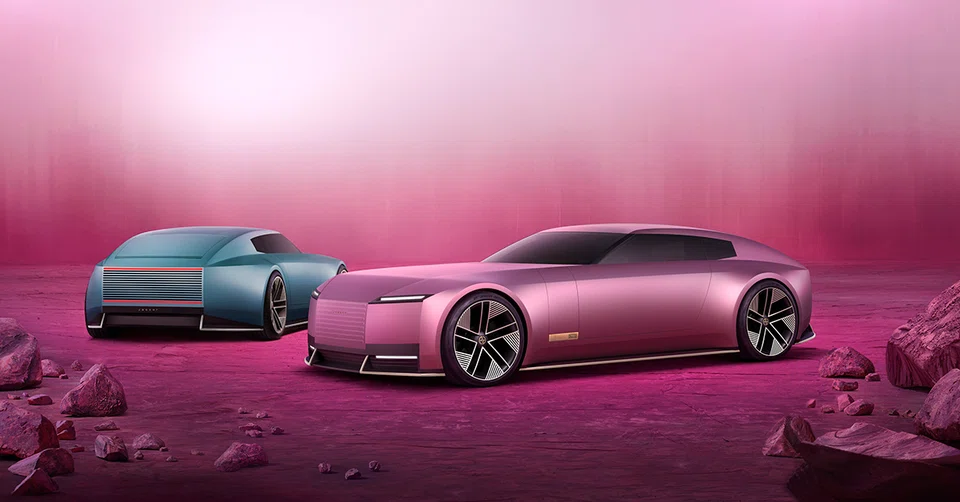
Jaguar will also take the branding and design approach embodied in the Type 00 concept car that debuted at Miami Art Week on Tuesday (Dec 3) – meaning its cars will have a strikingly minimalist appearance, in contrast to its current line-up of models.
A luxury EV sedan, to be unveiled in mid-2025, will showcase what the carmaker’s forthcoming production models may look like.
Adrian Mardell, chief executive of Jaguar’s parent company, JLR, described the move as a “complete reset to re-enter the world of aspirational luxury”. The India-listed Tata Motors is the parent of JLR, which also owns the Range Rover and Land Rover brands.
In a video briefing, Mardell said: “It’s an opportunity to fully embrace the electric era. However, EVs are only a part of the strategy. New Jaguar will be luxurious. It will sell in lower volumes at higher price points. And our research clearly shows there is a marketplace for this.”
Jaguar’s switch to an EV-only brand is part of JLR’s “Reimagine” global strategy announced in 2021; the vision includes a 2039 net-zero carbon target and EV models for all its brands.
Cat power

Gerry McGovern, JLR’s chief creative officer, said the new brand “does not desire to be loved by everyone”.
Opinions were divided earlier in November, when the brand unveiled a new logo, typeface and bold primary colours in a video trailer that featured fashion models in futuristic clothing – with no car in sight.
But behind this is a fundamental change in the way it does business.
Since the late 1990s, Jaguar has competed in the mainstream luxury segment, which is dominated worldwide by the German brands Audi, BMW and Mercedes-Benz.
Those brands sell millions of cars each year, partly by offering a very wide range of models. This strategy requires a huge cost base and capital expenditure, which JLR has been unable to match.
At its peak in 2018, Jaguar sold around 180,000 cars globally; Mercedes-Benz sold 2.3 million. Over the past decade in Singapore, Jaguar registered a high of 555 cars in 2016, making it 18th in terms of new car registrations that year. In 2023, it registered only 49 cars. From January to October this year, it has registered 26.
Mardell said: “The past decades saw Jaguar pursuing a mass-premium strategy focused on unit volume over value, with cars that were… not always distinctive enough in a fiercely cost-competitive, premium marketplace.”
With the brand revamp, annual production numbers will be “limited”, said Alistair Scott, JLR’s managing director for the Asia-Pacific. Jaguar will produce fewer than the current 60,000 or so cars per year, he said, but did not specify new sales or profit targets.
“The volumes will be lower (than currently)... as is often the case, if you want to create that sense of desirability and exclusivity,” he added.
The sedan – the first new model to be announced in 2025, with first deliveries targeted for 2027 – will be a fully-electric, four-door grand tourer. In the UK, it will be priced at around £100,000 (S$169,000), making it significantly more expensive than Jaguar’s current models, which range from £30,000 to £66,000.
That could still pit Jaguar against German carmakers’ higher-end models such as the Mercedes-Benz S-Class, but leaves it beneath ultra-luxury brands like Bentley in brand positioning.
Bentley’s range starts at £150,000. The brand manufactures fewer than 15,000 cars a year.
Scott said that JLR aims for Jaguar to achieve profit margins similar to that of Range Rover, its luxury off-road/sport utility vehicle brand.
“We won’t disclose any margins… but it’s a clear expectation that as you move up the value chain, as you move into the territory of luxury, margins tend to improve proportionately and in terms of percentages as well, but that that will be reinvested back into the brand experience.”
Industry observers say the typical profit margin per car for mainstream luxury models ranges from 5 to 10 per cent, but can exceed 15 per cent for more niche manufacturers such as Porsche and Lotus.
Trimming the cat
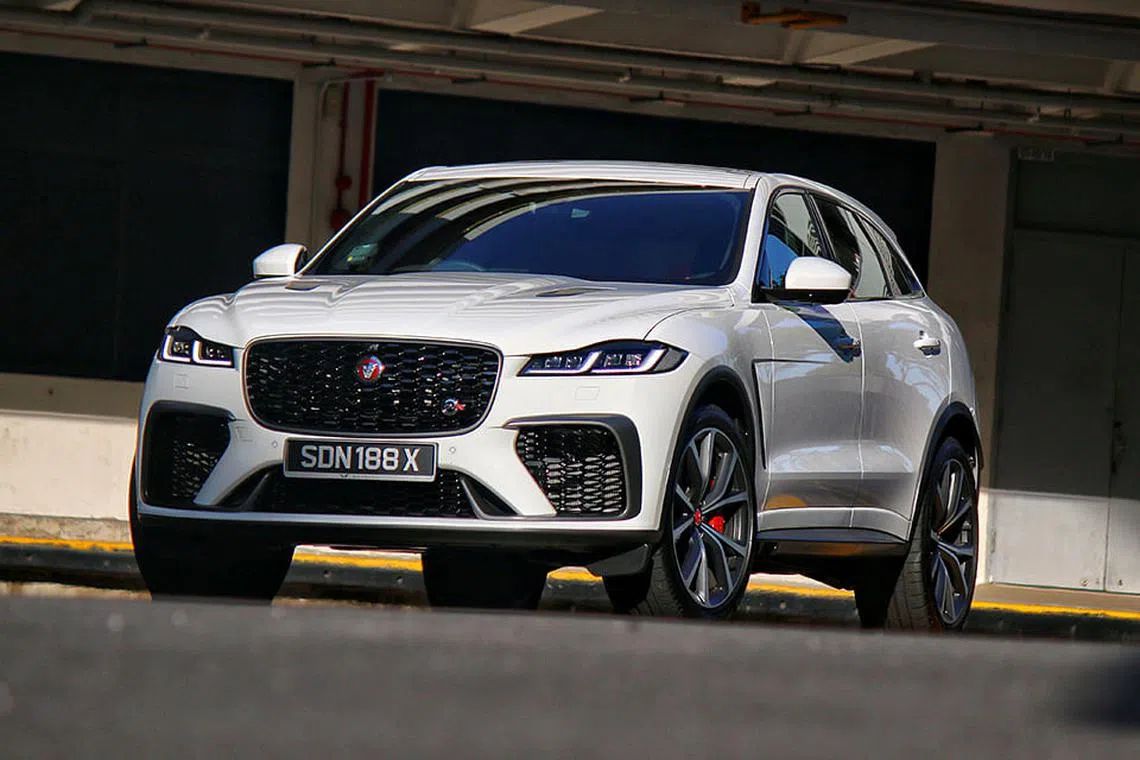
In preparation for the new strategy, Jaguar stopped selling its current model range in the United Kingdom in November. Production has already begun scaling down and will stop for all its models by this year – except for its top-seller, the F-Pace sport utility vehicle.
Partners will continue to service Jaguar vehicles, honour warranty claims and provide software updates, the company said.
Singapore’s authorised Jaguar dealer Wearnes Automotive said that sales of the F-Pace will continue for “the foreseeable future” and it will introduce a plug-in hybrid version in 2025. All other models from the current line-up will be sold until existing stock runs out.
The brand will be rebooted in only some markets first, chosen based on the development of the EV landscape.
Key markets among these first 25 are China, Canada, Europe, Japan, the US and the UK. In the Asia-Pacific, the new range will be available in Hong Kong, the Philippines, New Zealand, Singapore, Taiwan and Thailand.
All new Jaguars will be made in the UK, including those for the Chinese market. Currently, China is supplied by a Chery-JLR joint venture.
To prepare for smaller sales numbers and an EV-only focus, Jaguar could shed some dealers and pare down its retail network.
“Given that we are intending to target a lower sales volume, this means that we might see a reduced retail network,” said a representative.
Give no paws
JLR’s Reimagine strategy has also included adjustments of its retail network in preparation for the reboot, said a representative.
But overall, it does look like the group’s strategy is paying off. It logged a record £29 billion in revenue for the financial year ended Mar 31, up 27 per cent from the year before, driven largely by Range Rover and Land Rover sales.
Range Rover made up the largest share of sales – 203,788 or 47.2 per cent, while Land Rover sales were 161,079 or 37.4 per cent, compared to Jaguar with 66,866 or 6.9 per cent.
The year’s earnings before income tax (Ebit) were £2.5 billion, with an 8.5 per cent profit margin.
It has increased its investment from £15 billion to £18 billion for the next five years to support the Reimagine strategy, which targets double-digit Ebit margins by 2026.
It is hard to say how many lives Jaguar has had since its founding in 1922, but radical rebirths are nothing new to JLR, said Scott.
Defender, Land Rover’s classic off-roader, had remained almost unchanged since 1948 until a complete redesign in 2019.
“We relaunched Defender five years ago and have tripled the volume and doubled the price in that period of time. It’s an exemplary example of how we’re able to relaunch a brand, reposition it and reimagine it,” he said.