Japan unveils US$6 billion deal to buy out JSR
 Add BT as a preferred source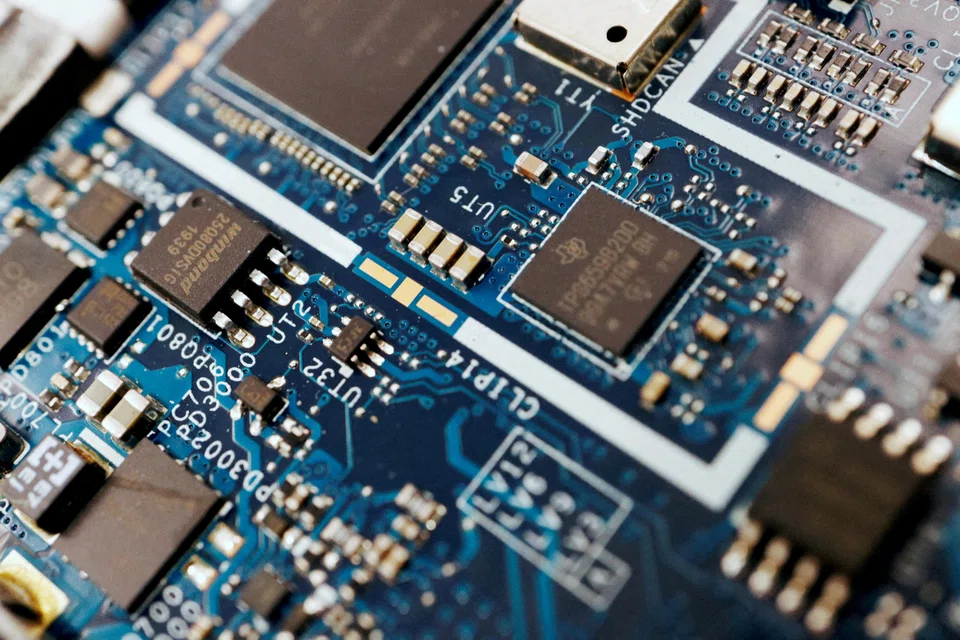
JAPAN’S government unveiled a US$6.3 billion deal to buy out and privatise JSR, taking direct control of the world leader in chipmaking compounds at a time US-Chinese tensions threaten to fragment the US$550 billion global semiconductor industry.
Government-backed Japan Investment Corp plans to offer shareholders 4,350 yen (S$41.12) a share in a tender offer around December, the company said on Monday (Jun 26) in a statement. That works out to around 903.9 billion yen, JSR said. The company rose 22 per cent Monday after the Nikkei reported on the deal, the most since 1999.
The move could help Tokyo expand control over compounds essential to make advanced semiconductors. Founded in 1957, JSR is the world’s leading maker of photoresists and one of three Japanese companies, along with Shin-Etsu Chemical and Tokyo Ohka Kogyo, that control the global supply of fluorinated polyimide and hydrogen fluoride.
Those compounds are needed to make semiconductors used in supercomputers, AI-harnessing data centres and missile control systems, not to mention gadgets including Apple iPhones. Government control over the materials critical to powerful chips would grant Japan greater leverage in a world increasingly divided by an escalating US-China technological rift. An unlisted JSR would also be able to take risks in new ventures to expand market share that a listed company might not be able to.
Prime Minister Fumio Kishida’s administration is betting shifting geopolitical priorities will help Japan regain some of its long-lost leadership in semiconductors. Japan’s preparing billions of dollars in subsidies as part of a push to triple domestic production of chips by 2030.
JSR peer Shin-Etsu jumped 1.5 per cent and Tokyo Ohka Kogyo surged 9.1 per cent to a record high.
Growing tech protectionism is spurring policymakers globally to go upstream in the supply chain to find more chokeholds by which to control technologies. In October, the US spearheaded a push to limit China’s access to advanced semiconductors, and its allies have also since stepped up efforts to curb exports on equipment and technology to the world’s No 2 economy.
Germany has also discussed limiting the export of chip chemicals to China. Such a move would restrict sales of materials by companies such as Merck KGaA and BASF, slowing China’s ability to innovate.
Japan, which seeks to raise its own profile as a chip supplier, still commands leading market share in a number of little-known but essential parts of the chip supply chain – a legacy from when Japan led the world in semiconductor technology in the 1980s.
Tokyo first tightened control over exports of chip chemicals in 2019, roiling South Korea’s biggest companies and prompting Seoul to file a complaint to the World Trade Organization. The restrictions did little to affect shipments of the materials to chipmakers Samsung Electronics and SK Hynixt the move was seen as a threat to hurt Seoul economically. BLOOMBERG
Decoding Asia newsletter: your guide to navigating Asia in a new global order. Sign up here to get Decoding Asia newsletter. Delivered to your inbox. Free.
Share with us your feedback on BT's products and services