

Japan's Nikkei crosses 29,000 as yen weakens on BOJ's dovish stance
 Add BT as a preferred source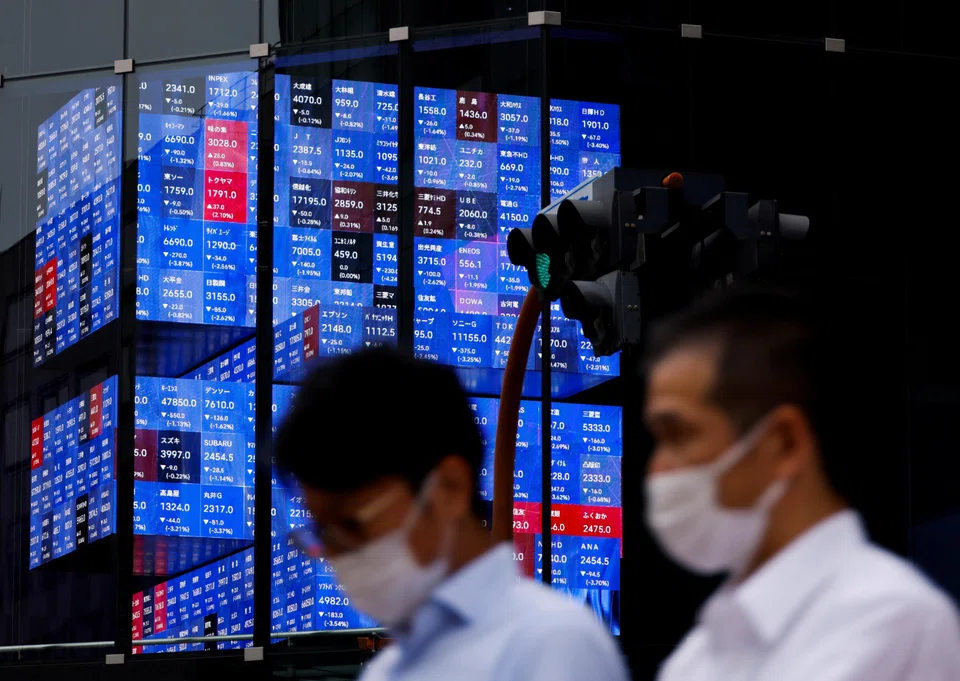
DeeperDive is a beta AI feature. Refer to full articles for the facts.
JAPAN’S Nikkei share average hit a more than eight-month high on Monday (May 1), topping the key psychological 29,000 level after the Bank of Japan’s (BOJ) continued dovish stance pushed the yen to a nearly two-month low.
Rail stocks and airlines were the best performing of the Tokyo Stock Exchange’s 33 industry sectors on the potential boon for tourism, each gaining close to 2 per cent. Automakers rose more than 1 per cent amid a boost to the value of overseas sales.
Tech services provider NEC surged more than 14 per cent after strong earnings to lead Nikkei gains by a wide margin.
The Nikkei gained 0.92 per cent to end at 29,123.18, after rising as high as 29,145.89 earlier, a level last seen on Aug 19.
The broader Topix added 1 per cent to 2,078.06, ending near the day’s peak of 2,078.37, its highest since September 2021.
The yen weakened to the cusp of 137 per dollar in Tokyo, extending its decline from Friday, when the BOJ kept stimulus settings unchanged and signalled it was in no hurry to normalise policy.
Navigate Asia in
a new global order
Get the insights delivered to your inbox.
Japan has a shortened trading week, marking the ‘Golden Week’ holiday from Wednesday, when the US Federal Reserve sets policy, followed by the European Central Bank on Thursday.
“I’m a bit surprised” that Japanese stocks would rise so much ahead of those risk events, said Kenji Abe, a strategist at Daiwa Securities.
“The strong performance is partly because of yen weakness due to the BOJ’s dovish stance, but also Japanese investors have some expectations that investors in the US are becoming less risk averse, and there might be some foreign inflows into Japanese stocks.” REUTERS
Decoding Asia newsletter: your guide to navigating Asia in a new global order. Sign up here to get Decoding Asia newsletter. Delivered to your inbox. Free.
Share with us your feedback on BT's products and services
TRENDING NOW

From 1MDB to ‘corporate mafia’: Is Malaysia facing a new governance test?

Higher costs, lower returns: Why are Singaporeans still betting on real estate?

South-east Asian markets account for 8.8% of global capital inflows from 2021 to 2024: report

Richard Eu on how core values, customers keep Singapore’s TCM chain Eu Yan Sang relevant

