

JC&C’s Toyota payout – What is an in specie distribution and why take this uncommon route?
The distribution in specie of around 7.2 million common shares of Toyota is valued at about US$0.36 a share

[SINGAPORE] Jardine Cycle & Carriage (JC&C) recently proposed a special dividend of about US$0.73 per share, comprising a cash payout and a direct distribution in specie of its remaining stake in Japanese carmaker Toyota Motor Corp.
The cash payout of US$0.37 per share is funded by Jardine’s divestments of Tokyo-listed Toyota shares in April, while the distribution in specie of around 7.2 million common shares of Toyota is valued at around US$0.36 a share. The move was aimed at prioritising the company’s portfolio focus and improving shareholder returns.
Combined with an unchanged interim ordinary dividend of US$0.28, total payouts reach US$1.01 per share. JC&C’s stock surged more than 7 per cent in intra-day trading following the announcement.
In standard corporate moves, it is more common for companies to sell their assets for cash and pay an all-cash special dividend.
Distributions in specie, however, provide shareholders with the opportunity to take part directly in the ownership and future value of the underlying investment, or to realise that investment for cash.
The Business Times looks at possible reasons why JC&C would opt for an in specie distribution, and the implications for the company and its retail investors.
What is an in specie distribution?
An in specie distribution involves handing assets directly to shareholders rather than converting them to cash first. In this case, for every 100 JC&C shares held, an investor receives roughly 1.828 Toyota shares listed on the Tokyo Stock Exchange.
JC&C has also provided a cash option. Shareholders who prefer not to handle Tokyo-listed odd lots can liquidate their entitled Toyota shares and remit net cash proceeds.
Why in specie? What analysts say
Analysts told BT that an in specie distribution can serve two clear corporate objectives.

“Firstly, simplification of the JC&C entity to be a cleaner, more streamlined intermediate holding company. Secondly, to consolidate all the smaller investment holdings under Jardine Matheson,” said Jayden Vantarakis, head of Asean equity research at Macquarie Capital.
Parent company Jardine Matheson Holdings (JMH) owns about an 86 per cent majority stake in JC&C. Because of its position, JMH will directly absorb the vast majority of the distributed Toyota equities into its parent balance sheet.
JC&C announced that JMH would hold its entitlement to any Toyota shares it receives from the distribution.
“Jardine Matheson plans to hold on to the shares it receives as the Toyota relationship is important for the group. So, this structure allows them to achieve both value realisation for minority shareholders and support the relationship,” Vantarakis said.
For JMH, the primary advantage is retaining direct commercial alignment with Toyota while avoiding open-market selling friction or cash drag.
As Vantarakis noted, this also marks the first time the Jardine group has executed an in specie distribution, broadening its capital management toolkit.
The special dividend “reflects JC&C’s sharpened capital allocation strategy following its strategic review, returning proceeds from the Toyota stake directly to shareholders”, DBS analyst Elizabelle Pang said in a Jul 31 note.
Impact on retail shareholders
For minority retail shareholders, the advantage of an in specie distribution is that investors gain the option to retain direct equity exposure to a global automotive leader.
However, the trade-off involves handling foreign-domiciled odd lots and managing Japanese yen exchange rate risk upon selling.
The special payout also coincides with JC&C rebranding itself to Jardine Matheson South-east Asia.
The company previously exited non-core stakes such as Siam City Cement and pared back its Vinamilk position. The Toyota distribution completes another chapter in portfolio simplification.
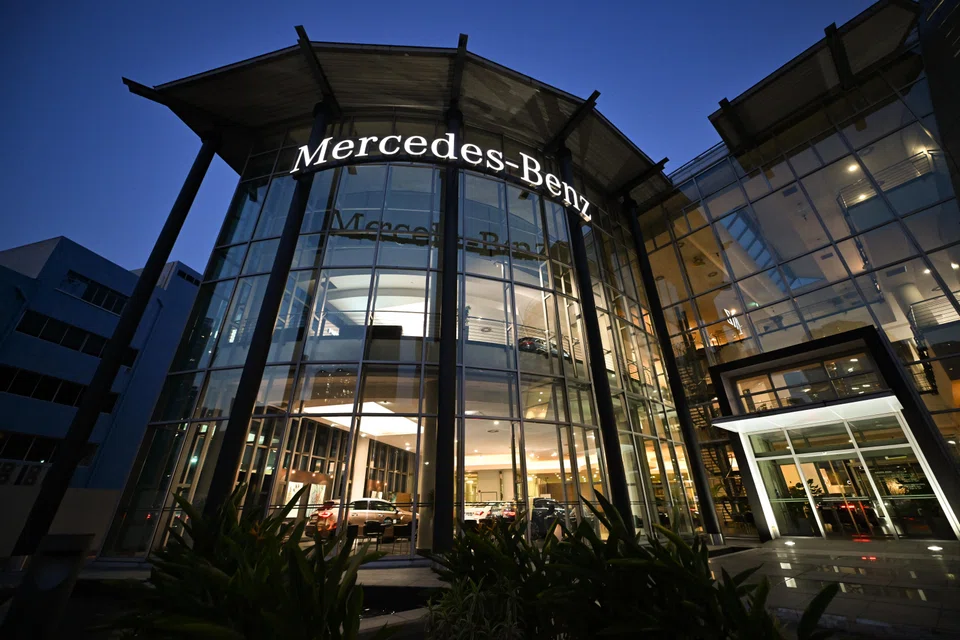
The move may also align with reports that JC&C is exploring the potential sale of its car dealership networks in Singapore and Malaysia, which include longstanding distribution businesses for luxury brands such as Mercedes-Benz, Mitsubishi, Kia, Citroen and Peugeot.
Decoding Asia newsletter: your guide to navigating Asia in a new global order. Sign up here to get Decoding Asia newsletter. Delivered to your inbox. Free.
Copyright SPH Media. All rights reserved.
TRENDING NOW

Singapore updates renewable energy certificate standard to tackle greenwashing; unveils new solar efforts

Director of PR firm sacked for secretly recording internal meeting loses wrongful dismissal claim
Indonesia says gas export cuts to Singapore remain within contract terms

Time for MAS, SGX to scrutinise issue managers

