Jewel gives CapitaLand platform to showcase capabilities in pursuit of global growth

Nisha Ramchandani
Singapore
JEWEL Changi Airport, which has created a global stage for some of Singapore's best brands, is expected to start contributing to developer CapitaLand's revenue from the second quarter of this year.
Jewel is not the group's biggest retail asset in its portfolio; for instance, Suzhou Center Mall and Raffles City Chongqing have a retail gross floor area (GFA) of about 300,000 square metres (sq m) and 230,000 sq m respectively. But it is still a significant one for the group in Singapore.
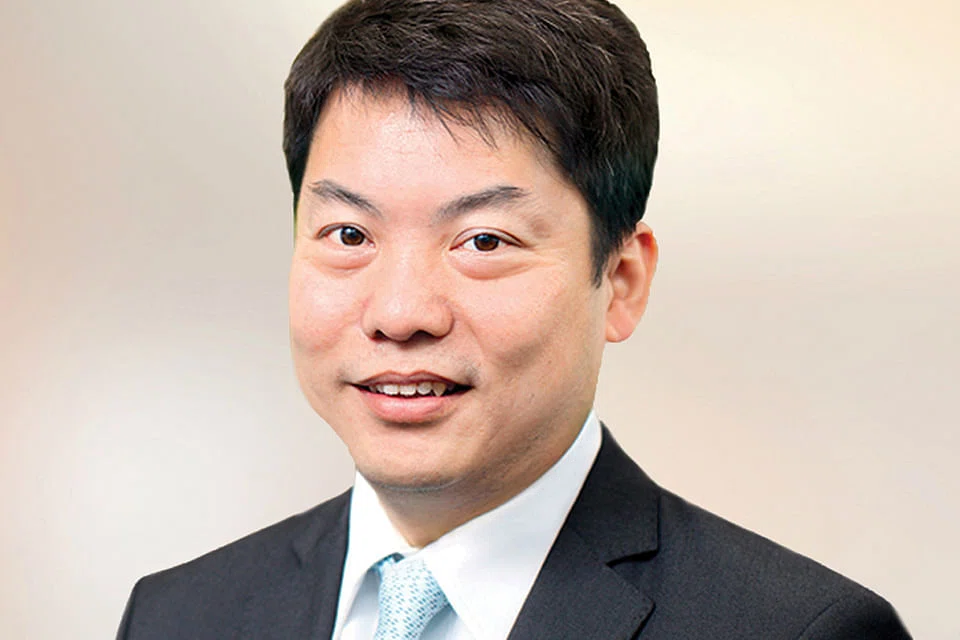
"The successful opening of Jewel demonstrates CapitaLand's multi-faceted capabilities in real estate development; and highlights the unlimited possibilities we have in enlivening an airport precinct with retail at its core," said Jason Leow, president and chief executive officer of Singapore & International for CapitaLand. "It will augment CapitaLand's track record in pursuing more growth opportunities globally, especially in large-scale precinct projects integrated with transportation nodes."
The project is a 51:49 joint venture between airport operator Changi Airport Group (CAG) and CapitaLand.
At 90,000 sq m, Jewel's retail size is comparable to CapitaLand's ION Orchard, which has a retail footprint of about 88,000 sq m. Raffles City remains CapitaLand's largest mixed-use development in Singapore at 320,490 sq m GFA.
Jewel's total GFA spans 135,700 sq m, comprising 90,000 sq m of retail; 21,100 sq m of indoor gardens and attractions; 19,400 sq m of facilities for airport operations; while 5,200 sq m has been set aside for hotel space.
About 25 per cent of Jewel's over 280 stores comprise new-to-market brands, new concepts or flagship stores. Nearly 50 per cent of the brands in Jewel are home-grown Singapore ones, with stores such as the Rich & Good Cake Shop, Birds of Paradise gelato store and Tiger Beer's new concept, Tiger Street Lab, attracting long queues during the Jewel's preview, Mr Leow said.
Through Jewel, travellers transiting through Changi Airport will be able to get a taste of such local brands, in the hopes that they may come back to visit Singapore again.
Meanwhile, some analysts believe that Jewel's debut could divert footfall from other malls in the eastern region, while RHB Invest analyst Vijay Natarajan reckons that CapitaLand Mall Trust's Tampines Mall could face some pressure in rental reversions ahead.
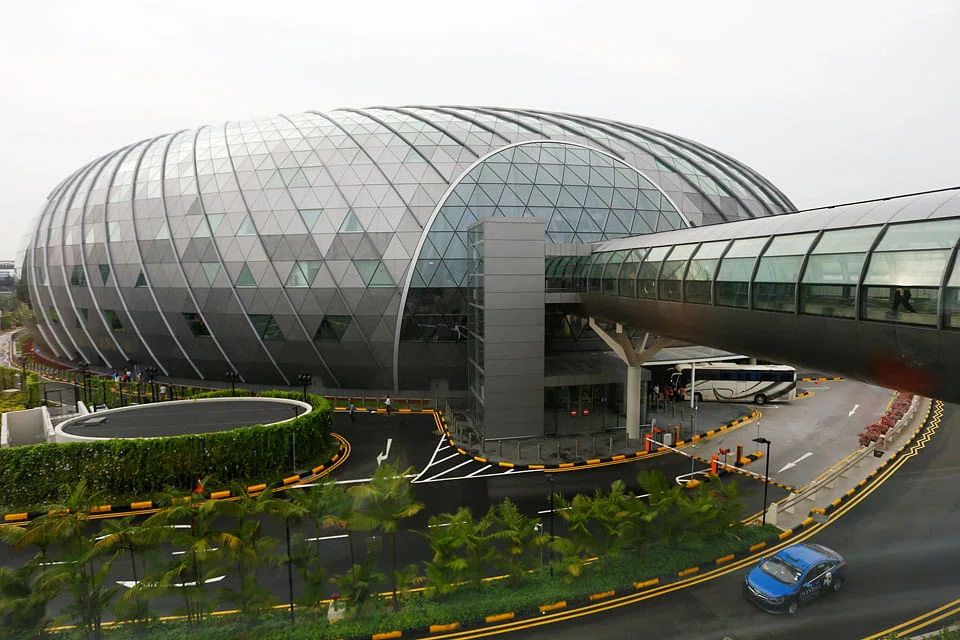
Designed by renowned architect Moshe Safdie, the S$1.7 billion Jewel bills itself as a destination in itself, with retail and dining outlets, attractions, a hotel and airport facilities under one roof. Key features include the world's tallest indoor waterfall, the 40 m Rain Vortex, and the sprawling, 14,000 sq m rooftop Canopy Park with sky nets, mazes and slides. Located next to Terminal 1 and connected to Terminals 2 and 3 via air-conditioned travelators, Jewel aims to attact 40-50 million visitors a year, of which 60 per cent will be Singapore residents.
Through Jewel, Changi Airport is seeking to strengthen its position as an air hub of choice to attract more stopover visitors and tourists as other airports in the region step up their game.
But constructing the iconic dome-shaped structure did not come without challenges. Built on the site of Terminal 1's former open air carpark, the 10-storey Jewel has height restrictions to ensure that the line of sight from the airport's control tower is not obstructed. It was also important to minimise disruption to airport operations during construction.
Procuring and taking care of such a large collection of plants also required careful planning, Mr Leow highlighted, given Jewel's "garden in a mall, mall in a garden" concept.
Mr Leow said: "The glass panels we have chosen for the dome facade are made up of high-performance material with the dual ability to transmit light for the vast landscaping in Jewel to thrive, and yet reduce heat gain for the comfort of visitors. Extensive efforts have also been made to ensure that Jewel's indoor temperature and humidity levels are conducive to the plants' growth conditions."
Responding to a question on whether Jewel might be ripe for injecting into a real estate investment trust (Reit) once its operations stabilise, Mr Leow highlighted that Jewel is a joint venture, adding: "Any decision to inject Jewel into any investment vehicle will be jointly undertaken by both parties." Typically, a new mall usually takes about two to three years to stabilise.
Shares in CapitaLand closed at S$3.68 on Wednesday, up three Singapore cents.
TRENDING NOW
He built the Vingroup empire. Now South-east Asia’s richest man is handing some key roles to his sons
Seatrium allocates S$200 million for new share buyback programme
32 companies, 6 individuals bag accolades at Singapore Corporate Awards 2026
Stocks to watch: Mapletree Logistics Trust, Seatrium, Keppel DC Reit, Food Empire