

Jumbo taps hawker scene to diversify income and adapt to new dining habits
This will accelerate breakthrough into local mass segment amid ongoing pandemic restrictions, says group CEO
Claudia Tan HS

Singapore
AS THE current business environment remains challenging for restaurants, food and beverage (F&B) player Jumbo Group has expanded to tap into opportunities in the local hawker scene that come with lower operating costs and a wider market segment.
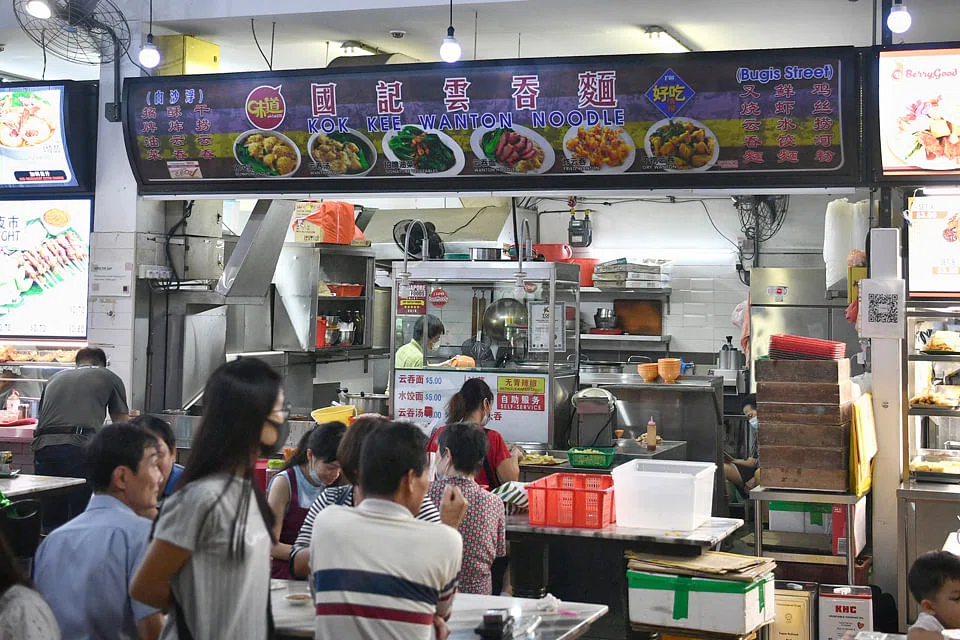
The group made headlines in November 2020 for its proposed acquisition of a 75 per cent interest in popular dumpling noodle stall Kok Kee Wanton Noodle for S$2.1 million in cash and shares, marking its first inorganic expansion since 2015.
In January, its indirect wholly owned subsidiary entered into a joint venture (JV) agreement with The Art of Mee Pok to run outlets selling Teochew fishball, minced meat noodles and pao fan - a Teochew dish of cooked rice served in broth.
Executive director and group chief executive officer (CEO) Ang Kiam Meng told The Business Times that Jumbo's foray into hawker dining concepts was part of the group's strategy to expand its presence in the local scene amid the long-drawn pandemic.
With hawker culture deeply entrenched in the lives of many Singaporeans, he believes that having a stake in a "staple food concept will accelerate the group's breakthrough into the local mass segment".
This is necessary given that business performance is expected to remain lacklustre, particularly as borders remain sealed and virus safety measures continue to be in place.
Against this backdrop, the group had been on the lookout for inorganic growth opportunities and saw bright spots in the local hawker scene.
"Such hawker concepts will also help to diversify our income streams, away from the group's current dominant full service dine-in restaurants," said Mr Ang.
It is less challenging to run a hawker stall in the current environment given the lower operating costs and wider customer base.
"The business model of a hawker stall is much simpler, compared to a restaurant," he said. "A hawker stall requires less manpower for daily operations as the menu is usually more focused."
The key to success for restaurants, on the other hand, is often reliant on the quality of food and customer service and experience.
"Generally, restaurants have a higher fixed cost due to the requirements for skilled labour, both in kitchen and also front-end service staff, and higher cost for quality raw materials, though margins are relatively higher," said Mr Ang.
"With the high operating cost for restaurants, those with weaker concepts and financials are likely to struggle in the current business environment if they cannot adapt to the new norm,"he said.
The CEO also felt that, being a homegrown brand, Jumbo has a part to play to "preserve and promote local heritage flavours and food culture".
But even as the group embarks on making its mark in the local hawker scene, he is taking a cautious approach, pointing out that hawkers will also need to be able to adapt quickly to thrive.
For instance, dining habits have changed amid social distancing and stay-home measures. Deliveries and takeaways are likely to stay and serve as an additional stream of revenue, said Mr Ang.
Prior to the Covid-19 pandemic, Jumbo's restaurants mainly focused on dine-in business given the appeal of communal dining at its outlets. But the group has been exploring ways to make its concepts more appealing for takeaways and deliveries.
Mr Ang is therefore upbeat on the prospects of Jumbo's new casual dining concepts such as Kok Kee and Chao Ting pao fan as they cater primarily to the local mass market and are well-suited for both the dine-in and takeaway businesses.
In line with appealing to new consumer behaviours, Jumbo has introduced new concepts that are better suited for stay-home dining targeted at younger crowds and smaller families.
This includes its first online-only brand, Hack It Seafood, which positions itself as a fuss-free dining concept that allows customers to enjoy fresh seafood in the comfort of their homes.
Beyond the F&B industry, Jumbo is deepening its presence in the the fast-moving consumer goods segment through retail products such as cooking paste and sauces that allow customers to replicate their signature dishes at home.
Jumbo has stepped up on its distribution network through e-commerce platforms such as Qoo10 and Shopee to cater to both local and overseas customers, said Mr Ang. Jumbo's retail products can also be found at departmental stores and hypermarts.
"We are also working with some of our suppliers, to sell bundle deals - fresh seafood together with our retail packs," he said.
With the F&B sector taking a hit from the pandemic, Jumbo's growth had initially hit a snag.
For the full year ended Sept 30, 2020, the group reported a net loss of S$8.2 million, reversing from a profit of S$11.7 million a year earlier. Revenue shrank 36.5 per cent to S$97.6 million from S$153.6 million the previous year.
The group attributed the poorer business performance to the pandemic, saying that businesses in China and Singapore bore the brunt of the impact when restrictions to curb the spread of the virus were in place.
The group managed to generate net cash flows from operating activities of S$12.7 million.
"Having been in the F&B industry for more than 30 years, we have been through many challenges. Strong liquidity and strong balance sheet are what has kept us resilient," said Mr Ang.
This has allowed the group to prioritise innovation with a focus on providing more food options for Singaporeans.
Still, it will continue to expand its global footprint through the franchising model, which the CEO said is less risky and demanding in terms of capital investments. It will also allow the group to leverage on their partners' understanding of the local consumers' tastes and behaviour.
Jumbo had noted in its latest financial results that its franchises, particularly in Ho Chi Minh City, Bangkok and Fuzhou, are holding up well despite the challenging business climate.
The franchisees in those regions are also on track for further expansion of their outlets network in FY2021.
TRENDING NOW
Far East Organization’s The Serra Residences sells less than a quarter of units released at average S$3,460 psf

A bumpy road ahead for some of Singapore’s fresh graduates in their job search

Philippine power giant First Gen rebuffs foreign offers, plans up to US$2.6 billion in expansion
No chicken feed: How Malayan Flour Mills built an empire from flour to fowl

