

Keong Hong buckles up as it rides construction roller-coaster
Amid slowing jobs and squeezed margins, it is diversifying its portfolio to pull in the all-important recurring income.

Anita Gabriel
Singapore
LESS is more, so goes a design maxim that espouses simplicity in style. It might also well be the guiding motto of Keong Hong Holdings, that three years ago climbed the ranks to Singapore Exchange's mainboard from Catalist and has survived several boom and bust cycles over the past 30 years.
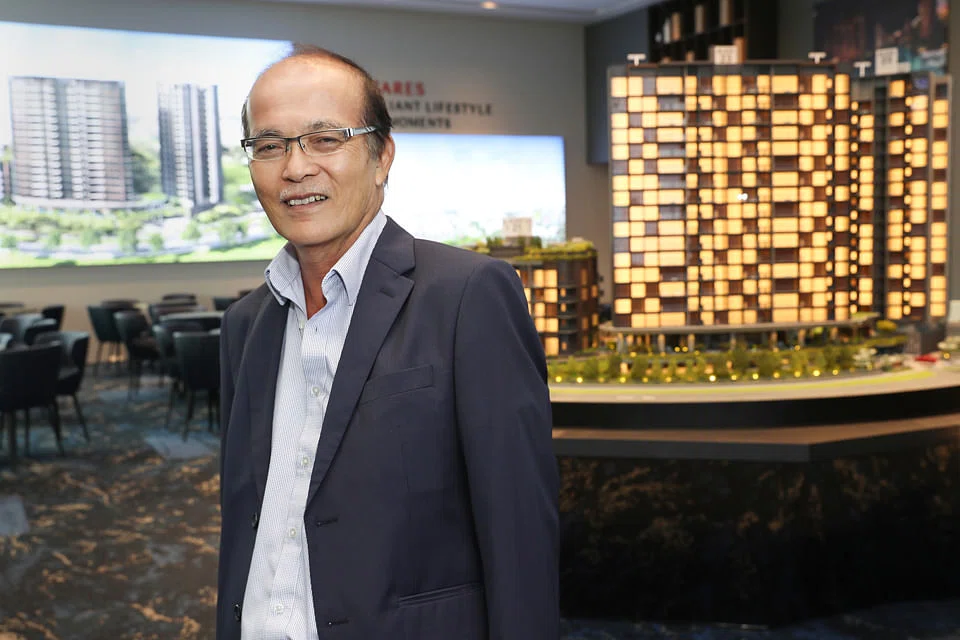
Keeping things simple is exactly how company founder and majority owner Ronald Leo Ting Ping has led the homegrown builder, which today has a market capitalisation of some S$100 million. Last year, it earned some S$22 million on the back of S$165 million in revenue.
Mr Leo says: "It's like running a restaurant. When you have a cook and wait staff that can serve only five tables, to sustain yourself, you have to make sure you serve five tables. If you do a lot more and expand too fast and hire more staff - not all of them will be good - then it will be hard to control or cover the cost. That's not how we do things."
The 67-year-old, a veteran in Singapore's construction sector, started out as a civil engineer in the Housing and Development Board. He started Keong Hong in the early 1980s and transformed it from a subcontractor to an established design-and-build main contractor.
"I started the construction company because when I was at HDB, I saw these contractors... most of whom were not literate but all of them were driving big cars and I said to myself, "gosh, I think I can do better," he says with a laugh.
"But it's been tough... a long journey. We have weathered many downturns. So basically, we need to knuckle down our cost and excesses and are constantly doing this."
In recent years, as the shine wore off on the construction sector amid slowing jobs and squeezed margins, Keong Hong started betting on new activities in property and hotel development to expand its portfolio and pull in the all-important recurring income.
Building buffers
Last month, The Antares, a 265-unit condominium project in Mattar Road (just off Aljunied Road) that Keong Hong jointly undertook with Hock Lian Seng Holdings and TA Corp, was launched.
The project, which comprises two five-storey blocks, one 17-storey block and one 18-storey block with swimming pool, is on schedule for completion in the fourth quarter of 2021.
So far, a total of 18 units have been sold with the 2-bedders drawing the most interest. It's not anywhere close to the brisk sales other recently-launched condo projects have enjoyed, but Mr Leo expects it to pick up once the project is near completion as it's an easier sell when potential buyers can see the finished product and are able to better match the timing to desired move-in dates.
This pattern, he said, was evident in its other projects. This included Seaside Residences - its largest construction project to date - a 843-unit condominium in Siglap. Launched two years ago, the units are more than 90 per cent sold.
Another example is Parc Life, an executive condominium project at Sembawang Crescent, which obtained its TOP in March 2018 and is fully sold.
The joint-venture company FSKH Development that was set up last year to undertake Keong Hong's development activities - it has a 35 per cent in the JV firm - won the Mattar Road site, its first residential parcel, through a tender in May 2018.
"We got this piece of land and shortly after, the government introduced new cooling measures... after that, the prices and everyone pulled back...," Mr Leo recalls, referring to last July's move by the Singapore government when it unexpectedly raised the Additional Buyer's Stamp Duty (ABSD) rates and tightened loan-to-value limits (LTV) on residential property purchases.
Wider portfolio
The enbloc fever, which saw a flurry of major sales in the past few years, is thought to result in more construction jobs, but Mr Leo says these days, "it is a lot slower" as the "digesting period is very, very long and we will probably see it (jobs) flowing in nicely end next year".
"If things are not disrupted by a major financial or economic crisis, property demand in Singapore, a safe haven, will be on an uptrend."
On the other hand, if things sour, Keong Hong does not have all its eggs in one basket. "We are not a full-fledged developer. So, our income doesn't just rely on residential."
The hotel business is another thing the company has worked hard on since 2013, hoping it would offset the volatile and lumpy returns from construction. "We basically wanted a little bit more recurring income as our revenue from construction is like a roller coaster."
In Singapore, the company has two hotel investments: The Holiday Inn Express Singapore Katong and Hotel Indigo Singapore Katong.
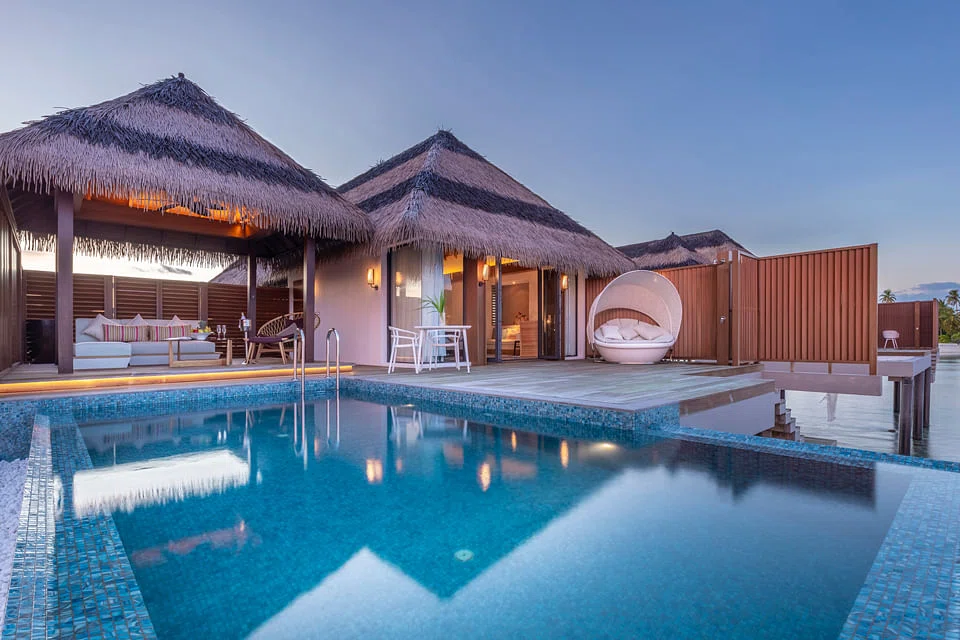
October was a milestone as the firm opened a luxury resort, its second hotel in the Maldives. "This is extremely exciting as we took almost three years to build it. It has been a challenge as this Maldives island was a virgin island and we needed to do everything from scratch," he said.
The Pullman Maldives Maamutaa resort has eco-friendly features such as a composter to convert food waste to fertiliser, a coral nursery, an in-house marine biologist to take care of marine life and solar panels on all back-of-house buildings. There are also two underwater villas and a 29-metre-long suspension bridge that overlooks an eco-pond.
The other hotel in Maldives is mid-scale Mercure Maldives Kooddoo, the firm's first overseas hotel.
Mr Leo says: "With hotels, you can... really get involved from concept to reality."
But it's the returns that are the biggest draw. "When we were first doing construction for one of the Singapore developers for resorts in Maldives, we were struck by the high RevPar (revenue per available room) the hotels generate there... it's one of the highest in world."
Mr Leo said Keong Hong has identified a site to build a 95-room four-star hotel in Kyoto, Japan's historic capital. If this pans out, it would mark the firm's first hotel in Japan where it is also invested in the business of leasing offices and retail shops in two commercial buildings in Osaka.
The company has also identified an existing hotel in Jakarta to potentially rebrand, another hotel in Hoi An, Vietnam, as well as an airport hotel in London.
Old is still gold
For now, construction is still Keong Hong's mainstay, contributing more than 90 per cent of revenue.
The company has gravitated to institutional buildings. While Singapore's weak demographic outlook may be a potential drag for the construction sector, institutional facilities - given the government's continued investments in health and education - will continue to spawn opportunities.
Some of jobs it has snagged include a 20-storey medical building extension to Raffles Hospital and a 10-storey new National Skin Centre.
Mr Leo says there are a lot of tenders coming up and Keong Hong is bidding for three jobs collectively worth S$1.5 billion, including a Woodlands hospital complex and an integrated sports hub in Tampines.
As some of the projects are "a little big for our size and for us to digest", the company has partnered a local and foreign company to bid for them, Mr Leo says. As at end-June 2019, Keong Hong's order book stood at S$267 million.
"Basically, if we get one contract, it's good enough. It will be just nice. We are not a big animal."
TRENDING NOW

Once staunchly pro-China, Malaysian Chinese businesses are now distancing themselves from Beijing

Could stablecoins be the future of money?

Grab CEO’s wife Chloe Tong on life with Anthony Tan and finding her purpose

Malaysia suspends sale of Chery Omoda 5 after viral incident; Singapore cars not affected

