Keppel adding more bricks to rigs
HISTORY doesn't repeat itself, but it often ryhmes, as the saying goes.
The year was 1983, and government-backed Keppel Shipyard, in the midst of a shipping slump, made one of the biggest takeover attempts in Singapore corporate history: a S$500 million bid for a big chunk of property and shipping group Straits Steamship, now known as Keppel Land. The takeover was billed as Keppel Shipyard's biggest diversification move. It was meant to provide long-term growth and a more stable income. The shipyard would call itself Keppel Corp a few years later.
However, the debt burden Keppel shouldered from the acquisition proved too much to bear, especially when both shiprepair and property businesses went into a funk. The purchase price was criticised for being too high. Keppel's turnaround took a few years, and included rights and debt issues, asset writedowns and layoffs. Heads rolled.
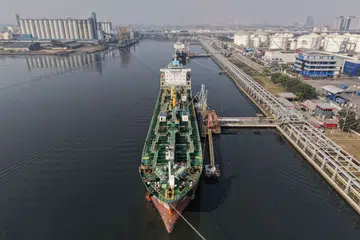
Today, after numerous acquisitions and divestments through the years, Keppel Corp might still think of itself as somewhat diversified. Its oil rig business, however, has grown so big that the conglomerate's share price fluctuates with the volatile price of oil. And today, just like in the mid-1980s, the offshore business is not exactly booming.
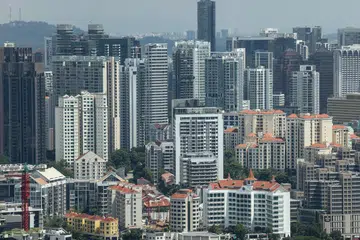
Keppel Corp's S$3.2-billion attempt to take over the remaining shares of Keppel Land it does not own can be evaluated in this light, with the benefit of hindsight.
First, the finances. Net gearing is projected to increase from 0.11 time to 0.41 time, and net debt from S$1.6 billion to S$4.7 billion. This might not seem too much. But don't forget that Keppel Corp is increasing its leverage levels at a time when both rigbuilding and property businesses are facing challenges.
The rig market is projected to be in a state of oversupply. Low oil prices exacerbate the situation as exploration and production companies, which rent rigs, delay their oil projects. This causes demand for rigs to fall. Keppel has already received requests to delay the deliveries of two projects. Customers in financial trouble could also delay payments. This will affect cashflows.
Meanwhile, the US is due to raise interest rates. This will affect property valuations and potentially increase debt repayments. Keppel itself mentioned how Keppel Land's markets have positive "medium to long term outlooks". Nobody knows for sure when property markets will recover.
On the bright side, Keppel Corp gets recurring income from its trusts and Reits, its property portfolio, and investments like telco M1. As its recently-announced S$510 million, 51 per cent divestment of its Keppel Merlimau Cogen power plant to its infrastructure trust shows, cash can be unlocked.
A second area which deserves scrutiny is whether doubling down on property is indeed the way to unlock value. Keppel has traded at a conglomerate discount for years because its businesses were seen as too disparate. The discount will only narrow if it demonstrates how its segments will help each other, otherwise known as "synergies".
However, what does engineering a sophisticated oil rig or repairing a ship have to do with building a high-end condominium? Is it really necessary to take its property arm private so that it can better build an integrated township or develop a data centre? Given the extent of control that the parent already has over its subsidiary, the "synergy" arguments can be questioned.
Like it or not, Keppel's rigbuilding business will still form the bulk of its valuation even after Keppel Land is taken private. Sum-of-the-parts valuation models used by analysts currently show the offshore and marine business taking up more than half of Keppel's fair value. With the privatisation, Keppel Land will probably take up a few dollars per share of Keppel Corp's estimated fair value in the teens. The infrastructure contribution is still negligible.
The privatisation theory was never that hot before the fact, simply because there were other ways for Keppel to unlock value that did not include a huge cash and debt commitment.
Keppel Corp will be less of an oil and gas play after its privatisation of Keppel Land, but its conglomerate discount could remain for years to come. The global economy continues to be on shaky ground. Keppel Corp today is far stronger and much more diversified than Keppel Shipyard in 1983, of course. History might not repeat itself this time. But there's certainly some deja vu.
READ MORE: Keppel Corp moves to take KepLand private
READ MORE: The strong draw of property