Keppel DC Reit sees opportunities in favourable supply-demand environment

AS IT approaches its 10th anniversary, Keppel DC Real Estate Investment Trust (Reit) has grown its assets under management by almost four times, from S$1.1 billion as at end-2015 to S$3.7 billion as at end-2023.
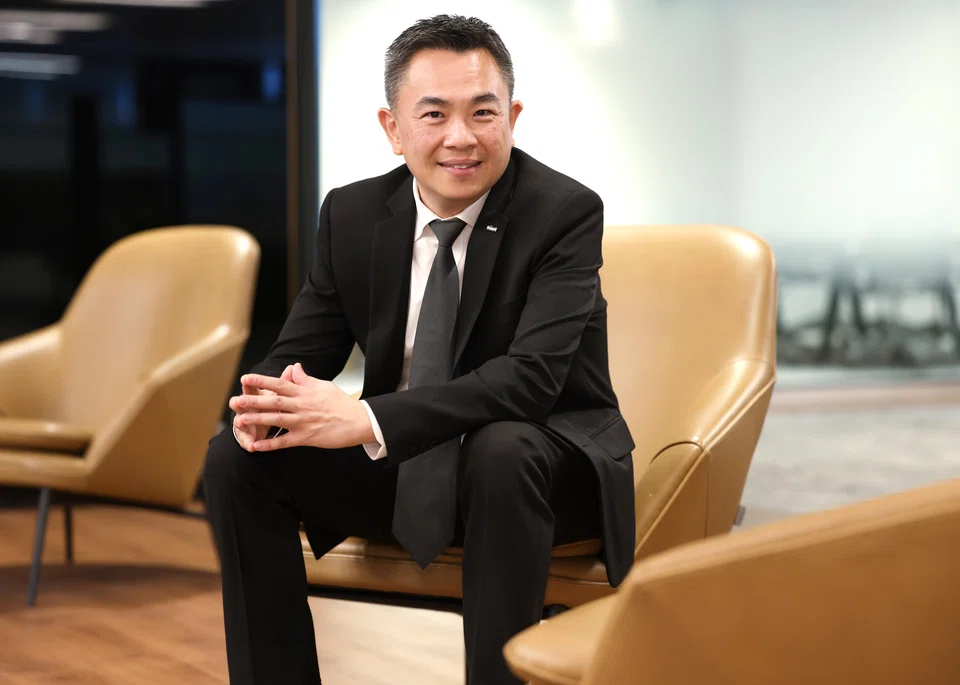
With data centre demand continuing to rise, Loh Hwee Long, chief executive of the Reit’s manager, said that the Reit will focus on Singapore and Japan for good quality deals that are accretive to its unitholders.
He noted that both locations have a tight supply of data centre capacity and high demand, resulting in favourable dynamics for landlords.
He also pointed out that the Japanese market is currently experiencing stiff energy constraints, with new developments able to secure power capacity only closer to 2030.
Singapore has also taken a cautious approach to providing data centre capacity. In May this year, the government announced that it aimed to provide at least 300 megawatts of additional capacity in the near term. The Republic has 1.4 gigawatts of existing capacity spread across 70 data centres.
On the demand side, Loh said that generative artificial intelligence (AI) has also contributed to greater demand as tech giants, such as Microsoft and Amazon, invest more to increase their processing capacities.
Expanding to Japan
“Japan is actually very important geographically as well in terms of global connectivity. The market itself will be increasingly important to serve… as a thoroughfare between the Americas and Asia,” Loh said.
In July, Keppel DC Reit made its first acquisition in Japan – a data centre built in 2019 – for 23.4 billion yen (S$210 million).
Loh said that the data centre, which is being leased out to a Fortune 500 hyperscaler (a large cloud services provider) on a shell-and-core basis, is due for a lease renewal in seven years. This compares favourably with other shell-and-core leases that can run for 15 to 20 years with no escalation features in Japan.
A shell-and-core lease is a lease of a building’s basic structure. Definitions vary, but shell-and-core leases typically include power but exclude the technology systems.
Because the original lease was signed in the mid-2010s, the rental is at least 15 per cent below current market levels. This gives the Reit “good certainty and visibility” of positive rental reversion on the property, said Loh.
In Singapore, he noted that Keppel DC Reit tends to acquire data centres that are leased out as colocation facilities, which typically have shorter leases.
Four of the Reit’s six Singapore properties have a weighted average lease expiry by lettable area of less than two years as at Jun 30, 2024.
These efforts to drive rental reversions seem to have paid off.
For the half year ended Jun 30, the Reit posted an 11.9 per cent year-on-year rise in gross revenue to S$157.2 million
However, distribution per unit fell 9.9 per cent to S$0.04549 over the same period, which the Reit manager attributed to a loss allowance for the receivables from its Guangdong data centres.
The Reit’s market capitalisation stood at S$3.6 billion as at Aug 23.
Managing China risk
In a Jul 29 report, OCBC analysts noted that “ongoing concerns” over the credit profile of Keppel DC Reit’s master lessee at its Guangdong data centres, following rental arrears, have “created uncertainties over (its) distributions outlook, and the recovery progress has been sluggish thus far”.
Loh said that the company has made progress in securing interest in the Guangdong data centres from Chinese companies with the help of its master lessee, Bluesea. This amounts to about 12,000 racks of interest, compared with about 8,000 racks of capacity.
However, these companies have not been able to take up the capacity, as they intend to use the racks for generative AI purposes and have been unable to secure access to graphics processing units. Such chips are used to train and run AI models.
It is only a matter of time before Chinese companies get their hands on them, Loh said, even as US sanctions prevent the best of these chips from being exported to China.
“From the Chinese side, you’ve got players like Huawei that are also making quite a fair bit of breakthroughs so, hopefully, from a supply chain perspective, they catch up quickly enough,” he added.
He also said that Keppel DC Reit will favour going into deals that involve single, larger tenants instead of master lessees with many small tenants.
In China, Loh said that the government clampdown on sectors such as cryptocurrency and gaming has hurt smaller enterprises which had taken on subleases with Bluesea. With these smaller players unable to continue, the underlying tenancy is broken.
He said: “We’re also trying to look into deals, like what we did in Japan, where we deal directly with the hyperscalers.
“In that sense, it derisks the deal a lot more.”