TOPLINE

Keppel DC Reit targets Asia-Pac data centre hubs

It is targeting markets such as Singapore, South Korea, Japan, mainland China and Hong Kong, as well as Sydney and Melbourne in Australia


Annabeth Leow
Published Sun, Apr 10, 2022 · 09:50 PM

    Singapore

    KEPPEL DC Reit may be headed for more equity fund-raising, as the data centre investor looks to pick up more assets after an active acquisition spree in the past year.

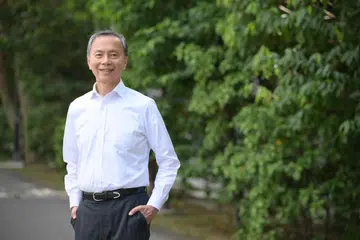
    "Anything above S$100 million would be a nice deal size, and the larger it is, of course, it would be a lot more needle-moving," Anthea Lee, chief executive of the manager, told The Business Times.

    Still, she has ruled out acquiring non-data centre assets that do not come bundled with data centres, in the face of speculation that the real estate investment trust (Reit) might continue with diversification, after last year's investment in telco M1.

    No DC, no talk

    As Lee noted, the Reit "widened our mandate to include our ability to invest in assets and real estate that supports the digital economy".

    Since the initial public offering in 2014, Keppel DC Reit has grown its portfolio from 8 data centres to 21, with assets under management worth S$3.5 billion. Recent deals include data centres in the Dutch city of Eindhoven and London's Bracknell district, as well as expansion into China with a Guangdong asset.

    But the most chatter emerged from a deal involving S$580 million in mobile, fixed and fibre assets at M1, which is owned by parent Keppel Corp. Unitholders voted in December to invest in S$89.7 million of bonds and preference shares from the Keppel DC Reit-M1 entity holding those assets.

    While some investors wondered whether the transaction marked a move away from data centres, Lee said ahead of the vote that the deal would be "a one-off opportunistic" investment, not a recurring one.

    She now reiterated the point, telling BT: "A pure telecommunication asset on its own - I don't think that is something that we want to focus too much attention on."

    The hunt for data centre assets comes amid competition that Lee said "is very strong everywhere".

    "Apart from just looking at the market-driven processes, we also have our network on the ground, we have data centre players who we talked to regularly... because data centre is not a transparent market," she said, adding that "there are opportunities for us to continue to do off-market deals".

    The Reit's leverage was 34.6 per cent as at end-2021, with S$481.5 million of undrawn credit facilities. Meanwhile, the proceeds from a S$204.3 million private placement - meant to fund the Guangdong and future acquisitions, and to repay debt - have been fully utilised.

    Still, Lee told BT that "we may also want to come to tap the capital markets to raise equity, rather than use up the entire debt headroom and handicap ourselves", if larger deals come before the manager.

    Places to go

    As for "key geographies where would we be targeting", she pointed to Asia-Pacific data centre hub markets such as Singapore, South Korea, Japan, mainland China and Hong Kong, as well as Sydney and Melbourne in Australia. Keppel DC Reit exited Brisbane with the divestment of iseek Data Centre last year.

    She is also weighing expansion in the European cities of Dublin, London, Frankfurt and Amsterdam, where the Reit already has assets, as well as entry into the Switzerland and France markets.

    Though Lee called the portfolio both "geographically diverse" and "Asia-focused", Singapore is still the leading market for Keppel DC Reit, with a revenue share of 58.1 per cent in the last financial year.

    But Lee said that the weightage is not a concern: "We understand the investors are actually quite happy that we have a huge chunk of our portfolio within the Singapore area," she told BT, attributing high portfolio occupancy of 98.3 per cent partly to Singapore regulatory constraints on supply that can "defend the data centre returns".

    She added, when asked whether the Reit is prioritising expansion in Singapore or overseas: "I think we don't have a fixed mindset on capital allocation. We will look at where opportunities are, and being focused on data centres is already very niche and specialised."

    Meanwhile, 2 clients in Singapore and Australia accounted for S$146.8 million, or more than half, of all revenue in 2021, according to Keppel DC Reit's latest statements.

    And an Internet enterprise customer described as "one of the largest tech companies globally" was the top client in December 2021, making up 37.0 per cent of rental income. The next-largest customer contributed 8.3 per cent.

    When asked whether the Reit faces risks from relatively high exposure to these customers, Lee replied that it is "not that we don't think that there's any risk", but also noted: "These tech companies are a lot larger than us. And they have been good paymasters, and their business has been growing."

    She also called the hefty revenue share from Internet enterprises unsurprising, as such businesses are the largest consumer of co-location data centres globally.

    Emerging stronger

    That's as Keppel DC Reit reported that net property income grew by 1.6 per cent year on year to S$248.2 million in the year to Dec 31, 2021, while gross revenue was up 2.1 per cent to S$271.1 million.

    Higher gross rental income was attributed to asset enhancement initiatives (AEI) at the Reit's Singapore and Dublin assets, and contributions from new acquisitions.

    Lee declined to disclose which assets could undergo future AEI works, which convert non-leasable areas into data centre space and raise the rent per square foot. But "we always actively look out for such opportunities", she noted.

    Separately, rising electricity and utilities costs are not expected to affect the Reit, as such costs are largely passed through to customers, based on contractual terms.

    Despite the challenge of ensuring continuity in operating critical infrastructure during the pandemic, Lee dubbed the Reit's recent performance "an easy year" overall.

    "The pandemic actually accelerated adoption of technology, which has been good for data centres all over the world," she said, adding: "I think we emerged well."