

Hot stock: Keppel Pacific Oak US Reit plunges nearly 40% to all-time low on shock distribution suspension


Raphael Lim &
Mia Pei
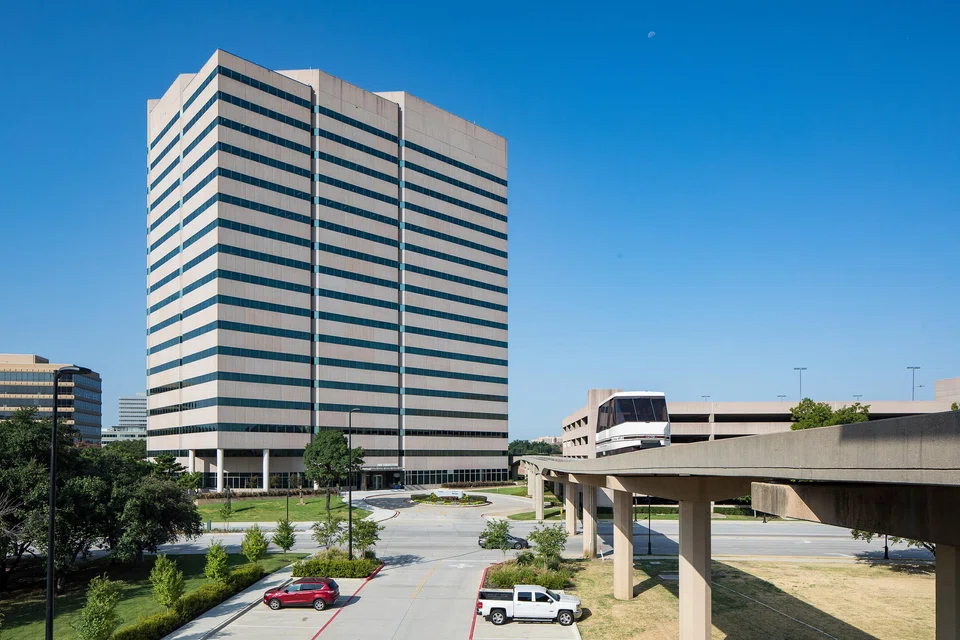
UNITS of Keppel Pacific Oak US Reit (Kore) plunged as much as 39.2 per cent on Thursday (Feb 15) morning, following the manager’s shock announcement that it would suspend distributions for the next two years.
At the midday break, the counter was down US$0.096 or 38.4 per cent to US$0.154 with 22.7 million units changing hands. It traded as low as US$0.152 in the morning session, and ended 39.6 per cent or US$0.099 lower at US$0.151, the lowest price since its 2017 listing.
The suspension of distributions caught investors by surprise, even though another US office Reit – Manulife US Reit – had also stopped distributions last year after breaching debt covenants.
Kore’s manager announced the recapitalisation plan before the markets opened on Thursday, after its leverage rose to 43.2 per cent amid a decline in portfolio valuation for the financial year ended 2023.
Chief executive of Kore’s manger, David Snyder, said at a briefing it is proactively addressing leverage concerns even though gearing is currently below regulatory and debt covenant limits.
“While the limits are truly 50 per cent, both within our covenants and within the regulatory limits, the banks – because of primarily what they’ve seen happen with at least one of our other competitors – are very reticent to lend against US offices above 45 per cent,” he said, adding that this requires the Reit to raise equity from somewhere.
Kore requires continued capital investments in its portfolio to maintain performance, occupancy and valuation, the manager said.
Other options including divestments and an equity fundraising (EFR) were evaluated. But the current US real estate market is difficult for divestments, while any EFR would also likely be insufficient to solve leverage concerns.
“I imagine most of you, on this call, feel a little bit of a sense of shock about it. You know, that was our first response to it too,” Snyder said. “But after digesting it and spending time working through, we really do feel good about this choice, but we also think it’s the best chance we have of alleviating any future funding options.”
The decision was made unanimously by both of its sponsors, Keppel and Kore Pacific Advisors as well as board and management, he added.
UOB Kay Hian analyst Jonathan Koh said suspending distributions in the second half of 2023, as well as in 2024 and 2025, will help avoid divestments at “dismally low prices” and dilutive EFR exercises.
“This is a painful decision for the management team,” he said. “Management is trying to avoid breaches to regulatory leverage limits or its debt covenants, which could lead to a potential default.”
DBS Group Research said it was “surprised” by the manager’s decision to suspend dividends up to the end of 2025, despite its operational and financial metrics being in line with estimates.
“We believe that the manager is probably proactively building up further liquidity to refinance its near-term debt expiry, in case there is a ‘funding gap’ when refinancing discussion starts sometime in the coming quarters,” said the research house. It is currently reviewing its target price and recommended call for Kore.
Kore’s distributable income for the second half ended Dec 31, 2023, fell 10.1 per cent on year to US$26.1 million.
The manager noted that the lower distributable income was due to higher financing cost and divestment of the Atlanta assets in H2 2022, partially offset by better performance from the existing portfolio.
Gross revenue for the period rose 1.3 per cent to US$74.8 million. The growth was led mainly by higher one-off income of US$1.3 million, recoverable property expenses and car park income. It was partially offset by the loss in revenue from the divestments of Northridge Center and Powers Ferry in July and December 2022, respectively.
Net property income (NPI) of US$42.2 million was up 2.3 per cent compared with H2 FY2022, as higher property-related fees and expenses were partially offset by lower property tax and expenses from the two divestments in 2022.
For the full year, distribution per unit dropped 56.9 per cent to US$0.025. Distributable income of US$52.2 million was 13.8 per cent lower than the previous financial year. Gross revenue was up 1.9 per cent to US$150.8 million, and NPI rose 2.2 per cent to US$86.1 million.
As at the end of December, Kore’s portfolio committed occupancy stood at 90.3 per cent. The weighted average lease expiry by cash rental income for its portfolio was 3.7 years.
Snyder noted that the occupancy and operating performance have largely been a result of “good asset management and the investment in the right things at the property level”.
“Continued investments into the portfolio are necessary to maintain performance, occupancy and valuation,” he said. The manager is expecting capital expenditures of around US$60 million in 2024 and around US$50 million in 2025.
Snyder noted that the suspension of distributions as well as available credit facilities should cover its capital needs in 2024 and 2025.
Kore could restart distributions sooner, if it can recapitalise by divesting assets at “reasonable valuations”.
“With no debt available for office real estate in the US, there will be very few buyers … if there are buyers, they are bottom fishers looking for massive discounts,” Snyder said, noting that any sellers in the US today are “desperate”.
He noted that Kore is not looking to sell right now, but it could sell assets when market activity returns. The manager has considered the divestment of several assets: Iron Point and 1800 West Loop South.
“If we can sell one or both of those by the end of 2024 or sometime in 2025, that would enable us to fully recapitalise,” he said. “ If we can do that before the end of 2025, we would actually love to be able to restart distributions sooner.”
The Reit’s all-in average cost of debt was 4.12 per cent, and the interest coverage ratio was 3.2 times. The weighted average term to maturity of its debt stood at 2.7 years, and 73.8 per cent of its loans had been hedged as at Dec 31, 2023, said the manager.
TRENDING NOW

Once staunchly pro-China, Malaysian Chinese businesses are now distancing themselves from Beijing

Cliff Tan has 7 million followers and a 4-month waitlist. Why won’t he expand his business?

Grab CEO’s wife Chloe Tong on life with Anthony Tan and finding her purpose
Singapore F1 to proceed despite haze; no changes planned to outdoor entertainment

