Keppel prioritises asset monetisation and digitalisation for growth
It remains on track to exceed target of S$100 billion in funds under management by end-2026, says CEO
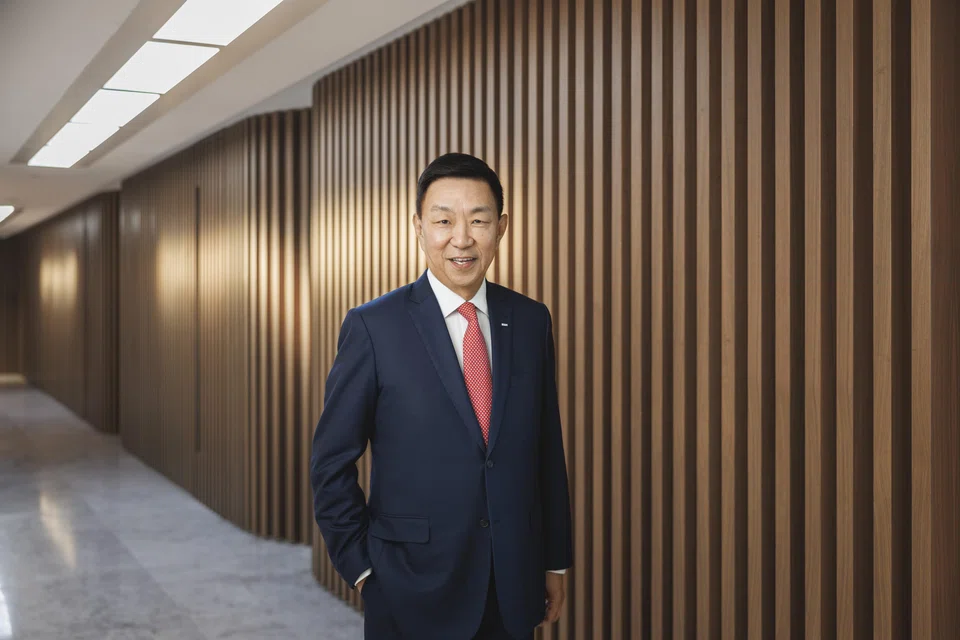
[SINGAPORE] Fund manager and operator Keppel will work towards “sustainably monetising” its non-core portfolio by 2030 to free up significant capital to fund growth, reduce debt and reward shareholders, chief executive officer Loh Chin Hua said on Thursday (Jan 1).
In his New Year’s message to employees, Loh said the group made notable progress in asset monetisation, despite facing headwinds in markets such as China’s real estate sector.
He added that Keppel continued to optimise the speed and exit value of its divestments through its Accelerating Asset Monetisation Task Force, established in early 2025.
The company’s funds under management reached S$91 billion by mid-2025 – up from S$88 billion at end-2024 – keeping it on track to surpass its target of S$100 billion by the end of 2026, he said.
In the first nine months of 2025, Keppel announced it would monetise about S$2.4 billion in assets, including the proposed sale of M1’s telco business. This brought the group’s total asset monetisation since October 2020 to about S$14 billion, counting the 2023 divestment of Keppel Offshore & Marine.
Loh noted: “The larger pension and sovereign wealth funds value Keppel’s ability as a solutions provider to offer tailored investment solutions at scale across the digital, real estate and infrastructure segments.”
'%3e%3cpath%20d='M12.1475%2025.5262C13.7713%2025.4295%2014.94%2023.913%2014.94%2021.8832C14.94%2019.5359%2013.474%2018.093%2011.5917%2018.093C11.3745%2018.093%2010.9582%2018.093%2010.8393%2018.1413V25.2086L11.8891%2025.5745C11.8891%2025.5745%2012.207%2025.5262%2012.1475%2025.5262ZM11.4934%2017.6281C13.2567%2017.6281%2014.3843%2016.4292%2014.3843%2014.4501C14.3843%2012.372%2013.275%2011.2973%2011.4339%2011.2973H10.8393V17.6305H11.4934V17.6281ZM6.66078%2025.6482L7.39265%2025.5492C8.02617%2025.4502%208.26403%2025.3053%208.26403%2025.1097V11.6149C8.26403%2011.4193%208.1451%2011.3709%207.23484%2011.249L6.68137%2011.173L6.6219%2010.7588H11.9508C15.7153%2010.7588%2017.0624%2012.0797%2017.0624%2014.1578C17.0624%2015.9666%2015.7748%2017.1909%2013.4969%2017.6305V17.7041C16.111%2017.948%2017.6571%2019.5382%2017.6571%2021.7636C17.6571%2024.3318%2015.8937%2026.0417%2012.1109%2026.0417H6.60132L6.66078%2025.6482Z'%20fill='%232B2B2B'/%3e%3cpath%20d='M20.6287%2025.6505L21.5596%2025.5515C22.1725%2025.4779%2022.4104%2025.3076%2022.4104%2025.112V11.249H21.9346C20.073%2011.3479%2018.982%2013.0095%2018.408%2014.6227L18.1907%2015.5018H17.6555L18.1701%2010.7588H29.3837L29.6421%2015.4787H29.1664L28.9491%2014.6227C28.3728%2012.8645%2027.3047%2011.2743%2025.5002%2011.249H24.9856V25.1856C24.9856%2025.3812%2025.1251%2025.4548%2025.9965%2025.5515L26.7695%2025.6505L26.829%2026.0417H20.5693L20.6287%2025.6505Z'%20fill='%232B2B2B'/%3e%3c/g%3e%3cdefs%3e%3cclipPath%20id='clip0_5242_21648'%3e%3crect%20width='24'%20height='16.8'%20fill='white'%20transform='translate(6%2010)'/%3e%3c/clipPath%3e%3c/defs%3e%3c/svg%3e)
As Keppel expanded its offerings and capabilities, it also sharpened its focus on the adoption of automation and digitalisation, he said, citing partnerships with technology companies.
These include Amazon Web Services and Dell, with such pacts granting Keppel access to the latest digital innovations for developing new solutions.
“Besides productivity and efficiency gains, we see artificial intelligence (AI), coupled with our deep operating and investing know-how, giving us valuable insights and competitive advantage that will drive long-term value growth for Keppel and for our investors,” Loh added.
Alongside AI adoption, he noted that the company has enabled the growth of the technology through its investments in energy transition, data centres, subsea cable connectivity and investment solutions.
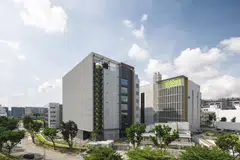
In 2025, Keppel expanded its portfolio of AI-ready data centres, and intends to begin the construction of its floating data centre project soon, he said. The group also completed the world’s first subsea cable system linking Singapore to the US West Coast through Indonesia.
Keppel also invested in Singapore’s first hydrogen-compatible power plant, which is scheduled to begin operations in the first half of 2026.
What’s next for Keppel?
Loh expects the new year to be accompanied by market volatility and a challenging geopolitical environment. He said that inflation will likely strengthen institutional demand for real assets with resilient, inflation-hedged cash flows.
“These trends favour asset managers who can originate, develop and operate such assets with discipline, particularly across secular themes such as energy transition, AI and digitalisation, as well as sustainable urbanisation,” he added.
Noting that investing in the energy transition and scaling AI adoption require significant amounts of capital, he said Keppel can leverage its fund management and investment expertise alongside its operational capabilities.
“This allows us to offer attractive opportunities to our limited partners, and also undertake such capital-intensive projects, beyond what our balance sheet could otherwise have been able to support.”
In the year to Dec 31, shares of Keppel advanced 50.7 per cent. The counter closed Wednesday up S$0.06 or 0.6 per cent at S$10.35.
Decoding Asia newsletter: your guide to navigating Asia in a new global order. Sign up here to get Decoding Asia newsletter. Delivered to your inbox. Free.
Copyright SPH Media. All rights reserved.