Keppel Reit doubles down on growth strategy amid uncertainty
The manager’s top priority is ‘sticking to its fundamentals’ and taking the long view amid potential headwinds on multiple fronts

Ry-Anne Lim
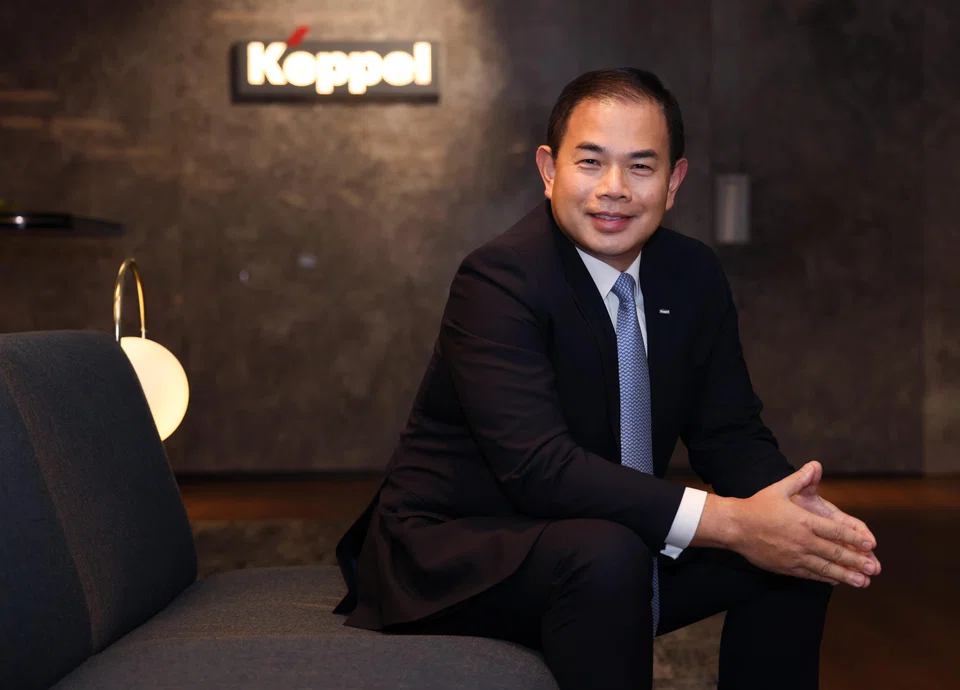
IT HAS been a challenging few years, with a global pandemic wreaking havoc on the economy, growing inflationary pressures, and a fast-changing macroeconomic climate. Yet, Keppel real estate investment trust (Keppel Reit) has held firm through it all, blooming in adversity.
The trust’s property income has steadily grown in the past five years.
In its latest financial year ended December 2023, property income was up 6.3 per cent at S$233.1 million, from S$219.3 million in the previous year-ago period. Compared with FY2019, property income grew by around 42 per cent from S$164.1 million.
While distributable income was down by a slight 1 per cent year on year in FY2023 at S$218.7 million, it was still up 15.5 per cent from FY2019’s S$189.3 million.
In just under two decades, the Reit’s assets under management have grown from around S$600 million to S$9.2 billion.
According to Koh Wee Lih, chief executive of Keppel Reit’s manager, the group’s blueprint for growth is rather simple – to commit to its core operating principles of prudent capital management, portfolio diversification and optimisation, and taking the long view to preparing for the future, especially in the face of uncertainty.
A prime example of this is the Reit’s entry into the Tokyo office market in October 2022, when the manager acquired a freehold boutique office building in the Ginza district for 8.8 billion yen (S$84.4 million).
Koh explained that Japan has the largest commercial real estate market in the Asia-Pacific, making it an ideal one to capitalise on. Between 2013 and 2023, for example, property consultancy Knight Frank found that an estimated US$16.2 billion was injected into the country’s commercial real estate market.
“For us, being a long-term player seeking that kind of stability and growth, I think Japan is a very essential part of our portfolio construction,” Koh said.
As with any other investment, Koh highlighted that it was crucial for them to “tread carefully” and plan ahead when making the acquisition. That meant fixing interest rates for five years, which has worked out in their favour given that Japan’s central bank just ended its negative interest rate regime on Mar 19, hiking rates for the first time in 17 years.
The Ginza acquisition – which achieved full occupancy in January this year, from 36.3 per cent in 2022 – has now laid the foundation for future expansion in Japan’s well-established office market, and helps the manager drive “sustainable long-term return” for unitholders, said Koh.
Headwinds ahead
Still, the chief executive sees some challenges brewing on the horizon.
The biggest of which is “obviously” rising interest rates, he said. Distributable income was down slightly in FY2023 mainly due to increased borrowing costs, for instance. Some 22 per cent or around S$800 million of its total borrowings are also due for refinancing this year, in the current high-rate environment.
But Koh remains unperturbed, pointing out that the Reit benefits from being part of the larger Keppel group, which is “well-supported” by its relationship with both local and international banks. “So we will continue to get good support (from them).”
The manager therefore expects an all-in interest rate of around 3.50 per cent per annum in 2024, up from 2.89 per cent per annum in 2023.
Furthermore, the Reit’s aggregate leverage as at Dec 31 was 38.9 per cent, with 75 per cent of the borrowings on fixed rates. Interest coverage ratio stood at 3.4 times. “You can’t fight this macro trend, but (overall), I think we managed our interest rate exposure very well,” said Koh.
He added that interest rates are likely to be lower in a year’s time, and in which case, the manager would be ready to “seize the opportunity”.
“That’s why we need to control or manage our capital structure appropriately because this is one competitive advantage that we have,” he said.
Market observers also expect an influx of Grade A office supply in the next two years, especially in Singapore and Tokyo, which account for a combined 80.1 per cent of the Reit’s portfolio.
In Singapore, for example, the opening of IOI Central Boulevard Towers this year will add 1.26 million square feet of Grade A office space into the central business district. In Tokyo, an “unprecedented” large-scale supply is expected to come on stream in 2025, with developers launching over 661,157 square metres of Grade A office space in the city’s central wards.
This is why the Reit’s manager has in place mitigating measures such as a continuous asset enhancement pipeline to boost asset and rental value, said Koh. “Hopefully the good service and premium products that we provide continue to retain and attract new tenants.”
Keppel Reit’s office tower in the Ginza district within the Chuo ward was also purposefully chosen for this reason, Koh pointed out.
Chuo is one of Tokyo’s core wards and home to major Japanese corporations such as the Bank of Japan and the Tokyo Stock Exchange. That makes the asset close to a few “more mature industries”, he said.
The tenants they have drawn so far are thus mainly local companies, which tend to be “very sticky”, unlike multinational corporations, said Koh.
Going forward, Koh remains optimistic about the Reit’s outlook, noting healthy demand and a resilient office market despite potential headwinds.
“I think these recent challenges have forced a lot of people to relook at the fundamentals, which is what we’ve been looking at all along,” he said.
“(When) cheap money was plentiful, people would borrow at 3 per cent and invest at 5 per cent, regardless of some long-term fundamentals. But I think those leveraged players have definitely suffered as a result, and those who focus on long-term fundamentals will prevail.”
More acquisitions of new assets may be on the cards to push further growth in the future, Koh added. “I really like to think that the best days are still ahead of us.”