Keppel, Sembcorp, SIA down as STI dips 1% after US resumes Iran shipping blockade
US-Iran hostilities have resumed, with Trump outlining a new 20% Hormuz toll

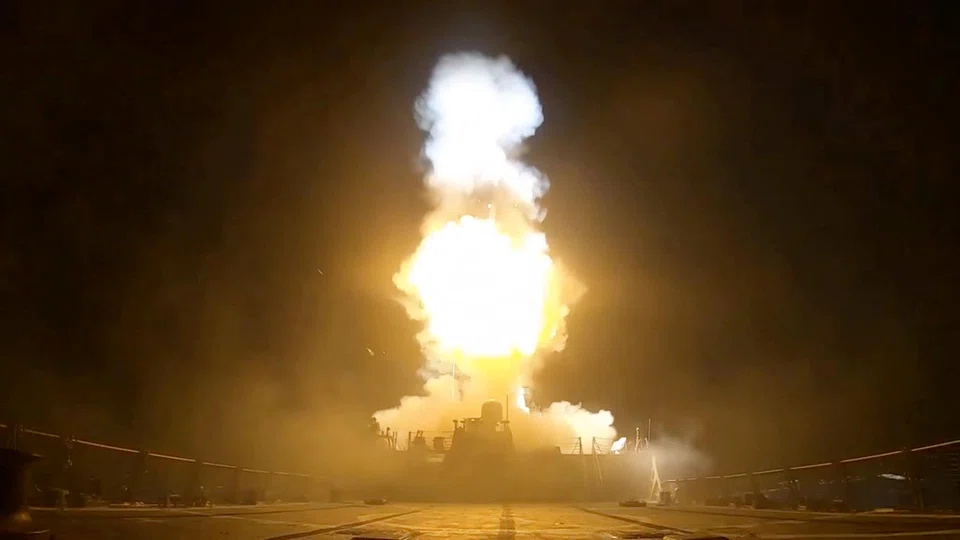
[SINGAPORE] The Straits Times Index (STI) took a 1 per cent hit on Tuesday (Jul 14) morning as investors reacted negatively to renewed hostilities overnight between the US and Iran.
Keppel fell as much as 3.6 per cent to S$11.17 within the first hour of trading, while Sembcorp shares were down as much as 2.1 per cent at S$5.51. The counters closed 1.3 per cent and 2.1 per cent lower, respectively.
This dragged the STI down to as low as 5,411.59, with energy-exposed stocks such as Singapore Airlines falling as much as 2.2 per cent.
The index later pared most losses and was down 0.1 per cent at noon, before closing 0.5 per cent higher.
Only a handful of stocks were up, with the Singapore Exchange largely showing a sea of red across the board.
Smaller energy players such as RH Petrogas and Oiltek gained more than 6 per cent each, though Oiltek was up only about 2 per cent at noon. The counters ended Tuesday 7.2 per cent and 11.9 per cent higher, respectively.
Rex International was also up about 3 per cent, before ending the day 6.1 per cent higher.
The US reimposed its naval blockade of Iran in the early morning of Tuesday as the two countries traded blows in the Strait of Hormuz, renewing fears around energy flows.
US President Donald Trump also declared that a toll would be imposed on seaborne cargo transported via the Strait of Hormuz.

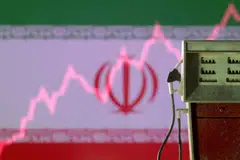

“The USA will be, from this point forward, known as ‘THE GUARDIAN OF THE HORMUZ STRAIT’, but as such, and as a matter of FAIRNESS, will be reimbursed, at the rate of 20 per cent on all cargo shipped,” he wrote on Truth Social.
That would translate to about a US$30 million tax on supertankers carrying their maximum capacity of about two million tonnes of oil.
Iran foreign minister Abbas Araghchi wrote on X that the country would remain the eminent authority over the strait “forever”, adding that a 20 per cent toll was “too much” and that “Iran will be fair”.
Iran had previously charged as much as US$2 million per vessel on an adhoc basis, said Bloomberg, citing sources.
Crude oil also extended gains as stocks across Asia fell, with inflation fears intensifying. Brent prices climbed 1.6 per cent to about US$84.65 a barrel, having soared 9.6 per cent on Monday in what was its biggest gain since May 2020.
Decoding Asia newsletter: your guide to navigating Asia in a new global order. Sign up here to get Decoding Asia newsletter. Delivered to your inbox. Free.
Copyright SPH Media. All rights reserved.