Keppel shareholders should 'hope for the best, prepare for the worst' on Temasek's offer

Anita Gabriel
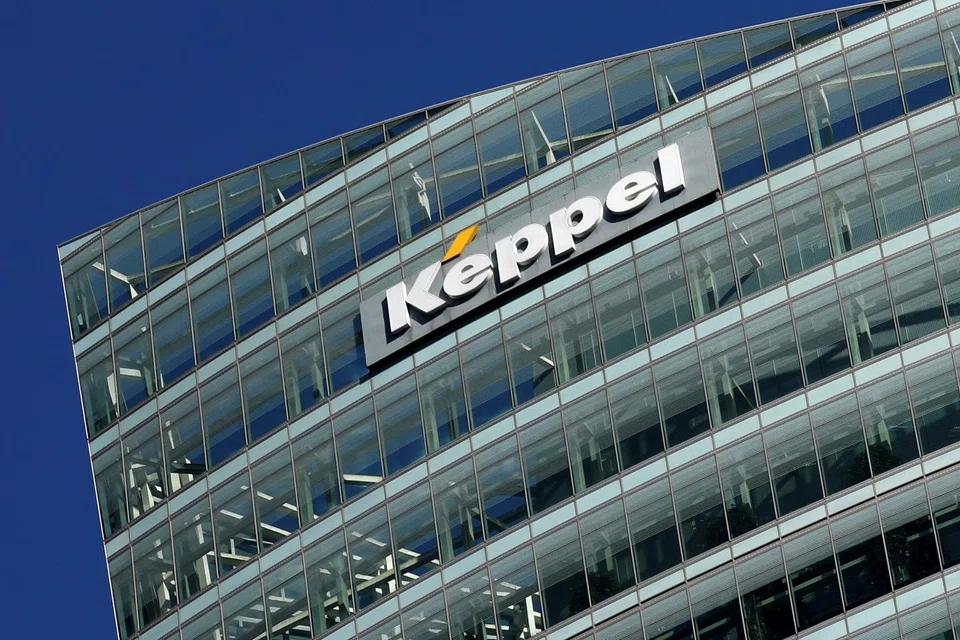
"DEAL or no deal?" has been trending among investors since Keppel Corp's record quarterly loss cast a cloud over Temasek Holdings' bid for the conglomerate.
Keppel posted a staggering S$697 million loss for the three months to June from a net profit of S$153 million a year ago, led by huge impairments of S$919 million on the back of a gloomy offshore and marine backdrop.
With that, it has breached a key metric for Temasek's pre-conditional S$4 billion partial offer for Keppel shares at S$7.35 per share. (In mid-June, when the market had mostly chosen to dismiss the impairment overhang, this writer had forewarned that such looming risks could cloud the deal's fate).
This pre-condition falls under the deal's Material Adverse Change (MAC) clause, whereby Keppel's profit after tax (PAT) must not fall by more than 20 per cent or below S$557 million over the cumulative four quarters from the third quarter ended September 2019. Given the latest showing, Keppel's cumulative PAT for the 12 months up to and including end-June 2020 stood at a negative S$165 million.
Clearly, the third quarter is going to be a no show for Keppel to reverse the outcome. For that to happen, the diversified firm will need to pull off a PAT of S$887 million for the three months ending September 2020 - a highly unlikely event given the weakened backdrop and as pointed out by DBS analyst Ho Pei Hwa, considering its average quarterly profit over the past four years of some S$200 million.
That leaves the ball squarely in Temasek's court on how it wants to proceed.
While the deal's long-stop date is Oct 21, anxious shareholders of Keppel deserve some clarity sooner. So, it helped that a day following Keppel's results announcement, it was disclosed that Temasek will decide on whether - or not - to invoke the MAC clause and walk away from the offer by Aug 31.
If it opts to go ahead with the deal, as most Keppel shareholders must be hoping, two other scenarios could play out - the state investment firm could waive the MAC trigger and stay on the deal on current terms or it could revise the offer with the nod of the Securities Industry Council of Singapore.
Keppel's stock reaction on Monday seemed to lean more to a no-deal scenario - it plunged 4 per cent or 22 Singapore cents to S$5.18, inching closer to its trough of S$4.93 in mid-March - a horrid month for oil prices amid a demand shock sparked by Covid-19.
Bear in mind that this is all happening as shareholders of Sembcorp Industries (SCI) and Sembcorp Marine (SembMarine) lodge their proxy forms ahead of the Aug 11 extraordinary general meetings to be held by electronic means to vote on the proposed demerger of the two firms and the marine giant's massive S$2.1 billion cash call.
These key events are separate but not altogether unconnected from the Keppel bid given Temasek's involvement - the state firm is backstopping S$600 million of SembMarine's rights issue and post-transactions, will emerge with a direct chunk in the marine firm.
Some analysts opine that if the SCI-SembMarine proposals snag shareholders' vote, there is a higher chance of Temasek forging ahead with the Keppel offer. Such notions may be largely premised on the big-picture speculation of a commercially-compelling consolidation of Singapore's giant rigbuilders once these deals are done and dusted. But let's not get ahead of ourselves just yet.
Should I stay or go?
When viewed from the lens of Temasek as a long-term investor, it may not be unreasonable to expect the investment firm to view the current tumult as a medium-term aberration and stick to its original case to raise its ownership in Keppel to a majority holding to shake things up at the firm to "create sustainable value".
"The decision to increase its stake in Keppel is based on long-term considerations. Walking away is likely a last resort than a first option," remarked Mak Yuen Teen of NUS Business School.
But from the value investing perspective and beyond a certain point, Temasek may find it hard to defend a deal at that price tag.
Even so, it's hard to fathom how Keppel's results could have come as a big shock for a skilled investor like Temasek. After all, oil's sorry state of affairs is well documented - oil majors have deferred activity and hurt day rates and utilisation rates of O&M providers while many oilfield services firms including rig players have filed for Chapter 11 bankruptcy protection in the US.
Another reason that backs the expectation that Temasek may not abandon the deal is that it has been lending its heft to aid portfolio companies (think Singapore Airlines and SCI-controlled SembMarine) that are hurting in the current climate.
In Keppel's case, however, Temasek's involvement is less a matter of survival, but more to do with a transformative agenda to unlock value - a process which Temasek could still guide by working with Keppel with its existing 20.45 per cent stake.
Note that excluding impairments, Keppel reported a commendable net profit of S$222 million - up 45 per cent from a year ago - which analysts attribute to the success of the group's multi-business strategy that includes property, infrastructure and investments apart from O&M.
In short, it appears that Keppel could hold its own with or without Temasek's offer, although the latter is an unfavourable outcome for Keppel's shareholders who were banking on the deal, that was launched last year under very different and chirpier circumstances, happening.
On that note, it would be wise for the market to brace for some disappointment. With these factors in mind, the "hope for the best, prepare for the worst and be unsurprised by anything in between" expression may be a handy mantra for current times.