

Keppel should take heart from its success and make a firm pledge on Scope 3 emissions
Its business model includes importing natural gas and managing asset portfolios so the bulk of its emissions impact falls under Scope 3
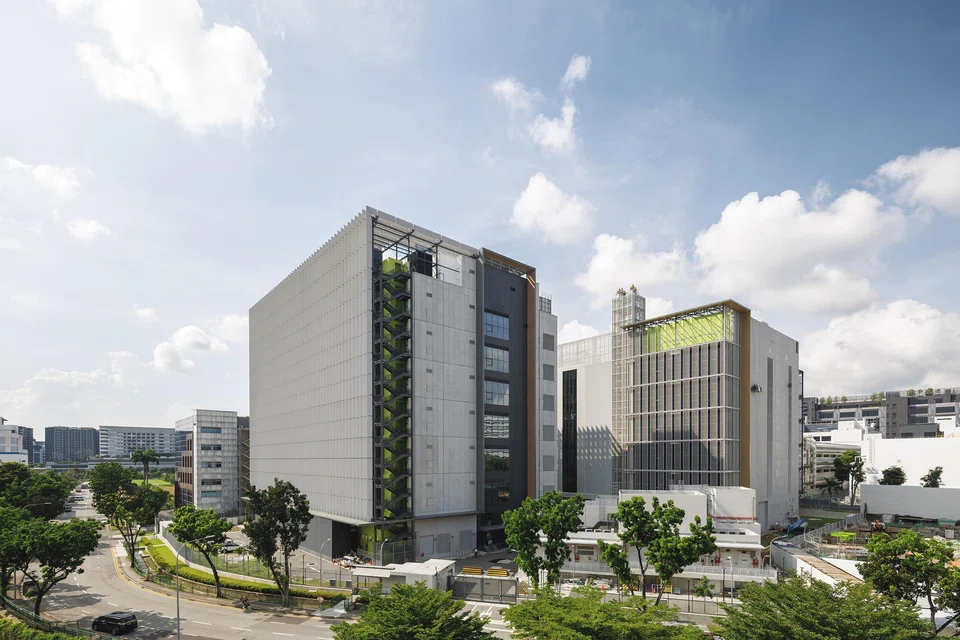
HAVING made good progress on its initial emissions targets, it may be timely for asset manager Keppel to raise its ambitions and commit to addressing the significantly larger carbon footprint of its supply chain.
In its latest sustainability report, Keppel posts Scope 1 and 2 emissions of 21,312 tonnes of carbon dioxide equivalent (tCO2e) for 2025, which represent an 87.6 per cent reduction from a 2020 baseline. This is well ahead of its interim goal, set in 2021, of halving Scope 1 and 2 emissions by 2030. The group is also significantly ahead of schedule on its 2050 target to hit net zero on Scope 1 and 2 emissions.
The progress is commendable, and has come on the back of a robust decarbonisation strategy backed by steady execution. In 2024 and 2025, Keppel committed to S$5 billion of sustainability-linked financing. In 2025, the company spent S$108 million on innovation, including research and development into clean technology, and into green and smart buildings.
Keppel further set a target to source 50 per cent of electricity use from renewables in 2025. The company achieved 60.8 per cent of electricity from renewables in 2025, up from 40.7 per cent in 2024.
Yet for all of that progress, the emissions targets that Keppel set in 2021 address less than a per cent of the group’s total emissions impact. Scope 1 emissions refer to greenhouse gases directly produced by Keppel in its operations, such as the use of fuels and refrigerants. Scope 2 covers emissions produced from purchased heat, cooling and power.
But Keppel’s business model includes importing natural gas to Singapore and managing portfolios of assets, significant portions of which are in infrastructure and real estate. This means that the bulk of Keppel’s emissions impact falls under what is termed Scope 3, which covers emissions indirectly produced in a company’s supply chain such as customers’ emissions from consumed gas or purchased construction services and office equipment. Yet Keppel’s formal emissions commitments omit Scope 3.
For 2025, Keppel reported Scope 3 emissions for categories that are relevant to the group of 6.7 million tCO2e, up 11 per cent year-on-year. The increase was primarily due to higher natural gas sales for Singapore’s electricity needs, accounting for about 83 per cent of the group’s Scope 3 emissions.
To Keppel’s credit, the group has consistently acknowledged and worked on addressing its Scope 3 impact. Its climate strategy includes plans to reduce Scope 3 emissions, with detailed approaches to its top three sources of said emissions.
Keppel’s real estate division even has an internal commitment to reduce Scope 3 emissions from purchased goods and services by 20 per cent per square metre by 2030 from its 2020 base year. However, the company has stopped short of including this as a formal commitment on the group level, and progress on that front is not reported. Keppel’s sustainability-linked financing framework also does not include Scope 3 emissions as a performance target.

Addressing climate risks and opportunities is an unavoidably long journey for companies, given evolving reporting standards and the work required to set up reporting systems. Starting with Scope 1 and 2 emissions was an appropriate approach for Keppel in light of what was feasible.
But navigating the climate transition also requires regular recalibration to ensure meaningful progress. Keppel’s largest exposure to climate risk and opportunities does not lie in the narrow boundaries of Scope 1 and 2 emissions. It rests in the company’s supply chain as the operator of a nationally strategic gas supply business and the manager and operator of a vast portfolio of assets.
Taking firm pledges on Scope 3 reduction and reporting on progress provides investors and other stakeholders with vital information about how well the group is addressing those risks and opportunities.
Commitment always carries a risk of disappointment, but Keppel can take courage from its success so far on Scope 1 and 2. The group has already laid much of the foundation for taking the next step on its Scope 3 emissions, now it just has to commit.
This article previously appeared in the ESG newsletter on May 29
Decoding Asia newsletter: your guide to navigating Asia in a new global order. Sign up here to get Decoding Asia newsletter. Delivered to your inbox. Free.
Share with us your feedback on BT's products and services
TRENDING NOW

Once staunchly pro-China, Malaysian Chinese businesses are now distancing themselves from Beijing

Looking beyond looming CEO succession, should UOB potentially pursue a transformative merger?

Could stablecoins be the future of money?

Grab CEO’s wife Chloe Tong on life with Anthony Tan and finding her purpose

