

Keppel’s M1 sale stalls as IMDA probes alleged spectrum breaches by Simba
The asset manager says it will now execute a ‘Plan B’

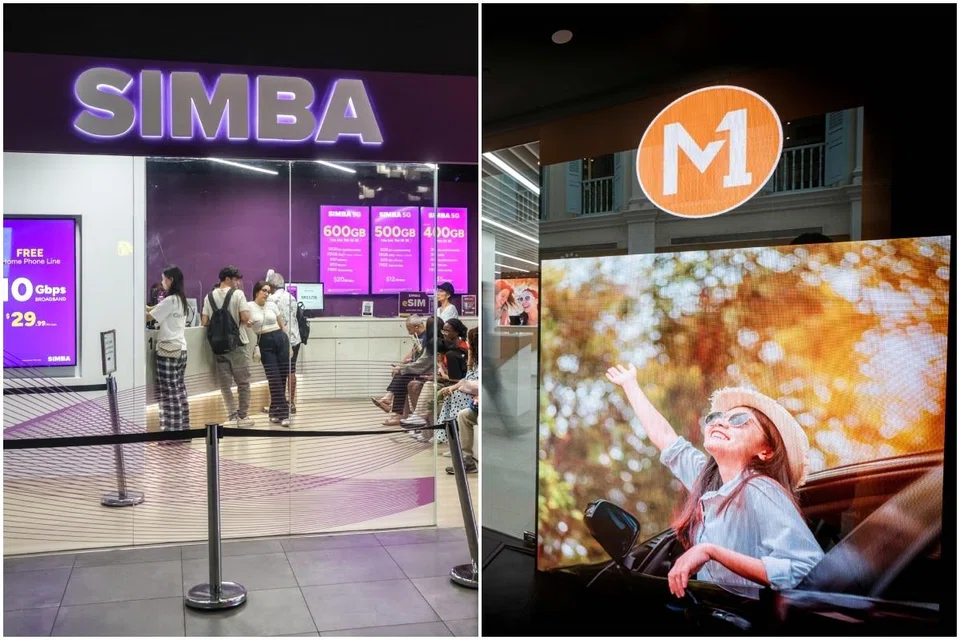
[SINGAPORE] The Infocomm Media Development Authority (IMDA) has halted its assessment of the proposed consolidation between M1 and Simba Telecom until further notice.
The suspension comes after the authority learnt that Simba could have been using radio frequency bands that it was not assigned to provide mobile services.
“This would constitute unauthorised use of frequency spectrum, which is a breach of the Telecommunications Act 1999 and the conditions of Simba’s Facilities-Based Operations Licence,” IMDA said on Monday (May 18).
The authority said it will take enforcement action if it establishes that a breach of the rule has occurred. It has suspended its review of the proposed consolidation while it investigates the matter.
IMDA said it has been assessing the proposed deal according to the framework set out in the Telecom and Media Competition Code, which entails evaluating whether the consolidation would “significantly lessen competition or raise public interest concerns”.
This also includes ensuring that the operation of critical telecommunications infrastructure meets the stringent cybersecurity requirements necessary in a heightened cyber-risk landscape.
“Since M1... operates large mobile and broadband networks in Singapore, the assessment has necessarily been detailed and thorough,” said IMDA.
Keppel – which in August 2025 proposed the S$1.43 billion sale of its M1 telco business to Simba – said on Monday that it will respect IMDA’s decision.
The proposed divestment will be removed from the group’s announced monetisation for 2025, even as its target to monetise S$2 billion to S$3 billion of non-core assets in 2026 “remains unchanged”.


Keppel said it has been working on a “Plan B”, in case it retains majority ownership of M1, which it will now start executing.
The asset manager said it intends to focus on “enhancing M1’s efficiency to improve its run rate Ebitda (earnings before interest, taxes, depreciation and amortisation) through rightsizing the company and reducing costs, without adversely affecting customer experience”.
This is in response to the “significant challenges” plaguing the telecommunication industry in Singapore, it added.
A 90-day plan to drive M1’s efficiency will be activated “with immediate effect”, said Keppel.
This plan includes reducing technology platform costs and network costs, using artificial intelligence for automation, as well as product rationalisation.
“Even as we undertake the efficiency drive at M1, we believe that the telecommunication industry in Singapore needs and will benefit from consolidation and Keppel remains open to opportunities for divestment,” the asset manager said.
Shares of Keppel fell as much as 5 per cent to S$10.07 in early trade on Monday before paring some losses to close the day at S$10.38, down 2.1 per cent or S$0.22.
Proposed S$1.43 billion deal
Keppel on Aug 11, 2025, proposed divesting its 83.9 per cent effective stake in M1’s telco business to Simba. The all-cash deal had a S$1.43 billion enterprise value and was to net Keppel nearly S$1 billion in cash.
One day after news of the proposed sale broke, StarHub announced its S$105.2 million purchase of the remaining stake in MyRepublic’s broadband business that it did not already own.
The announcements seemed to confirm oft-discussed speculation about consolidation in a crowded telco market that has grown increasingly competitive over the past decade.
M1, Simba and other relevant parties on Sep 26, 2025, submitted a consolidation application to the IMDA.
On Mar 26, 2026, Keppel announced a joint agreement with Simba to extend the long-stop date for the proposed deal to May 21.
Keppel will, however, disregard the S$1 billion it had expected to book from the sale from its announced monetisation for 2025.
IMDA, which regulates the telco and media industries, said that in the course of its review of the deal, Simba was found to have used radio frequencies it was not assigned.
IMDA has commenced an investigation to the alleged flouting of the Telecommunications Act 1999 and the conditions of Simba’s Facilities-Based Operations Licence.
Decoding Asia newsletter: your guide to navigating Asia in a new global order. Sign up here to get Decoding Asia newsletter. Delivered to your inbox. Free.
Copyright SPH Media. All rights reserved.
TRENDING NOW

LTA proposes combining car COE categories, adding rebate-surcharge system

StarHub to acquire MyRepublic’s mobile business amid ongoing telco consolidation

DBS, OCBC, UOB rout lops billions off STI as inflation, rate concerns spook investors

Grab CEO’s wife Chloe Tong on life with Anthony Tan and finding her purpose

