Koufu focuses on homeground expansion amid Covid-19 pressures
Earlier plans to deepen bubble tea footprint and offer meatless dining concept in the region are on hold
Singapore
FOOD and beverage (F&B) company Koufu Group plans to focus its energy on homeground expansion this year, now that its planned overseas expansion will have to take a backseat amid the Covid-19 situation.
This year has not been easy for the company. Sales at its Singapore restaurants, food courts, and coffee shops fell by "a substantial amount" during the "circuit breaker", after it temporarily suspended the operations of 10 food courts and five restaurants to cut operating costs.
According to Bloomberg data, the consensus estimate for its FY2020 revenue is S$201 million - 16 per cent lower year-on-year. Net profit is expected to decline 31 per cent to S$19.2 million.
The stock, which has recovered 24 per cent from its trough in April, is down 12 per cent for the year, finishing at S$0.68 on Tuesday. That still compares favourably with the Straits Times Index, which is down 18 per cent year to date. The stock trades at 13.7 times its historical earnings and has an indicated dividend yield of 4.4 per cent.
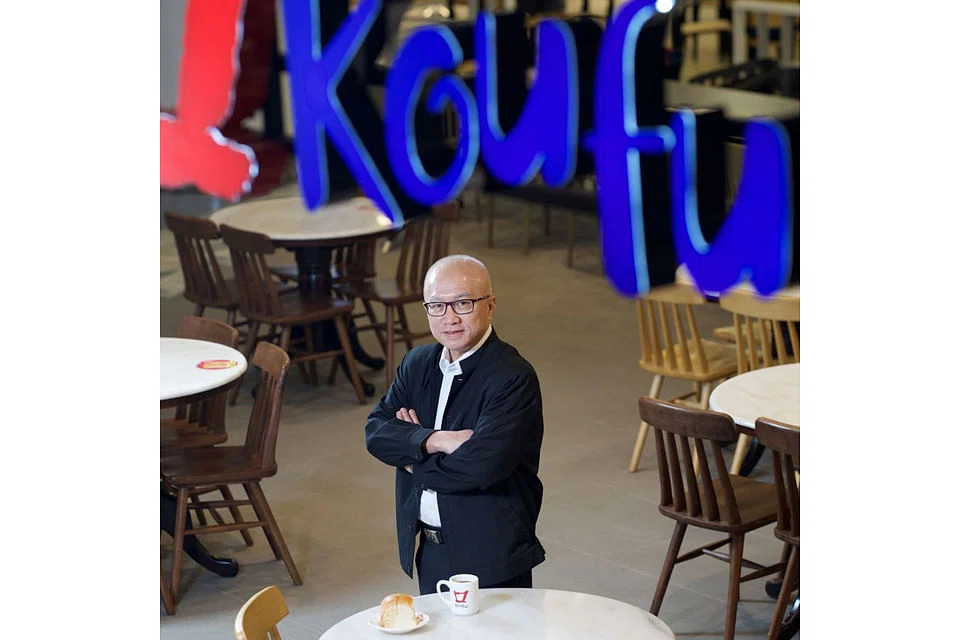
Pang Lim, Koufu's founder and CEO, called Covid-19 the biggest challenge he has ever faced in all the 17 years of Koufu's operation.
Earlier plans to deepen its bubble tea footprint in Indonesia and the Philippines, as well as plans to offer its meatless Elemen dining concept in China, Australia, Malaysia and Indonesia, have been placed on the back burner due to continued travel restrictions.
"Bringing in any new concept to a new market now will be challenging, but that does not mean we completely throw out the idea of expansion abroad," he told The Business Times in Mandarin in an interview. He added that Koufu will wait until the virus situation has eased before it proceeds.
Meanwhile it continues to focus on growing its domestic business.
Mr Pang said the decline in footfall during the "circuit breaker" was partially mitigated by an increase in delivery services.
Noticing a change in consumption patterns among diners, the group has doubled down on efforts to improve its "Koufu Eat" mobile app to facilitate food deliveries. It believes that this will also help to soften the impact on dine-in numbers now that seating capacity at its eateries is reduced. About 70 to 80 per cent of its stall tenants are already on the app.
Since Phase 2 began in mid-June, sales have rebounded. But they remain below pre-Covid-19 levels.
Koufu is also growing its coffee shop and food court footprint in Singapore, particularly in hospitals, commercial malls, tertiary institutions and new housing estates. About two-thirds of its outlets are located in heartland areas and made up about about 70 per cent of Koufu's FY2019 revenue.
The group opened two coffee shops at Tampines and Compassvale Drive this year, and plans to open at least one more at Le Quest condominium at Bukit Batok.
As business activity has slowed, Mr Pang said that government tenders for coffee shops and food courts have slowed as well. According to a June CGS-CIMB report, an average of 10 to 12 new sites are put up for bidding yearly by the Housing and Development Board. Up to 20 may be available in a good year. Koufu's track record and competitive pricing has enabled it to enjoy a higher win rate than its peers, said the report.
Mr Pang said that as a Singapore business, it has always been Koufu's strategy to deepen its roots in its homeground. "But given the difficulties that the F&B sector is facing, we will proceed very cautiously in our assessment of these opportunities . . . Every outlet we open and every acquisition we make has to fit in with our long-term business development plan," he added.
Koufu this month announced the acquisition of Deli Asia and three other companies that collectively make up its biggest suppliers of fried food and dough products.
Mr Pang said the deal made perfect sense because Koufu has the presence in Singapore to distribute its fried food and dough products to a wider market. As at end-December last year, Koufu ran 72 self-operated F&B stalls, 27 F&B kiosks, seven quick-service restaurants and four full-service restaurants here.
Koufu intends to integrate production of these products into its new 20,000 sqm headquarters building, which is targeted for completion by the end of this year, barring further construction delays.
The new seven-storey integrated facility in Woodlands will house a larger central kitchen, a research and development centre to develop new recipes and analyse market trends, as well as smaller central kitchen units that will be rented out to chain stall operators to support their growth. This will also generate recurring rental income for the group.
Asked whether Koufu is eyeing any other targets amid talk of continued industry consolidation in Singapore's F&B industry, Mr Pang said the company will focus on stabilising and integrating its new acquisitions first, as well as ensure it can value-add to these businesses, before it looks at other deals.
In spite of the effects of the pandemic, the company still aims to reinvest half of its net profit back into the business. The other half is intended for distribution as dividends.
Analysts continue to like Koufu because of its stable cash flow, strong balance sheet, and focus on the mass market segment. They also expect Koufu to remain profitable, thanks to the government's Job Support Scheme and foreign worker levy waiver, as well as rental relief from its landlords.
Mr Pang is not beaten down either, saying: "The crisis won't last forever; it will pass. So what we are doing now is to prepare for the future, so that when the pandemic is finally over, we can swifty return to our growth trajectory."