

KPMG Singapore’s new managing partner says ESG is next big growth opportunity

Renald Yeo
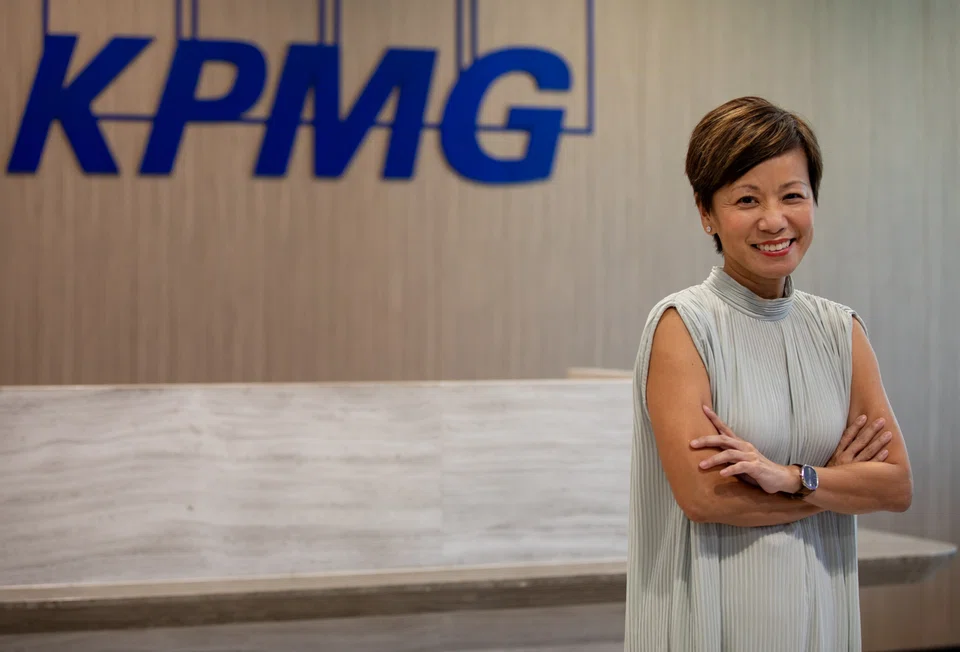
KPMG in Singapore is banking on environmental, social, and corporate governance (ESG) services to drive growth, as businesses in the Republic face an urgent imperative to adopt sustainable practices.
The Singapore office of the professional services giant is training staff and building its own capabilities accordingly, managing partner Lee Sze Yeng told The Business Times in an interview shortly after taking on the role.
Lee, formerly deputy managing director and head of audit, took over in October from Ong Pang Thye, who had been managing partner since 2016.
ESG efforts are an ongoing journey for many organisations, each of which is at a different stage of maturity, noted Lee. “The level of help they need will be quite different, and the skill sets that our people need to be equipped with are also different.”
In June, KPMG in Singapore committed to invest S$50 million over the next five years in innovation and technology, with a “significant proportion” of this going towards ESG capability development.
The focus is on two ESG-related services: helping companies put in place emission reporting systems, and helping them navigate sustainability assurance requirements.
One client pool the firm is keen to target is local fintech startups that deal with ESG-linked digital assets and data.
Such startups are grappling with an increasingly competitive marketplace as well as increasingly complex ESG requirements, Lee told BT.
To ensure staff are well-versed on the topic, KPMG has rolled out a series of ESG-related trainings over the past year for its 4,000-odd employees in Singapore.
“It is something that they need to continue to learn, because things evolve very fast and it is a very big topic,” said Lee.
“That will also help them to build awareness, to increase the level of proficiency and also to be able to future-proof themselves,” she added.
Beyond ESG, other priority areas for KPMG in Singapore include advising clients on technology and data, and deploying digital tools to enhance its audit capabilities.
These include helping clients to come up with ways to improve their bottom line, be it through automation or the introduction of technologies like artificial intelligence, Lee said.
Not a boring field
KPMG’s headcount has risen around 15 per cent this year, from 3,400 in 2022, even as the assurance sector faces troubles with recruitment.
“It’s not just in Singapore,” noted Lee. “(While) talking to fellow professionals in other countries, (we have realised that) we all have a shortage in terms of people wanting to join.”
The shortage is particularly acute for the roles of audit, tax and advisory, which typically require an accountancy background.
Lee suggested that both firms and universities were “not doing a good-enough job” explaining what the accounting profession is about.
The industry can be seen as “boring” and heavily technical, she said, whereas the reality is that it is also a people-centric business.
“It is not just technical knowledge – it is how you manage stakeholders, how you work as a team.”
Another problem is the perception that salaries of accountancy graduates lag behind those of their peers from similar disciplines, even after a few years in the job, she said.
In 2022, the median monthly gross salary was S$4,000 for fresh honours graduates who majored in accountancy at the National University of Singapore. The equivalent for business administration majors was S$4,696.
Salaries for graduates from Nanyang Technological University and Singapore Management University tell a similar story, with median monthly gross salaries for accountancy graduates generally 15 per cent to 20 per cent lower than that of their business administration peers.
The comparatively lower starting salaries do not tell the full story over the short to medium term, Lee said, adding that the accounting profession has structured, regular promotions – which come with a corresponding bump in pay.
“You can see very quickly that they will reach a certain level of pay; and (for) their friends that started other jobs, the increment may not be as much,” she added.
“Again, I think this is something that, maybe, we did not do a good-enough job to explain.”
TRENDING NOW

Two Singapore-listed palm oil firms named in Greenpeace report on Indonesian plantation fires

Singapore Airlines flight returns to San Francisco after ‘unruly’ passenger incident

Singapore looking into which companies responsible for haze-causing fires: PM Wong

Deluge IPO 3.86 times subscribed ahead of SGX debut

