

Let the chips fall where they may
Semiconductor industry faces headwinds and there likely will be M&A opportunities in the sector in the years ahead, says Ellipsiz's CEO Kelvin Lum.

Annabeth Leow
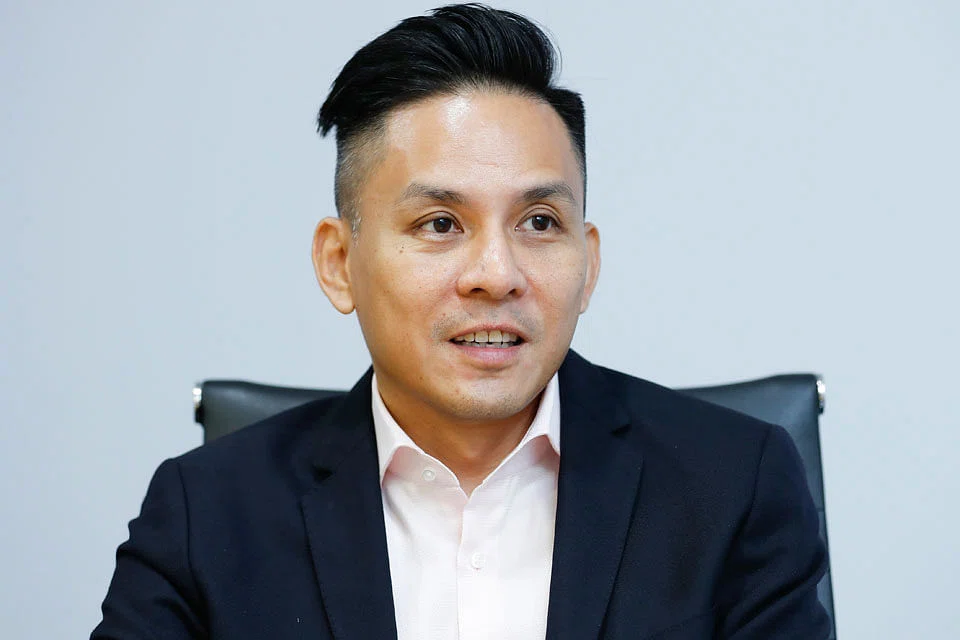
THE semiconductor industry is in for a tough period, warns Kelvin Lum, CEO of Mainboard-listed Ellipsiz.
He cites a global contraction in the semiconductor market, as well as China's slowing economy and the US-China trade war, as key factors.
Although Ellipsiz has been retooling its business, it faces uncertainty in the next six months, Mr Lum says.
At the halfway point of the company's financial year, Mr Lum tells The Business Times that "we're not seeing the level of orders and commitment from industry players as much as we can usually visualise for the whole year".
Ellipsiz reported a second-quarter gross profit of S$4.58 million for the three months to Dec 31, 2018, almost twice the S$2.62 million in the same period the year before, on a 65 per cent rise in revenue to S$17.3 million.
(It's hard to give an apples-to-apples comparison year-on-year, because the group did a significant divestment in 2017, when it sold probe card manufacturing unit SV Probe to Nidec-Read Corp for US$70 million, and made some accounting changes.)
"Now, we service the foundries and the fabs, the chipmakers and all that," Mr Lum says. "Then, on the electronic manufacturing side, we are servicing the ODMs (original design manufacturers) and the OEMs (original equipment manufacturers)."
Still, on whether underlying operating profit is expected to remain consistent, referring to the industry's headwinds, he says "it really depends on how severe this landing is".
He bemoans that, while the first-half went well in his estimation, "now we have the second-half to deal with".
"If the market were trading in its normalcy - none of this trade war - I think we could have finished a very good year," he says. Instead, "people are not committing too much to capital expenditure (capex), holding off on commitments and all that".
Mr Lum - son of Lum Chang Holdings managing director Lum Kok Seng, who owns 60.11 per cent of Ellipsiz - has been CEO since last August, after his predecessor retired.
And it has been non-stop as he takes the company in new directions.
First as a board member since 2016, and now as head honcho, Mr Lum has been diversifying Ellipsiz's business during a rough time for semiconductors.
Flush with cash from the SV Probe sale - "it was a profitable divestment, we unlocked value," he says - Ellipsiz signed up for a half-stake in the holding company of retailer Kalms (Singapore) for S$10 million last year.
But it rang up a share of losses of S$691,000 from the vending machine joint venture (JV) in the latest quarter.
It has since set up Adell Solutions, a used semiconductor equipment JV, in January. While Ellipsiz said at the time that the new business is not expected to have a material impact on the group's earnings or net tangible assets for the financial year to June 30, Mr Lum says he hopes to recognise some financial results from Adell in the second-half.
This, even though he warns that the state of the semiconductor industry also poses a challenge. "We've got to be careful of the kind of used-equipment deals we do, because when the market's not so good in this industry, maybe sometimes there are default rates or payments don't come in."
But, despite noting that "for us to tackle another sector is not impossible, it might take time to build it up to scale", Mr Lum notes, as he seemed more upbeat about loss-making Kalms' prospects in the Asian consumer market.
"Unlike the semiconductor and electronics manufacturing services, where we deal more with (business-to-business), this one is more on the consumer level," he says. "It's more retail, the products are more mainstream. But there's a distribution angle to it."
He sticks to his guns that services and distribution is the way to go, especially with Ellipsiz's manufacturing operations already sold off.
The probe card unit, wholly owned by Ellipsiz since 2006, was "manufacturing-based and required a lot of (research and development) and capex, and if you don't keep up with the right technology, it can be quite risky".
"It's good to have your own product, but... technology evolves so fast. Probe cards have a lot of competition as well. We were lucky we were able to unlock at the right time," Mr Lum says. "So there are no regrets. We moved on, we got cash, deployed the cash into other sound investments."
Waiting for "new game-changers - 5G and all that", which could have new applications, he adds: "Hopefully, new, emerging technologies will cushion us in time to come. This sector has enjoyed quite a good ride in the past couple of years already, so any correction is usually healthy. We might see more M&A opportunities in this sector during this time."
TRENDING NOW

Good Class Bungalow market activity picks up pace on ‘realistic’ pricing
Indonesia imposes US$116 million in fines over manipulation of Sinar Mas, Prajogo-linked stocks

Singapore identifies 7 firms responsible for haze fires, notices issued urging action: Grace Fu

Once staunchly pro-China, Malaysian Chinese businesses are now distancing themselves from Beijing

