LHN (Coli)-woos investors with more rooms, divestments as it seeks transfer to big board

Anita Gabriel
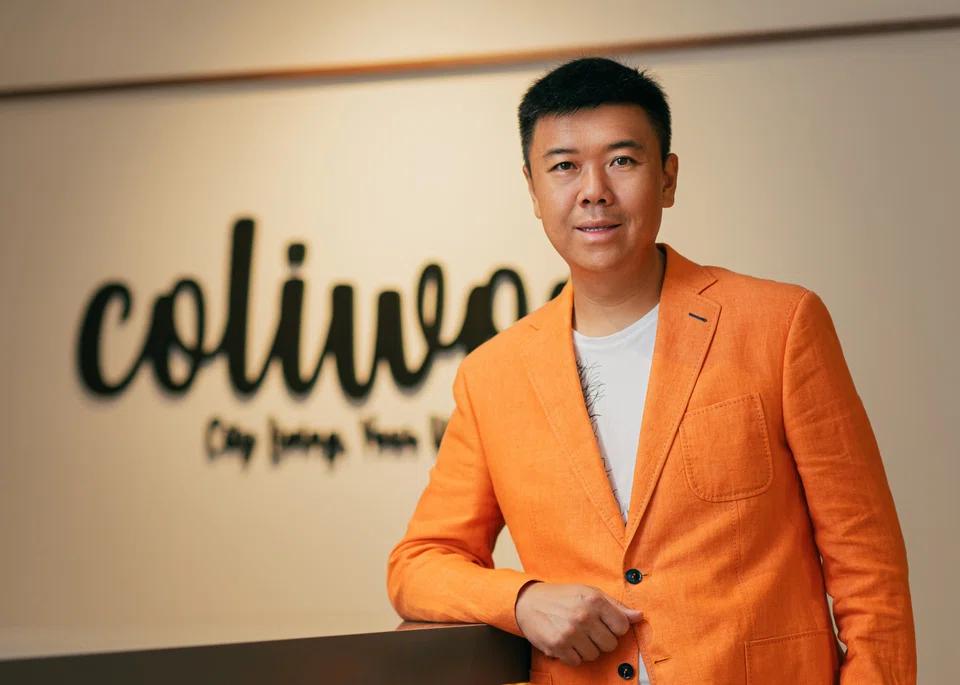
THINGS have been falling nicely into place for LHN, the co-living operator listed on Catalist. “We didn’t expect demand to be so great. We thought that the business would grow constantly, (but) not exponential(ly),” said the group’s executive chairman and managing director Kelvin Lim, in an interview with The Business Times.
The modern concept of communal living, with its promise of affordability and flexibility, has become popular, not just among foreign students and expatriates to whom co-living has long appealed. More Singaporean young adults and couples are also ditching conventional accommodation to embrace shared residential spaces owing to lifestyle changes.
Co-living initially exploded amid the startling supply-demand imbalance in Singapore residential properties – no thanks to the pandemic. While these market dynamics appear to be gradually regaining their sensibilities, other factors are now keeping the boom in short-stay accommodation going.
Among them are the live concerts and sports events in Singapore that are drawing regional audiences. “We have a lot of people coming in ... (to) watch concerts ... to do projects and especially so when hotel prices in Singapore now are crazy. We managed to get a lot of business,” Lim said.
LHN ’s co-living brand Coliwoo boasts of having the biggest market share of 32 per cent in Singapore in terms of the number of keys. The other two big players in Singapore’s co-living sector are The Assembly Place and Bespoke Habitat, according to a report published by JLL in June this year.
Wooing co-livers
“Coliwoo” is not only a play on “co-living” and “co-working”, but also a reference to the instances of romance that have been known to flourish among some co-livers - hence the “woo”. “The ‘woo’ is a bit funny ... there are couples emerging out of co-living,” Lim said, with a hearty laugh.
At the peak of the Covid-19 pandemic, Coliwoo enjoyed full occupancy. Now, occupancy is still running at 97 per cent, said Lim, who together with his sister Jess Lim – LHN’s group deputy managing director – are the firm’s controlling shareholders.
On the other hand, while the co-working sector continues to be supported by today’s flexible working arrangements, factors such as rising rents and tight office supply in Singapore have challenged their rosy prospects. In that sense, the outlook for co-living appears sunnier, or as Lim puts it succinctly: “You can’t live without a place to sleep. You can live without a place to work.”
Transforming space
LHN’s biggest earnings generator is the space optimisation business, which essentially involves taking old, unused and under-utilised industrial, commercial and residential properties and transforming them into well-designed and highly usable spaces.
The group’s commercial portfolio encompasses offices, sports and recreation centres, and food and beverage outlets, while its industrial properties include self-storage spaces. Clearly, the co-living operations under the residential segment, which it had embarked on four years ago, appear to be creating the most buzz.
For the six months to March 2023, the residential business, which includes co-living, raked in revenue of nearly S$11 million – up 48 per cent versus the same period a year ago. Revenue contribution from the industrial segment came in 44 per cent higher at nearly S$14 million, while the commercial segment recorded a revenue drop of 21 per cent to S$3 million.
Over that period, group net profit fell 47 per cent to S$17 million on the back of a 6 per cent drop in revenue to S$56 million. The lower net profit was primarily due to fair-value losses on investment properties, compared to fair-value gains over the same period a year ago.
Since 2019, when LHN stepped up its game to tap the growing demand for co-living, Coliwoo has added an average of 400 rooms annually. It hopes to double this pace of expansion to 800 rooms a year within the next three years.
Coliwoo operates in 17 locations across the city-state including its flagship offering on Orchard Road, and had 1,600 keys as at end-March 2023. For now, foreigners account for 70 per cent of Coliwoo’s co-livers, with the remaining being locals.
Its biggest allure apart from its price is the flexibility it offers tenants in terms of monthly renewal options. “They don’t need to bring anything ... just their belongings. We are very flexible – if they try it out and like it, they can continue. If not, they can move to other places, or even move within our properties,” said Lim.
Coliwoo’s properties are mainly under master leases. “Leasing is a very good thing ... (we) don’t worry about interest rate. If you buy, you’d have to worry about interest rate,” he explained.
Eventful August
This month has been a busy period for the hospitality player.
Coliwoo launched a four-storey premium co-living service residence in bustling River Valley, which is its 14th property launched to date. It is also planning to scoop up two properties – for some S$23 million – in the same opulent neighborhood, for conversion to hotel or serviced residence use.
While Singapore remains LHN’s primary market, it is exploring opportunities in other markets, namely Japan, Vietnam, Thailand, Malaysia and Indonesia, where there are large expatriate communities. But this could take time.
“To start a meaningful venture in a new country, we need to have good people and good prospects. In Indonesia, we already have a team because we have been there for ten years. For other countries like Vietnam and Malaysia, we do not have any people (yet),” said Lim.
Stars aligned
Several other things are lining up well for this hospitality player.
More than a week ago, the company - which has a market capitalisation of S$133 million - said it was seeking to transfer to the mainboard.
Earlier in August, LHN said it would divest its logistics and transportation arm LHN Logistics for S$32 million, after the buyer, Milkyway International, finalised its offer. This came after the deal’s pre-conditions were met and LHN’s shareholders gave their overwhelming nod for the sale.
Some analysts expect LHN to pay out a special dividend following this deal. LHN coughed up a special dividend after listing LHN Logistics last year.
Analysts are also expecting LHN to divest more non-core assets over time. These could include its Golden Mile Tower carpark and an industrial building at 55 Tuas South.
“As we go along, we should be divesting all the mature properties, and then ... manage. That will give us a very good cash flow, and we can use the money to churn out new projects,” Lim said, adding that some divestments will take the form of sale-and-leaseback deals.
Such efforts have won praise among the analyst community. “Their solid track record of asset recycling initiatives to enhance return on equity for shareholders has allowed the market to re-rate its shares closer to their intrinsic value, as well as allowed management to implement a new dividend policy to distribute at least 30 per cent of recurring earnings as dividends,” said Lim & Tan Securities in a recent report.
Operationally too, LHN has big goals. Lim is gunning for Coliwoo to have 10,000 rooms by 2030, which he said can be achieved through market consolidation or overseas acquisitions. He added: “You need to set a vision for yourself. You cannot wait for things.”