

LHN expands co-living portfolio with healthcare lodging win, bolstered by high occupancy

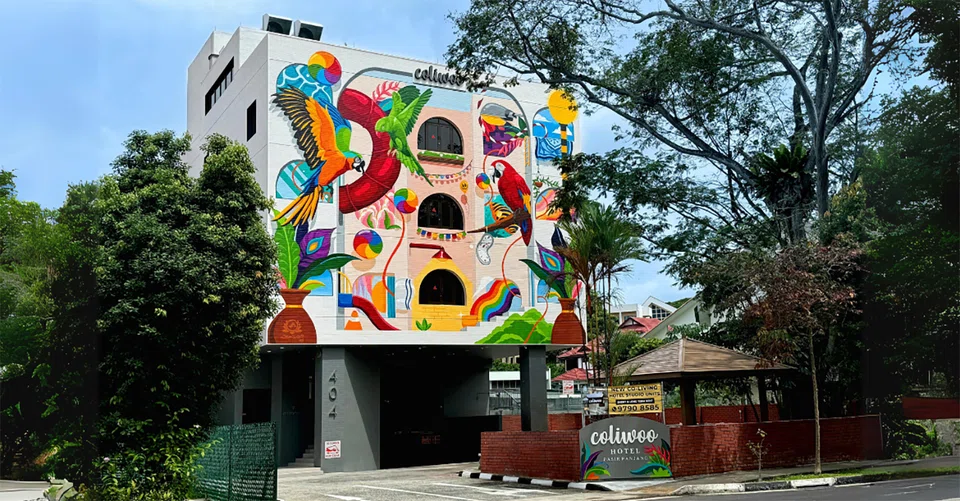
MAINBOARD-LISTED LHN ’s co-living business segment Coliwoo will continue to grow, backed by an increase in keys and resilient rental rates, analysts have said.
In particular, the company could get a boost from the award of two contracts to operate hostel-type facilities for foreign healthcare workers, which will house at least 700 such professionals.
This could further catalyse the company’s stock, which generated total returns of nearly 27 per cent in the past year.
In comparison, the benchmark Straits Times Index’s total returns came in at 5.8 per cent in the same period.
Besides LHN, one other locally listed company that offers co-living options in Singapore is CapitaLand Investment – through a brand called lyf, which is owned by the group’s lodging unit Ascott. There are currently three lyf co-living properties in Singapore, one of which is held under CapitaLand Ascott Trust .
CapitaLand Ascott Trust has returned 0.4 per cent in the same period.
Lim & Tan Securities analyst Chan En Jie sees the two upcoming healthcare lodging facilities, at 100 Ulu Pandan Road and 60 Boundary Close, as a new revenue stream for LHN.
These two properties were among five earmarked by MOH Holdings – the Ministry of Health’s (MOH) holding company for healthcare institutions – to be retrofitted and run as co-living, hostel-type accommodation for new foreign healthcare workers.
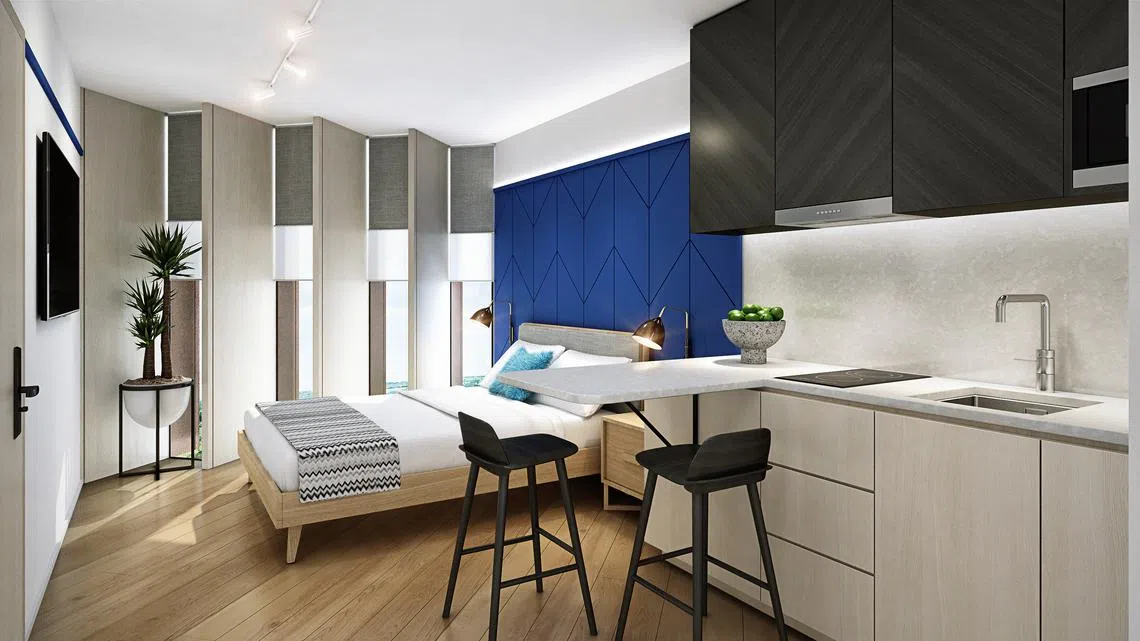
These hostel-type facilities will include amenities such as a dining area, a pantry, a laundry room and common social space; each bedroom is expected to be shared by two occupants.
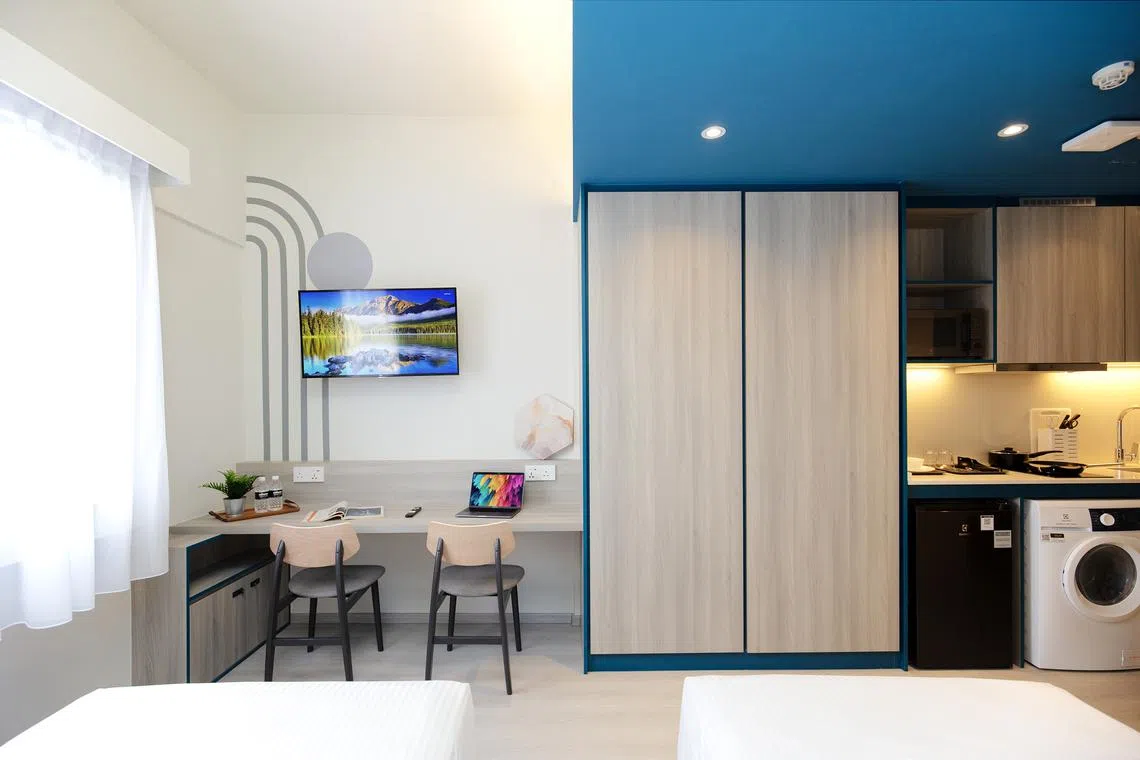
Chan said: “The design and retrofitting of the healthcare lodging facilities will provide upfront revenue, while the operation of these accommodation facilities provides recurring revenue streams.”
The two sites will add at least 350 rooms to the company’s portfolio, based on a two-person-per-room occupancy.
Chan noted that LHN could also clinch contracts for 11 other sites, following a review of the five sites by MOH and MOH Holdings after operations commence.
The other three sites up for grabs were secured by a joint venture between non-listed players The Assembly Place and TS Group.
Strong occupancy in co-living space
Coliwoo, considered the largest co-living operator by number of keys in Singapore, had an occupancy rate of over 90 per cent as at last December, the group noted in its first-quarter business update.
The group has 1,770 keys in its Singapore projects, and 383 keys in China and Cambodia, where it owns the brand 85 Soho.
Maybank Securities analysts Li Jialin and Eric Ong said LHN’s operational performance “remains positive on the back of a buoyant Singapore hospitality market”.
“We expect momentum to pick up, with more Coliwoo openings in the second half of 2024,” they said in a note. Coliwoo has 19 locations now, and plans to launch three more; the company targets adding at least 800 keys each year for the next three years.
The Maybank analysts added that co-living room rates are holding up, despite a slower local rental market. Hotels are benefiting from the surge pricing during major events and serviced residences lend stability.
Cushman & Wakefield Singapore and South-east Asia head of research Wong Xian Yang cautioned that co-living rates in Singapore could be tempered by a fall in overall private residential rents, despite co-living being a differentiated product from typical private rental units.
The real estate services firm estimated that overall private residential rates could decrease by up to 5 per cent this year, as the market faces a supply surge from 2023.
That said, he believes demand for co-living facilities would be supported by increasing foreign demand and shifting consumer preferences. Operators with a strong brand presence and differentiated tenant experience will come out on top, he added.
While rising property prices could push acquisition prices higher as LHN expands its portfolio in a competitive co-living industry, Maybank’s analysts believe the group may be able to keep its gearing stable by recycling its capital.
“Potential divestments are supported by a portfolio of assets that are in the money, and LHN is tilting towards an asset-light strategy,” they said, adding that the FY2024 estimated price-to-earnings (P/E) ratio of less than seven times is “undemanding, compared to global hospitality peers”.
Lim & Tan’s Chan finds LHN’s valuations attractive at five to six times P/E ratio, and noted that the company still trades at a price-to-book of 0.6 times, despite its asset-recycling initiatives.
Shares of LHN ended Thursday unchanged at S$0.335.
TRENDING NOW

Two Singapore-listed palm oil firms named in Greenpeace report on Indonesian plantation fires
Singapore Airlines flight returns to San Francisco after ‘unruly’ passenger incident

Singapore looking into which companies responsible for haze-causing fires: PM Wong

Deluge IPO 3.86 times subscribed ahead of SGX debut

