Lian Beng aims to stay conservative as pandemic hits construction sector
The company is choosing to hunker down - focusing on fulfilling existing projects in its order book of S$1.5 billion - while keeping a firm hand on costs.
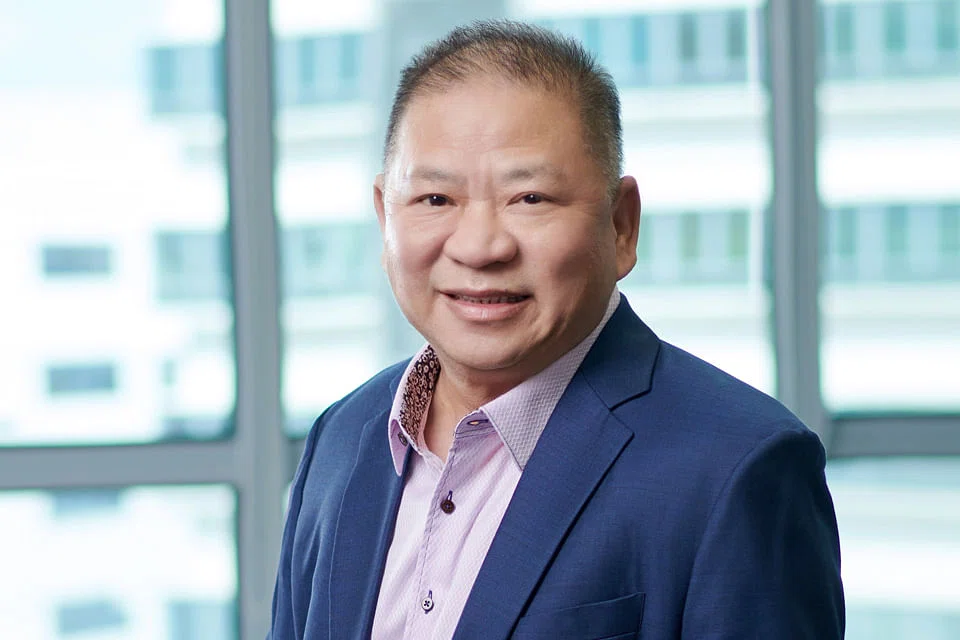
CONSTRUCTION company Lian Beng Group has been in business for close to 50 years, and has weathered several storms - including the Asian financial crisis, the Sars epidemic and the Lehman Brothers collapse. But chairman and managing director Ong Pang Aik said those downturns can't hold a candle to the challenges brought about by the current pandemic.
The main difference is the pandemic's crippling effect on the company's workforce. He told The Business Times (BT) that its construction sites have not been operating at full capacity since the Covid-19 crisis started - which means project timelines will inevitably be extended and margins eroded.
Some projects were paused for as long as six months, as they lacked enough workers to continue work.
Thankfully there was the Jobs Support Scheme, Mr Ong said, referring to the government's wage subsidy scheme. "The various government support schemes during this Covid-19 period have definitely been helpful for the construction industry as the work stoppage meant that we were not able to book any revenue for construction progress."
But it doesn't look like the labour crunch is easing anytime soon. New restrictions to curb the inflow of employment pass holders from high-risk regions have choked off supply for most construction players, including Lian Beng. The majority of its workers hail from India or Bangladesh.
Mr Ong said on average, there are about 30 per cent fewer workers on its sites now, compared to before. Work is also subject to delays from safety restrictions. "Every day we have workers going for swab tests, and that takes about half a day, so it's very difficult to have a full force at the site on any single day," said Mr Ong.
"We've been trying to find more people from Vietnam or Thailand to come and work for us on site, but there is short supply. Plus, the cost of labour now is significantly higher."
L03 's financial performance for H1 FY2021 reflects some of the pandemic impact, although the full extent is yet to be seen. For the half-year ended Nov 30, the company posted S$17.6 million in net profit - down 5.2 per cent from a year ago. Its revenue fell 36.6 per cent to S$197.5 million.
Conservative management
Despite these challenges, Mr Ong believes that the company - armed with a war chest of S$194.2 million in cash and cash equivalents as of November 2020 - can power through this storm.
The company has also built up other revenue streams through its dormitory business, property development and investment holdings, which it hopes can help to prop up cash flow during this difficult period.
Despite a somewhat robust balance sheet, Mr Ong prefers to take a conservative approach. He tells BT Lian Beng is choosing to hunker down - focusing on fulfilling existing projects in its order book of S$1.5 billion - while keeping a firm hand on costs. This alone should support the group's activities through FY23.
This strategy was not put in place lightly. Mr Ong has learnt, from bitter experience, the perils of overstretching finances. He saw firsthand how, during the Asian financial crisis, several of his peers in the construction industry were quick to drop their prices in a bid to secure projects from a dwindling pool. But, they downplayed the impact these projects might have on their cash flow.
Mr Ong then decided to err on the side of caution. "We could have ended up in a worse position by taking on projects with such razor thin margins," he said. The company did not take up any new projects for two years.
As the crisis stretched on, construction timelines were extended and payments delayed. The industry started to implode. Construction companies struggled to fork out the cash to pay for materials, labour and operations. He recalls how there were so many main contractors that ran into financial difficulties that they had to queue up just to file for liquidation.
This presented an opportunity for the company. Lian Beng took on some of the abandoned projects, which yielded better margins, since initial costs were already accounted for. Lian Beng's cautious stance paid off.
"I learnt then that cash flow is king. You can secure all these big projects, but if your cash flow is not healthy, you can still crumble."
Diversification game
Such problems from the past are eerily similar to what the industry is facing now. What is a construction company to do?
In Lian Beng's case, Mr Ong accepted early on that the company "cannot rely on construction alone" because of the industry's inherent volatility. He chose to diversify Lian Beng's revenue streams to build up a cash pile - hopefully one strong enough to sustain it through any storm.
He said Lian Beng in the first half of FY21 recognised more development profit and sales at some of its private-home projects. Its dormitory business and investment holdings, meanwhile, benefited from lower interest rates.
The construction business is, however, still its golden goose. For FY2020, its construction segment brought in S$460.5 million in revenue, compared to S$46.2 million for property development, S$26.1 million for investment holdings and S$23.3 million from its dormitory business.
But the pandemic has exposed the flaws in the construction industry's dependence on foreign workers. As Singapore actively looks to reduce its reliance on low-wage foreign labour, players such as Lian Beng face tough questions about the future of their industry.
Mr Ong said it is difficult to reduce this reliance, especially since technological innovations have not caught up.
"A lot of the work on site can't be completed without some component or input of manual labour.
"In terms of execution, certain skilled trades like laying tiles, electricity cables and water pipes can only be done manually."
In any case, Lian Beng has looked for ways to improve efficiency and costs. These include investing in engineering capabilities, technologies, machinery and new processes.
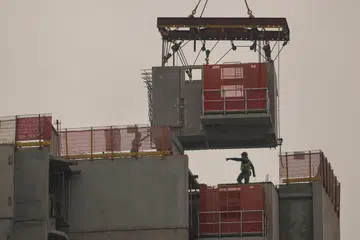
The company is in the midst of building what is said to be the tallest prefabricated building in the world: 56-storey twin towers located in Singapore's Bukit Merah district. This will be done through a relatively newer method known as prefabricated prefinished volumetric construction (PPVC), Mr Ong said, adding that there are "only a handful" of players with PPVC construction capabilities in the city-state.
The individual modules are first factory-made in Senai, Malaysia. These units are then transported to a facility in Singapore to be fitted out and furnished before being moved to the construction site where they will be be fit together - like "Lego", said Mr Ong.
"This way of building requires less labour and can help reduce waste and noise pollution," he added.