Livestreaming platform 17Live aims to convince investors of booming content creator industry

Megan Cheah
LIVESTREAMING platform operator 17Live Group is confident that investors will eventually come to understand and invest in the booming content creator industry.
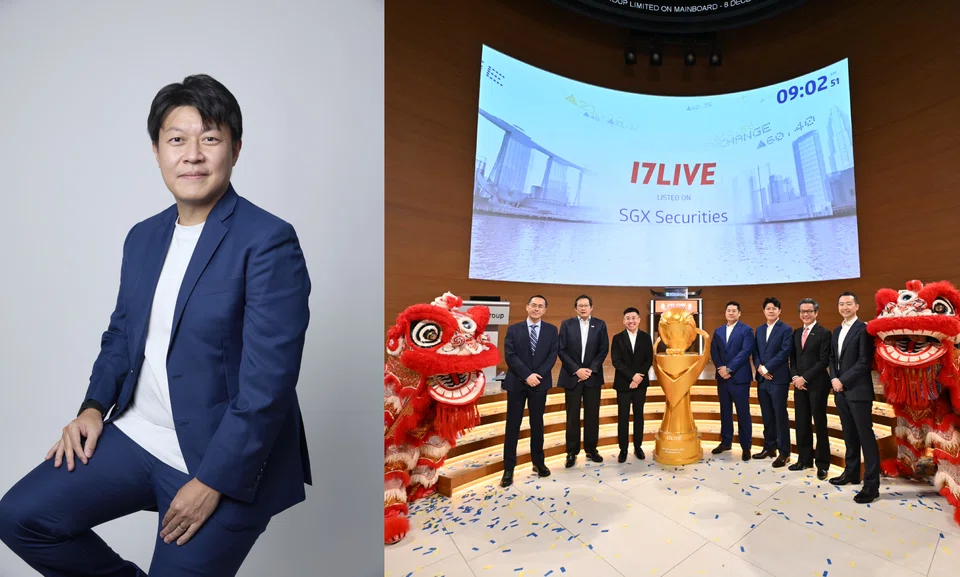
Chief technology officer Ng Jing Shen said the Taiwanese platform is planning to create a “rigorous investor relations programme” to help investors understand the merits of the livestreaming industry – which will, in turn, benefit the company.
“Right now, we are the only opportunity for investors who wish to be a part of this growing creators’ economy,” Ng said in an interview with The Business Times.
Despite the optimism, the company has not started off with its best foot forward.
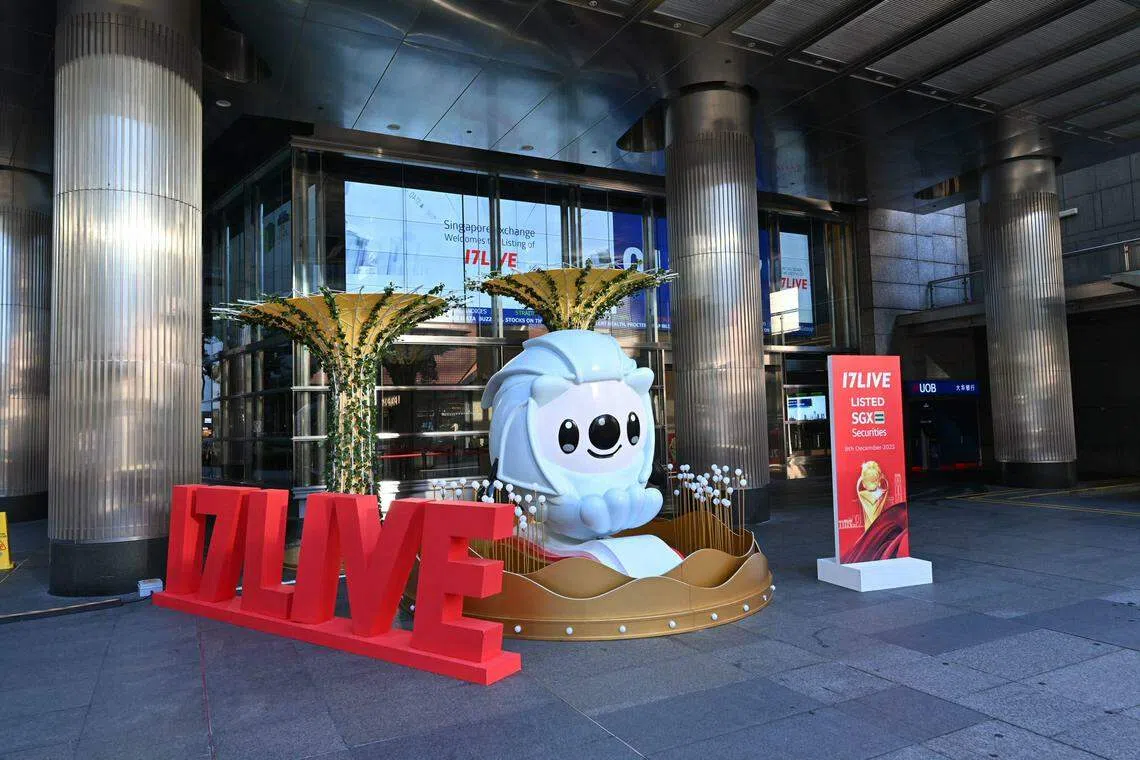
On Dec 8, the platform traded for the first time on the Singapore Exchange’s mainboard, after it successfully completed its business combination with Vertex Technology Acquisition Corporation (VTAC), a special purpose acquisition company (Spac).
The move marked a couple of firsts – 17Live is the first livestreaming platform to be listed here and the first de-Spac transaction to be completed in Singapore.
However, its share-price performance did not reflect investor confidence in such milestones. The counter tumbled 18.8 per cent or S$0.73 on its first day of trading to S$3.15. It has since fallen further, closing on Monday (Dec 18) at S$1.62.
Before its trading debut, VTAC’s shareholders expressed their lack of confidence in the listing by redeeming close to two-thirds of the share capital of the Spac.
When asked about the high level of redemptions, Ng said the market likely does not understand the “high-growth creator industry” and therefore does not see the value of investing in such shares yet.
He added: “The whole investor base here and in the region is still new to livestreaming and to Internet stocks in general.
“We need time to educate investors about the industry… and how to look at an Internet growth stock compared to traditional media.”
Ng, who is Singaporean, entered the company with 17Live’s chairman Joseph Phua in 2017, when the duo’s dating app Paktor merged with 17Live for an undisclosed sum.
17Live, then known as 17 Media, was founded in 2015 by Jeffrey Huang, who stepped down from the board in 2020.
Ng said the company had chosen a Spac listing due to the growing popularity of livestreaming, and had wanted to capture this growth.
After all, the content creation industry appears to be thriving. In a report this year, Goldman Sachs Research estimated the total addressable creator economy to be worth some US$250 billion.
The research house expects it to roughly double in size by 2027 to US$480 billion, with the current 50 million global creators to grow at a 10 to 20 per cent compound annual growth rate over the next five years.
Expansion
Although content creation is on the rise, 17Live recorded a loss of US$118.2 million for the first half ended June, widening from a US$42 million loss in the corresponding year-earlier period.
It also registered a full-year loss of US$51 million for FY2022.
After accounting for revaluation loss at fair value for certain preferred shares and warrants, the group would have posted an adjusted profit of US$9.4 million for H1 FY2023.
This revaluation loss on financial liabilities is not expected to recur after the completion of the deal, the company said.
Nonetheless, Ng highlighted that 17Live has been generating operating profits and is Ebitda (earnings before interest, taxes, depreciation and amortisation) positive since FY2020.
The core business is also cash-flow generative, Ng said.
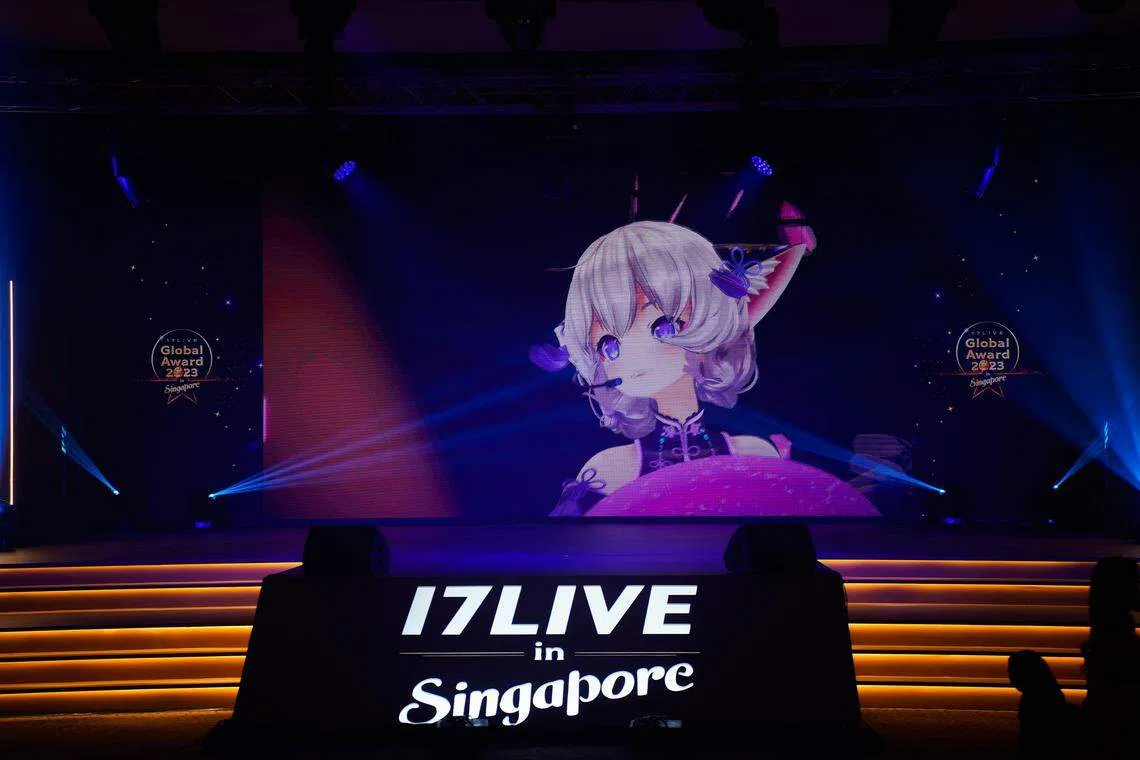
He added that the money will be used to fuel 17Live’s growth, particularly in the field of V-Livers – livestreamers who don a virtual avatar and usually embody a specific personality in this form.
The company aims to use this listing as an opportunity to expand into a new geographical location. Ng believes South-east Asian livestream viewers are generally interested in such streamers – and Singapore’s position as a regional centre makes it the ideal place to list.
He added that the company will eventually sign on talent from South-east Asian countries. “We will try to import some of our top talent from these places and make it available here, including their merchandise,” he said.
Content is king
The company banks heavily on its content creators, using a revenue split model where it takes a cut of what its creators earn. Ng declined to reveal the split between company and creator.
Unlike other streaming platforms such as Twitch and YouTube, 17Live exclusively signs and manages the creators on their platform with its in-house management team.
At the last count, the company had 87,000 contracted streamers, who earn money through virtual gifts that fans can buy on 17Live.
These viewers who spend money on streams are tracked by 17Live as “quality users” – a metric that the company wishes to grow.
“The essence of livestreaming is finding a creator that you really love and are willing to support,” said Ng, who added that the number of such viewers is growing.
As at the first half of FY2023, the company has around 550,000 average monthly active users. These users have a spend rate of 16.1 per cent, on a monthly average basis.
The average revenue per spending user is US$302, the company said.
Ng explained that quality users are important to 17Live, as the group does not make money from advertisements.
He said: “We don’t chase large view numbers. What we chase is people who have found the creator that they love.”