LMS Compliance to expand ESG offerings to assurance and carbon credits verification

Janice Lim
IT HAS been less than a full year since LMS Compliance announced in March 2023 that it had launched a new product offering environmental, social and governance (ESG) reporting services.
But, the testing and certification services provider is already looking at expanding its range of ESG-related services, by venturing into carbon credits verification.
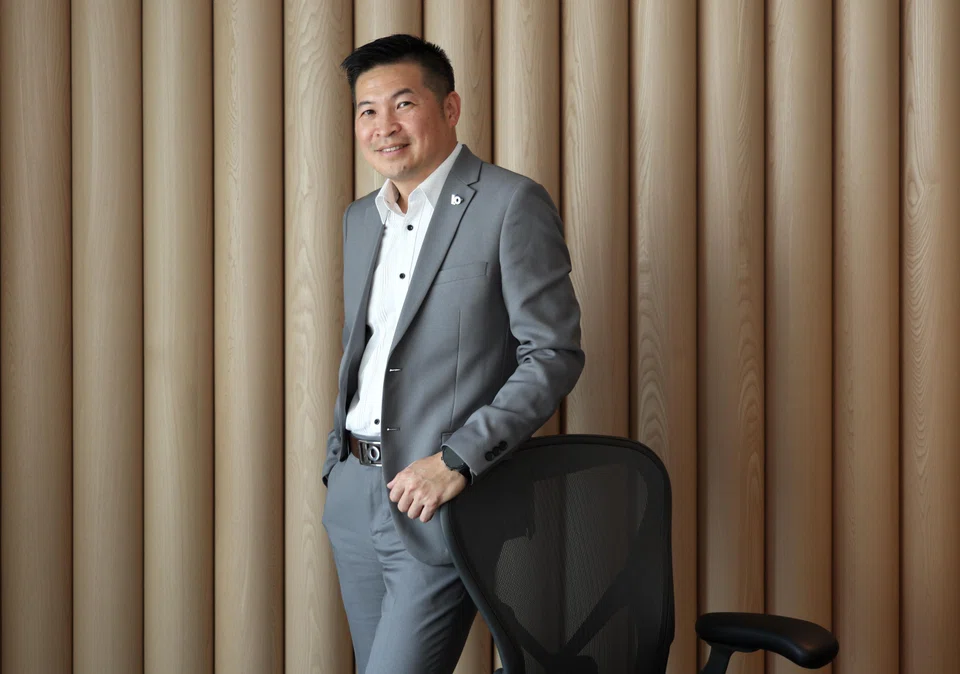
Its chief executive officer Louis Ooi told The Business Times that the Malaysia-based company is working with some companies in the country to assess their carbon credit projects and submit them for approval to Verra, the world’s biggest certifier of voluntary carbon credits.
Some of these projects include using technology to break down municipal waste without burning them or throwing them into the landfill, or using thermal or wind energy as renewable sources of power generation.
Ooi added that the group is also looking to provide assurance services for companies issuing sustainability reports, with expectations that demand for such services would go up in the future.
While exchanges in both Singapore and Malaysia have mandated some level of climate disclosures for listed companies in both markets, seeking external assurance to independently evaluate their reports is still optional. Hence, demand for these services has been slow.
Currently, LMS’ ESG offerings mainly consists of training workshops and assisting companies in assessing and reporting their greenhouse gas emissions.
While the new ESG reporting service was announced in March last year, Ooi said that orders have only started coming in from companies in Malaysia as well as Singapore since January this year, as a lot of time was spent on creating awareness and publicity about the group’s new product line.
Hence, revenue generated from this new income stream would not be reflected in LMS’ upcoming financial report, as it covers the group’s performance until only the end of December last year.
Its full-year results for the 2023 financial year is slated to be released in February this year.
The company raked in revenue of RM9.9 million (S$2.8 million) over the first six months of its 2023 financial year ended on Jun 30, an increase of 13.1 per cent from the same period the previous year.
However, its net profit slipped 0.5 per cent to RM2.6 million due to higher taxes.
While its laboratory testing and certification services continue to be the main revenue driver for LMS, accounting for 96 per cent of its revenue, Ooi foresees the ESG reporting service to be another area of growth for the company.
He said that outlook on ESG is bright with many countries setting net-zero targets. This means they would have to implement several green programmes to steer the private sector to also set its own net-zero targets.
Second, he believes that the Carbon Border Adjustment Mechanism of the European Union, which imposes a carbon tariff on carbon-intensive products being imported into the region, would spur regulators in South-east Asia to implement their own carbon tax. Currently, Singapore is the only country in the region which has set a carbon tax.
These wider trends would eventually generate more demand for LMS’ ESG reporting and assurance services, Ooi noted.
The company has started including the carbon footprint of the testing method that its laboratory utilises in the final report it produces for its clients since the fourth quarter of 2023.
“This is to show the commitment as an independent verifier; we would like to show our footprint to every user,” added Ooi.
In addition, LMS’ laboratory-testing clients could also use the carbon footprint data to calculate their own Scope 3 emissions, which refer to indirect emissions generated from a company’s supply chain, and not from the company itself.
The hope is that such carbon data provided by LMS could generate demand from its existing testing and certification clients for its ESG reporting services, such as to compile and assess companies’ greenhouse gas inventory.
Besides expanding through organic growth, Ooi added that the company is looking to complete at least three mergers and acquisitions in 2024.
While he was not able to provide the specifics of these deals, he said that two of them will be related to testing and certification, and the third one will involve Internet of Things (IoT) sensors. The company utilises IoT sensors to gather data of a testing method’s carbon emissions, among other uses.
With wider geographic coverage through these deals and more services offered, Ooi expects the company to experience high growth in 2024.
However, he recognises that inflationary pressures and the Malaysian ringgit’s deprecreciation will still present downside risks for the company.
LMS has embarked on a few digitalisation exercises in 2023 to bring down costs, and will go into its next phase of digitalistion through more extensive use of IoT and artificial intelligence in 2024.
As for the ringgit’s depreciation, Ooi said that the company has been hedging some of its investments with the Singapore dollar to offset the ringgit’s decline in value.
Ooi noted that LMS shares has been traded at a higher price-to-earnings (PE) ratio of about 130 times since its listing in November 2022 due to the monetisation of its listing fees.
However, it expects that things will normalise with more genuine growth. The PE ratio will likely decline to not more than 20 times, which is on a par or slightly lower than its competitors, added Ooi.
LMS’ share price has risen by over 46 per cent from its initial public offering price of S$0.26 per share to close at S$0.38 on Friday (Jan 26).