From local AI partnerships to global opportunities: How MNCs help S’pore firms scale
By partnering with MNCs to develop AI solutions, Singapore firms can build new capabilities, prove their technologies in real-world settings and open doors to overseas markets
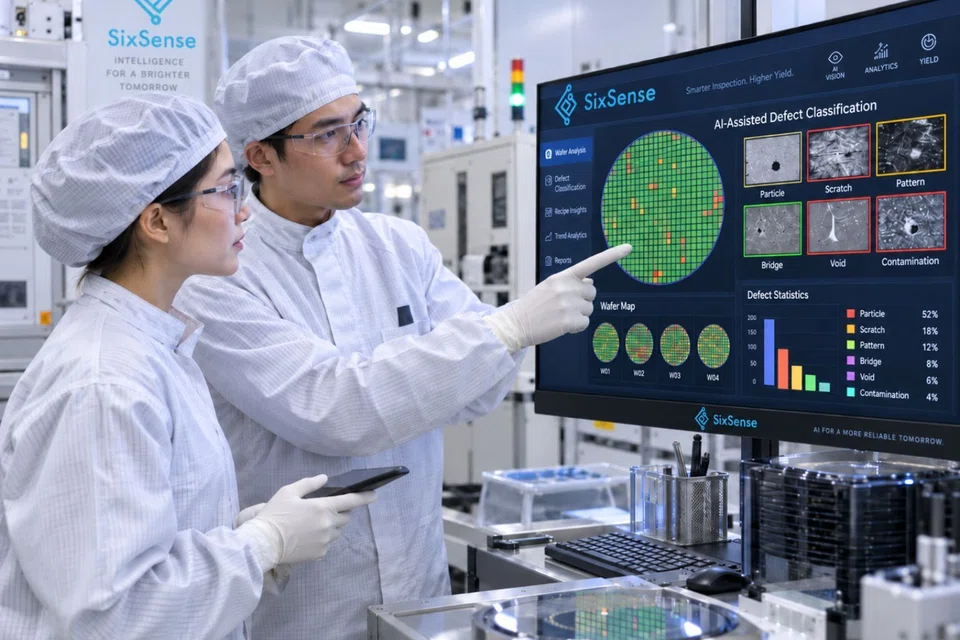
JUST five months after Singapore-based AI start-up SixSense was founded, its co-founder and chief executive Akanksha Jagwani met Tok Soon Chen of GlobalFoundries, one of the world’s leading semiconductor manufacturers, at an industry event in 2019.
Tok is now head of Global Digital Manufacturing and AI Centre of Excellence at GlobalFoundries Singapore.
At the time, SixSense needed to prove its AI technology could work in a real manufacturing environment. “Credibility in semiconductor manufacturing is earned on the fab floor, not in a pitch deck,” says Jagwani.
GlobalFoundries was looking to improve defect classification, a critical step in wafer production that helps maintain consistent quality. The company saw potential in SixSense’s technology to make the process more efficient.
That meeting led to three years of co-development, culminating in the deployment of SixSense’s Automated Defect Classification (AI-ADC) platform at GlobalFoundries’ Singapore facilities in 2022.
“Working with SixSense has helped us develop digital capabilities to support our manufacturing operations and engineers,” says Tok.
“Singapore’s AI ecosystem, supported by the government and industry platforms such as the Singapore Semiconductor Industry Association, has played an important role in connecting us with partners.”
The partnership is just one example of how working with multinational corporations (MNCs) can help Singapore firms develop their technologies and reach overseas markets.
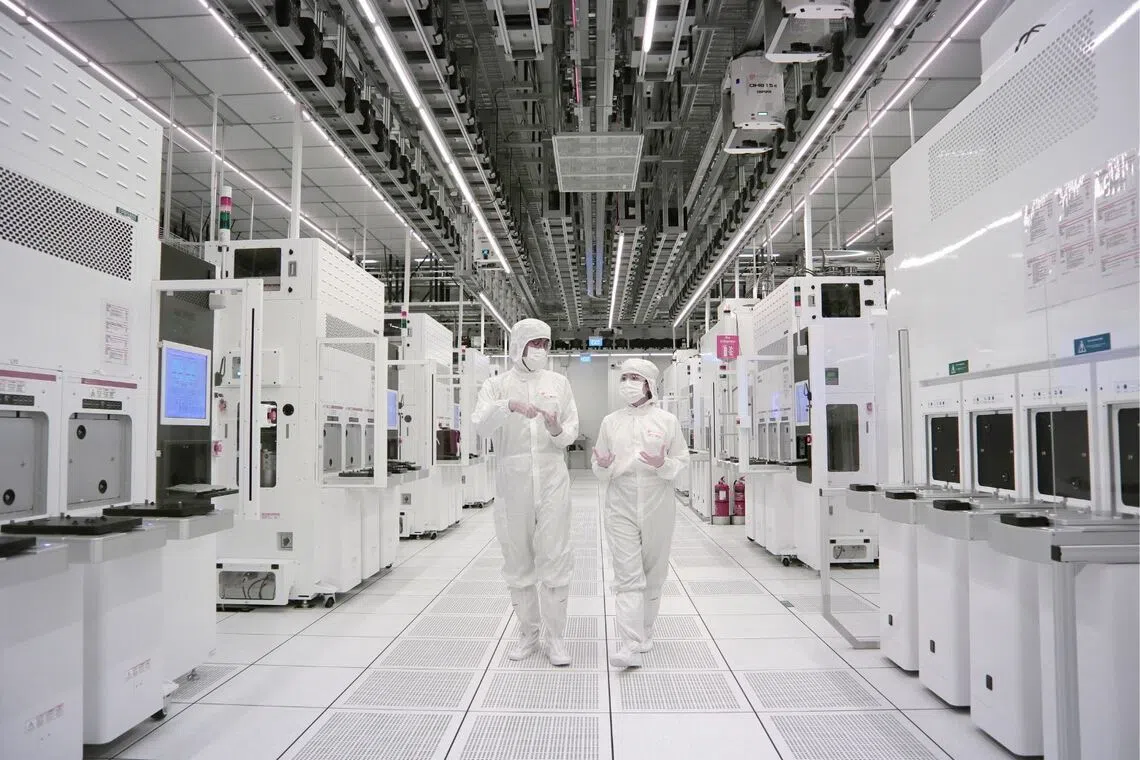
How AI helps engineers identify chip defects
During chip production, inspection equipment captures thousands of images of semiconductor wafers, which engineers traditionally review manually to identify more than 200 types of defects.
SixSense’s platform classifies defects in real time and explains its recommendations, allowing engineers to check its decisions. Building trust was essential. “No fab engineer will accept an AI decision they can’t understand on a wafer worth thousands of dollars,” says Jagwani.
GlobalFoundries engineers helped develop the solution, ensuring its recommendations were traceable and could be integrated into existing factory workflows.
The collaboration delivered measurable results. Testing at GlobalFoundries showed that the AI solution correctly classified close to 90 per cent of defects, while cutting the time needed to review wafers by about 26 per cent.
By automating routine visual inspections, the solution also allows employees to focus on higher-value work such as yield engineering and process improvement.
For SixSense, the deployment became a production-scale reference that strengthened its credibility with overseas customers.
“When we walk into a fab in Taiwan, the US or Europe today, the first question ‘Does this work in a real high-volume fab?’ is already answered,” says Jagwani. “That single fact has been the springboard for every conversation since.”
Jagwani also credits the Singapore Economic Development Board (EDB) with helping kickstart the collaboration.
Scaling AI for smarter infrastructure inspections
Around the same time SixSense’s solution went live, EDB and Enterprise Singapore (EnterpriseSG) were facilitating another MNC-local firm partnership: Japanese company Panasonic’s collaboration with NovaPeak on building inspections.
As Singapore’s building stock ages, demand is growing for safer and more efficient inspections. Traditional facade inspections can be labour-intensive, time-consuming and require personnel to work at height.
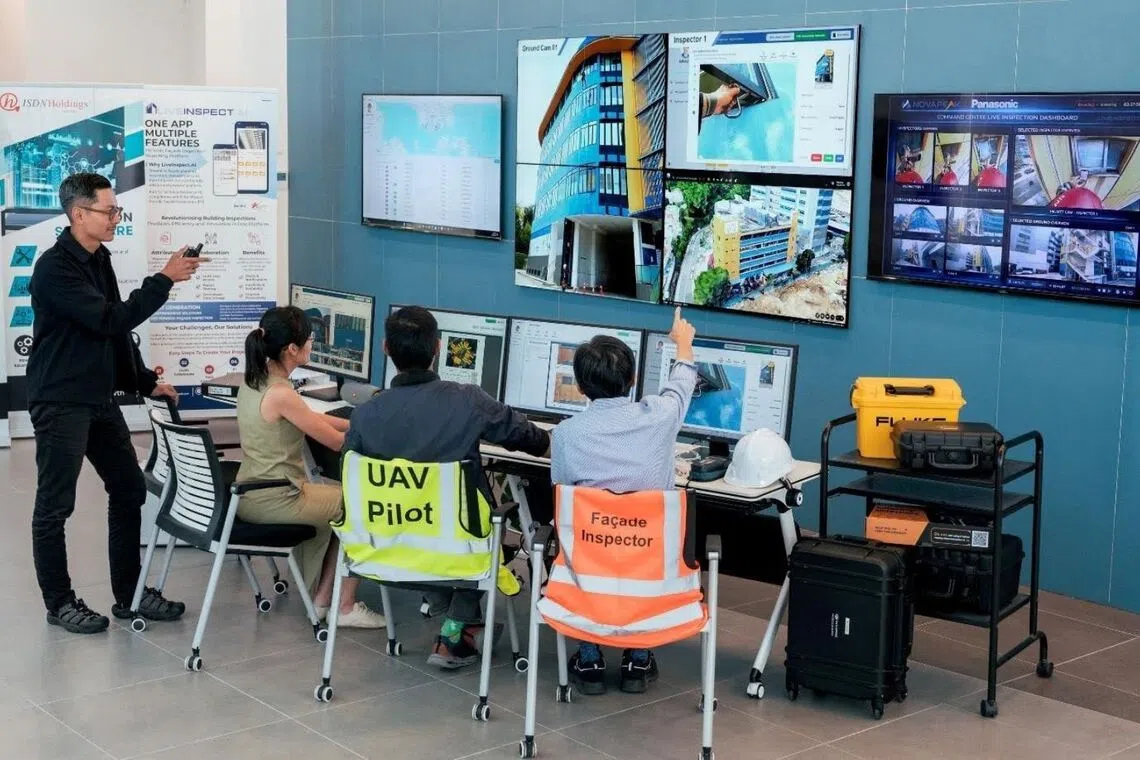
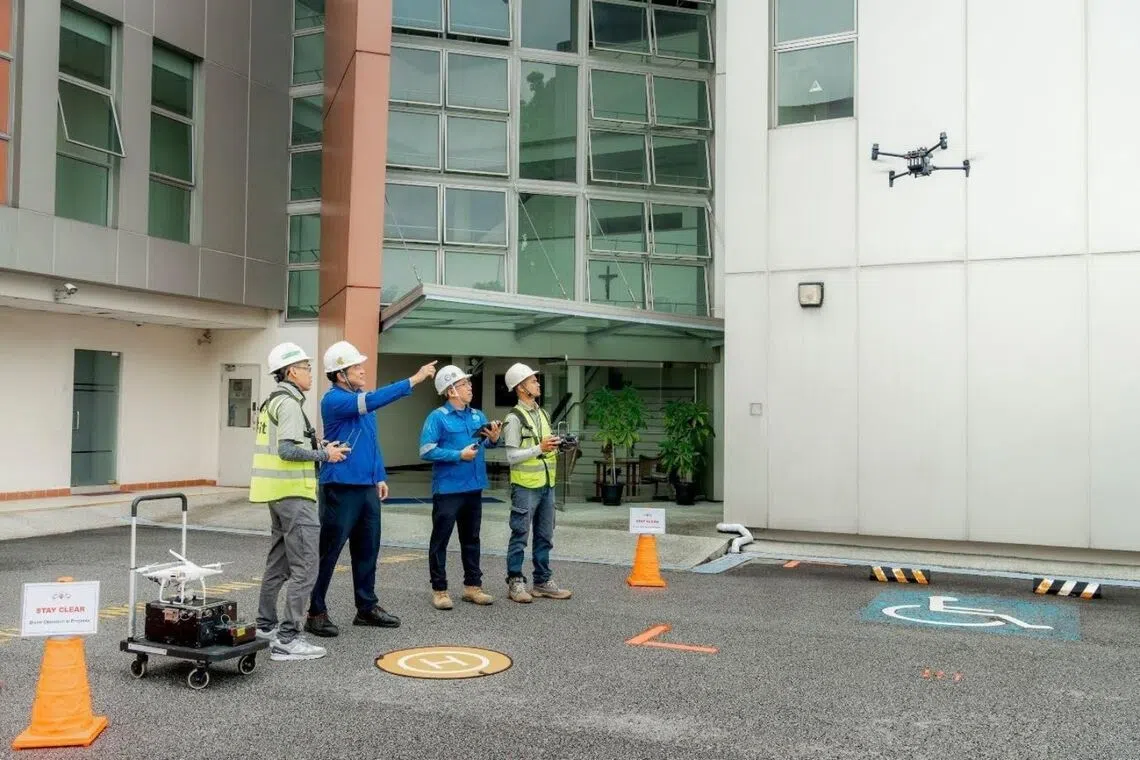
Founded in 2022, NovaPeak combines drones, artificial intelligence-assisted defect detection and engineering expertise for building inspections.
EDB and EnterpriseSG helped connect Panasonic and NovaPeak with stakeholders, including the Building and Construction Authority, to better understand industry needs, regulatory requirements and inspection workflows.
The collaboration began in 2022, produced its first proof of concept in 2023 and entered commercial trials in 2024.
NovaPeak brought expertise in drone operations, engineering workflows, regulations and live inspection projects, while Panasonic contributed AI visual recognition, software engineering and scalable platform capabilities.
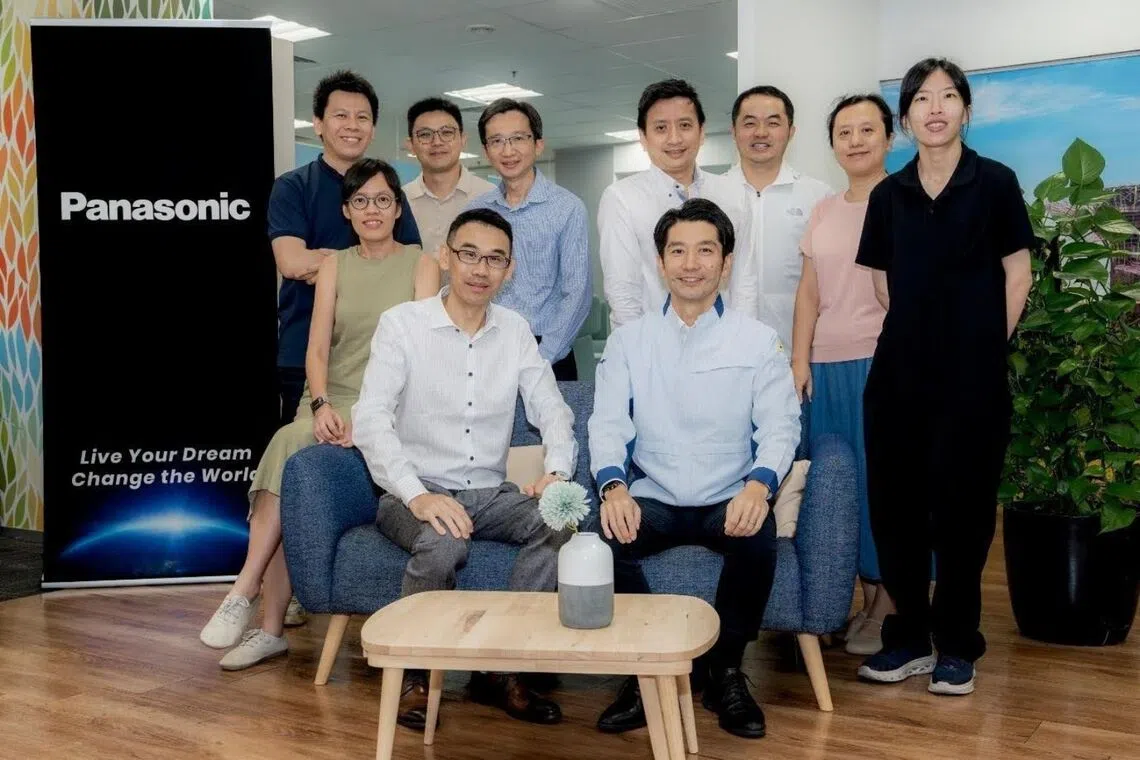
The partnership resulted in LiveInspect.ai, an AI-powered platform designed to make building inspections safer, more productive and easier to scale.
The platform analyses drone images for potential defects, which qualified engineers review before incorporating the findings into reports. Every image and review decision is traceable, ensuring human oversight in matters affecting public safety and regulatory compliance.
Eugene Choy, managing director of NovaPeak, explains: “The AI supports the inspection process, but it does not replace professional responsibility.”
The development of LiveInspect.ai was supported by the Partnerships for Capability Transformation (PACT) programme, administered by EDB and EnterpriseSG. It helped provide resources and specialist talent during the early stages of the collaboration.
“In particular, Panasonic needed dedicated AI solution engineers and solution architects who could translate core AI image recognition technology into a deployable inspection platform for real field use,” says Takeshi Ando, managing director of Panasonic R&D Center Singapore.
Panasonic and NovaPeak are exploring opportunities to bring LiveInspect.ai to Japan and Hong Kong, as well as applications beyond facade inspection.
“The longer-term opportunity is to extend the platform to other infrastructure types, such as bridges, industrial facilities, public assets and other built-environment structures where safety, maintenance and asset intelligence are critical,” adds Ando.
“Singapore has been a very strong testbed because the regulatory environment is clear, the standards are high and customers are demanding,” Choy adds.
Why MNC-local partnerships matter
Beyond attracting global companies to Singapore, EDB also seeks to create opportunities for local businesses to collaborate with them.
Cindy Koh, executive vice-president of EDB, says: “AI is reshaping how companies compete and grow. Beyond attracting leading global companies to Singapore, EDB works with them to create opportunities for our workers, local enterprises and the wider business ecosystem.”
“As companies increasingly adopt AI, stronger partnerships between MNCs and local enterprises can help deepen our ecosystem and create new opportunities for Singapore companies to grow alongside global companies.”
Wong Zeng Yi, assistant managing director (manufacturing) at EnterpriseSG, adds: “As more small and medium enterprises scale through these collaborations, they strengthen Singapore’s industrial ecosystem and create new engines of growth for the economy.”
Learn how MNCs and local enterprises are building new solutions together, and explore how the Government can support your collaboration here.

Share with us your feedback on BT's products and services