

Locally arranged outstanding debt down 2% in 2022; first fall in 4 years
Navene Elangovan
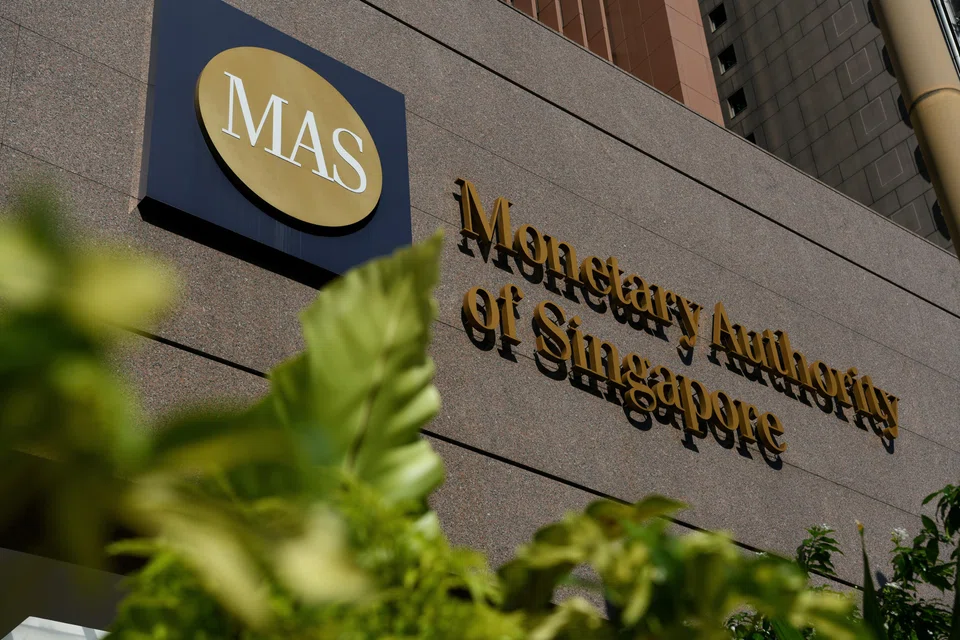
THE total outstanding debt arranged by financial institutions in Singapore dropped by 2 per cent to S$512 billion in 2022, down from S$523 billion the year before.
The decline marks a reversal in the steady growth of Singapore’s debt market since 2018.
The Monetary Authority of Singapore (MAS), which published the figures in its annual Singapore Corporate Debt Market report on Monday (Oct 16), said the decrease was in line with the slowdown in bond market activity.
New debt issuance also fell to S$190 billion in 2022 from S$232 billion in 2021. The drop marks a year-on-year decrease of 18 per cent and the steepest drop since 2018.
Of the new issuances, S$161 billion, or 84.7 per cent, were denominated in foreign currencies, which were mostly US dollars.
Financial institutions were the key issuers in both Singapore dollar and non-Singapore dollar issuances last year. The institutions were driven by banks’ funding activity to strengthen capital buffers before further tightening by the US Federal Reserve.
On the other hand, corporate issuers halved during the year, as corporates with strong balance sheets cut back on fundraising efforts amid greater bond market volatility and higher interest rates, said MAS.
The bulk of Singapore dollar issuances, or 44.3 per cent, were from financial institutions.
This was followed by issuances from statutory boards, which “remained strong” at 28.1 per cent of Singapore dollar issuances, said MAS.
The central bank noted that the Housing and Development Board, National Environment Agency and PUB, the national water agency, had raised a total of S$8.2 billion. Of this amount, half were raised as green bonds, it said.
In the case of non-Singapore dollar issuances, financial institutions made up 83.9 per cent of issuers in 2022, marking a 19 percentage point increase from 2021.
The proportion of non-Singapore dollar corporate issuances, on the other hand, declined by 14.1 percentage points to 10.8 per cent in 2022.
The issuance of green, social, sustainability, sustainability-linked and transition (GSS+) bonds in Singapore also fell from a record high of S$14.4 billion in 2021 to S$10.1 billion last year.
However, this amount was still higher than the aggregate of 2019 and 2020 issuance volume, despite the more challenging market environment for bond activity.
MAS said that the volume of GSS+ bonds issued in 2022 signalled the “continuing mainstreaming” of such bonds.
Public sector green bond issuances also increased by 2.5 times in 2022 as compared to 2021.
Market watchers said the drop in the total outstanding debt arranged by financial institutions did not come as a surprise, given that borrowing costs were already on the rise.
Research analyst Lim Choon Siong of wealth advisory firm Providend said the drop was likely the result of a substantial surge in borrowing costs since the 1980s.
He added that both financial institutions and corporate entities in Singapore had reduced their debt issuances following a decline in global bond issuances in 2022, brought about by sharp increases in interest rates.
“This shift could be attributed to the higher costs of borrowing and a decreased appetite for their debt, as investors may now favour government bonds, deemed to be less risky in comparison to debt issued by financial institutions or corporations,” said Lim.
Similarly, Clifford Lee, global head of fixed income at DBS, said the drop was not surprising, as issuance volume had already declined since the start of 2022 in both the US dollar and Singapore dollar space.
On the drop in new debt issuances last year, Lim of Providend noted that the decrease in non-Singapore dollar new debt issuance was “more pronounced” compared to that of Singapore dollar new debt issuance.
Non-Singapore dollar new long-term debt issuance fell by 40 per cent, while Singapore dollar new long-term debt issuance declined by 14 per cent.
Lim attributed the relatively smaller decline in Singapore dollar debt issuance to the lower borrowing costs compared with non-Singapore dollar debt, such as US dollar debt which carries a higher borrowing cost.
The drop in the issuance of GSS+ bonds, meanwhile, was “not unexpected” as it is in line with the slowdown in bond market activity locally and globally, said Lim.
He noted that the Sustainable Bond Grant Scheme introduced by MAS in 2017 to defray the cost of issuing green and sustainability-linked bonds and loans could have also incentivised debt issuers to opt for GSS+ bonds.
This may have helped to offset some of the declines that would have otherwise occurred in 2022, he said.
On the outlook for 2023, DBS’ Lee noted that new issuances have decreased this year, with both the Asia (ex-Japan) G3 and Singapore dollar market declining.
The bond issuance volume for Asia (ex-Japan) G3 has declined year on year by 24.8 per cent as at Oct 16, while the volume for Singapore dollar bonds in the same period has dropped by 21 per cent.
There will also be “continued softness” for 2023 due to several factors, including high interest rates, China being out of the issuance market, as well as poor business sentiment.
That said, Lee added that the Singapore dollar market will be a “bright spot” this year as more than half of the Singapore dollar bond issuers are foreign issuers.
This shows the Singapore dollar market is becoming “more internationalised and more interesting” to foreign issuers and investors, he said.
Lee expects a more stable market situation going into 2024, predicting rates to stay high at their current levels next year before softening into the second half.
“We hope to see a pick-up in the issuance activity both in the Asia (ex-Japan) G3 as well as the Singapore dollar space.”
Similarly, Edmund Leong, head of group investment banking at UOB, noted that there is “a strong recovery” in the Singapore dollar bond market in the third quarter of 2023.
He said the momentum in the primary issuance market could continue into the fourth quarter, given the sizeable amount of liquidity in the system and S$6.9 billion worth of bonds that are maturing or callable in this period.
“We expect market volume to return once the market stabilises and when there are signs of a reduction in interest rates on the horizon,” he added.
TRENDING NOW
Prima to move out of historic Keppel Road flour mill building in 2028

Grab CEO’s wife Chloe Tong on life with Anthony Tan and finding her purpose

OCBC sheds S$8 billion in value as shares close nearly 6% down; analysts cautious on banks

As Asia’s food delivery giants rejig the pie, who will win the market?

