London’s voluntary carbon market model could work for Singapore: CIX product head

Wong Pei Ting
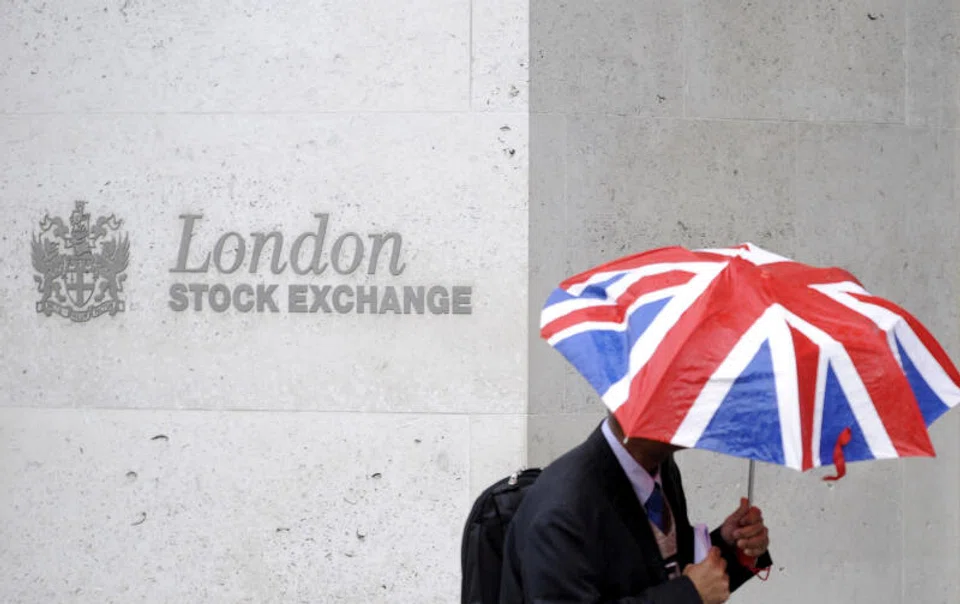
SINGAPORE carbon exchange Climate Impact X (CIX) is watching the London Stock Exchange’s (LSE) Voluntary Carbon Market designation with keen interest, with its product head saying it is possible for the model to be adopted here.
Speaking to The Business Times, CIX head of product Tom Enger said that the designation, which gives carbon reduction and removal projects an avenue to raise capital via a public listing, is a “very interesting” model that will attract a global supply of carbon projects.
CIX is backed by Singapore Exchange (SGX), Temasek, DBS Bank and Standard Chartered Bank.
Since Singapore is a financial hub like London, and funds are not new to the Republic’s ecosystem of financial institutions, brokers or exchanges, it is “possible or probable” to adopt a similar model here, he felt.
Enger added that global investors are “not unique” to London, as he stressed that Singapore receives demand for Asia-project origin versions of funds, because “foreign investors and buyer governments assume Singapore can pool regional supply efficiently”.
SGX declined to comment, saying that it may be too early to give an opinion.
CIX is currently only involved in the voluntary carbon market’s primary market through its Project Marketplace platform.
It has yet to launch its planned carbon exchange platform, meant to help traders, brokers and financial institutions trade liquid standardised carbon contracts without counterparty risks.
Asked what CIX’s approach was, Enger said that it skews towards supporting the contract development of physical forwards, benchmarks, futures or funds, which are innovations that improve access and transparency.
In contrast, LSE’s fund model, which suggested that entities could issue carbon credits as dividend in-specie, could appeal to investors interested in dividends from carbon credits as offtake from new projects, he pointed out.
Enger, however, said that these investors should take caution of the risk profile of funds with projects that are either early stage or host imminent credits.
They should also consider the projects’ timeframe as returns, in some cases, could only be realised in a decade, he pointed out.
Motivation is another area to look into, he added, saying that some projects focus on sustainability, or feeding liquidity into the system to scale decarbonisation markets, while others focus on hedging, in anticipation of the rising cost of carbon.
Singapore-based AirCarbon Exchange’s head of Asia-Pacific and head of products Hum Wei Mei said that LSE’s approach essentially gives investors upstream exposure to carbon crediting projects.
“Given the scale of investment required to fight climate change, carbon exchanges may over time, each offer several avenues for gaining exposure to the carbon markets,” she added.
When asked if the relevance of AirCarbon’s exchange is questioned with the development, its chief executive officer Thomas McMahon contended that “markets do not scale in isolation”.
“As we have seen historically in financial market formation, regional and national exchanges and global commodity market venues address demand and correlated value creation,” McMahon said.
Meanwhile, MetaVerse Green Exchange (MVGX) co-founder Bo Bai believes that LSE’s model does not yet solve carbon’s “nationality problem”, which has caused Indonesia and India to roll out restrictions on exporting voluntary carbon credits to prevent the “smuggling” of credits that would negatively impact their nationally determined contributions.
He continues to advocate for the use of blockchain technologies to bring transparency, accountability, and standardisation to carbon credit ownership, stressing that Singapore needs to resolve this to facilitate exports of carbon credits for its neighbouring countries.
MVGX’s chief strategy officer Michael Sheren, who is also a senior advisor to the United Nations Development Program Finance Hub, said that LSE’s development, which calls for the financial regulatory body in the UK to oversee the carbon market, is an excellent way of providing the necessary guardrails and oversight needed to strengthen the sector.
But he believes that it may serve both LSE and the Financial Conduct Authority better if they work with the United Nations, the Integrity Council for the Voluntary Carbon Market, and other global stakeholders to develop global harmonised baseline standards and support the development of an international carbon trading regulatory regime.
Paul Greening, a partner at law firm Akin Gump Strauss Hauer & Feld, said that the model could create an opportunity for two significant exchanges – LSE and the SGX – to cooperate on standardisation.
But the key issue, he added, is whether the issuer can provide enough certainty to investors upfront as to the type of credit they will receive as distribution in-specie.
“Without all carbon certificates being equal, the value of the distribution will vary depending on the underlying asset quality, geography, timeframe and certification regime, and this may not be attractive to investors,” Greening said.
Orchlon Enkhtsetseg, who founded Singapore-based climate tech startup Ureca, said that LSE will have to be able to attest to the quality of the credits sold through it. “If we have a carbon credit equivalent repeat of the sub-prime mortgage crisis – during which little attention was being paid to the quality and origin of the instruments being sold – this could have a profoundly detrimental impact on the planet’s survival, as extreme as it sounds,” he added.