

In the long run, we won't all be dead: Motley Fool
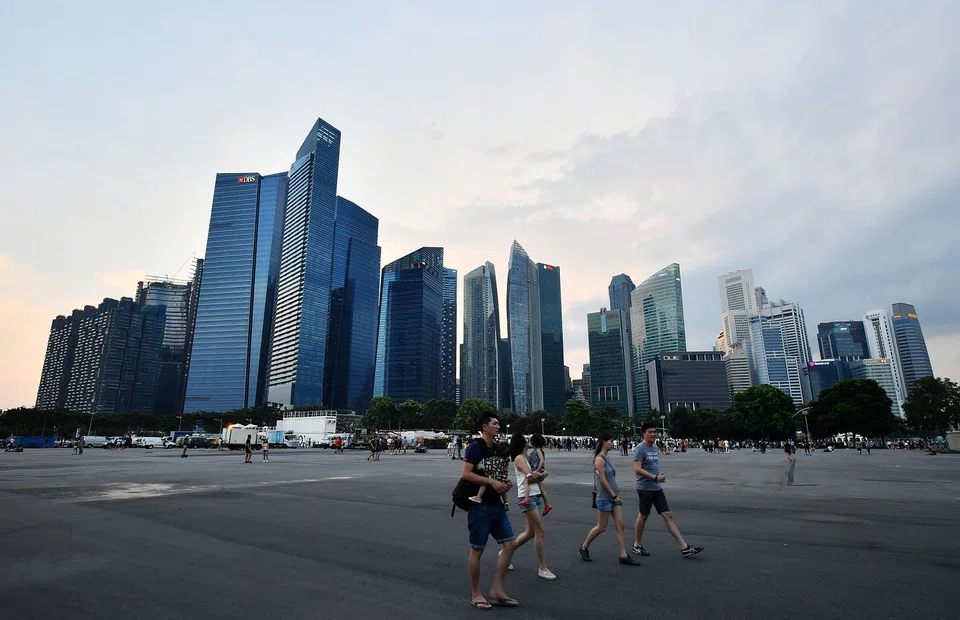
Singapore
EVEN though global markets have been trending upwards for very many years, a major recession does not appear to be likely, said Tematica Research chief investment officer Christopher Versace at InvestFair 2017 on Saturday.
The "four horsemen" of the global economy - the US, EU, China and Japan - are still doing well, even though they each have their own set of risks.
And even if the markets decline by 20, 30 or even 50 per cent, it does not necessarily spell doom for investors as they always recover in the long run, said The Motley Fool co-founder and CEO Tom Gardner at the same event, organised by ShareInvestor and The Business Times.
Mr Versace said that some of the risks investors needed to look out for included the "underperforming" US economy which may be further shocked by more Fed rate hikes. He also added that despite the EU generally outperforming the US, the 133 per cent debt-to-GDP ratio of Italy was a "crisis in the making" for the bloc.
However, taken together with the performance of the Chinese and Japanese economies, he said the global economy was achieving slow and steady growth and that there was "no incoming global recession".
Mr Versace also discussed how investors can use thematic investing to maximise their returns.
"Sector investing is dead," he said. "When we look at the vast majority of institutional investors that follow a sector-based strategy, they tend to underperform their benchmark, like the S&P 500."
Instead, he advocates thematic investing as a better way to maximise returns. An investment theme is a market shift that shapes and impacts consumer behaviour, forcing companies to make fundamental changes to their businesses to succeed.
Spotting thematic tailwinds and investing in the relevant companies, therefore, is the key to success.
The three themes Mr Versace said were most relevant in today's global economy include "Ageing Population", "Cash-strapped Consumers" and "Connected Society".
First, for dealing with an ageing population, he highlighted financial services companies as being important for helping people with progressively longer lifespans stretch their capital.
He also said the ageing population would be a boon for disruptive technologies such as driverless cars, online shopping and delivery services for the elderly who may be less mobile. Caregiving services would also face a higher demand.
Second, "Cash-strapped Consumers" acknowledges the high levels of debt in many advanced economies and looks for companies which can help consumers make the most of their money.
Third, "Connected Society" looks at the demographic and behavioural effects of new technologies, such as the increased usage of online shopping and delivery service providers.
But Mr Versace also said that because demographic trends take some years to play out, thematic investments do not give quick returns. That was also the message of Mr Gardner, who emphasised long-term investing as the best way of guaranteeing stable returns. He said that drawdowns happen regularly in the short-run and that they are unlikely to affect long-run returns.
Mr Gardner added that since 1928, the US markets have faced a 10 per cent decline every 11 months, a 20 per cent decline once every four years and a 30 per cent decline every decade, on average. But over any 10-year time period, there would be an 88 per cent chance of an investment making positive returns.
And for Singapore's own Straits Times Index from 1993 to 2016, 21 of these years saw a more than 10 per cent maximum drawdown and 10 of them saw a more than 20 per cent maximum drawdown. Yet, over this time frame, the STI returned 112 per cent in total.
"The very worst thing I can do as a long-term investor is to sell a winner too soon," Mr Gardner said. "At The Motley Fool, we've found that if we had never sold a stock, our returns would have been better."
TRENDING NOW

Stocks to watch: Clar, Seatrium, Sheng Siong, MPACT, NetLink NBN, Starhill Global Reit

Singapore government slaps loan curbs on individual private-hire car buyers

If Europe goes to war, the fallout will be felt in East Asia

DBS denies rumours of Indonesia unit merging with Bank Central Asia; analysts see sense in a deal

