

Is luxury’s favourite e-tailer about to go bust?
 Add BT as a preferred source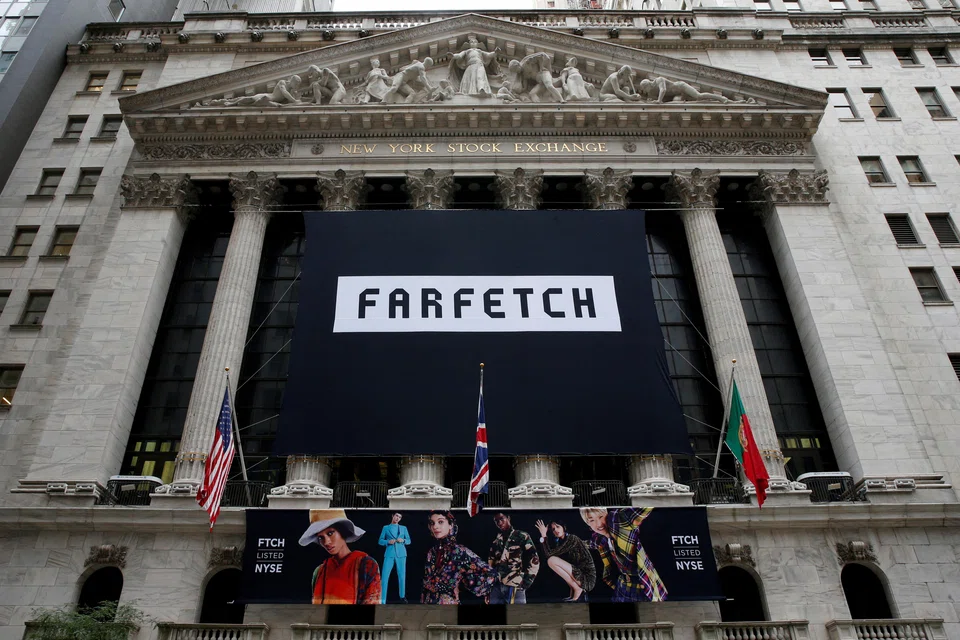
FOR more than a decade, Farfetch has been a global retail powerhouse, selling billions of dollars worth of coats, shoes, handbags and other luxury goods.
But in recent months, the online platform, which was valued at more than US$20 billion at its peak in 2021, has been fighting for its survival. Its share price has collapsed, rumours have been swirling that its founder is trying to take the company private and reports suggest it will need a lifeline of at least US$500 million by the end of the year to prevent it from toppling into bankruptcy.
Farfetch has multiple big-name investors, including Alibaba, a Chinese tech giant; Artemis, a holding company of the billionaire Pinault family, which owns Kering; and Richemont, a Swiss luxury group. The company’s shares lost about one-third of their value this week, at one point dropping to a record low of just 60 US cents, giving the firm a market value of about US$250 million.
Farfetch declined to comment for this article.
How did Farfetch fall so far and so fast? Who might be able to step in and save it? And who will be affected if it collapses?
Farfetch came to life in 2007 as an e-commerce marketplace for brick-and-mortar fashion boutiques. This meant that a shopper in London could buy boots from an independent shop in Paris, or a customer in Beijing could source a bag that was not available locally from a store almost 8,000 km away in Venice, Italy. Today, it works with more than 550 fashion boutiques in 190 countries.
As consumer appetite for buying luxury goods online began to grow, the company also started working directly with fashion brands to build their websites and back-end operations. Through Farfetch Platform Solutions, the company now offers a host of e-commerce services to brands, including Burberry and Ferragamo, and department stores, including Harrods and Bergdorf Goodman.
In 2015, it bought Browns, a London fashion boutique, and in 2018, the company, then described as “the Amazon of fashion”, went public on the New York Stock Exchange.
Who founded it?
Jose Neves, 49, is a Portuguese entrepreneur whose first foray into the fashion business came in 1996 with a shoe brand called Swear. For years, he was seen by the fashion industry as a game-changing guru who could guide brands towards successful digital strategies – and he accumulated an estimated US$2.5 billion personal fortune as a result.


Farfetch is a public company, but Neves still owns a 15 per cent stake and 77 per cent of the voting rights through a dual-class share structure.
Farfetch charges a cut of more than 30 per cent of sales for making a retailer’s stock available to almost one million active customers. The company reached profitability for the first time in 2021, but has had a rocky time maintaining it since then.
The luxury retailer’s appetite for risk started to become apparent in 2019, when more than US$2 billion was wiped off its market value in a single day after it blindsided investors with a US$675 million takeover of Italian holding company New Guards Group, owner of the licence for the fashion label Off White and brands such as Palm Angels, and reported larger than expected losses.
Neves defended the acquisition, saying Farfetch was still in growth mode, but critics felt it was an expensive deviation from Farfetch’s original inventory-free, logistics-focused strategy. It also owns a US$200 million stake in American department store Neiman Marcus.
Even still, several of fashion’s major power players kept the faith. Alibaba and Richemont backed Farfetch through a complex tie-up in which they invested US$300 million each in the company, and an additional US$250 million each for a 25 per cent stake in its Chinese offshoot. Its market value peaked at US$23 billion in early 2021 as luxury shopping boomed in the pandemic.
Since then, there have been major headaches. Overhead costs soared as the company continued to scale up. This year, in Farfetch’s second-quarter results, the New Guards division posted a 40 per cent drop in sales, despite a much-celebrated partnership with Reebok that was unveiled earlier in the year. Farfetch also reported US$1.15 billion in debt for its fiscal quarter ending in June.
Neves has been taking steps to improve the company’s fortunes. This year, Farfetch closed its beauty business and laid off 11 per cent of its employees as part of what Neves described in an earnings call as the most significant cost-cutting measures in the history of the company. There is also industry chatter that he is looking to sell Browns and beauty retailer Violet Grey.
But the share price has continued to plummet, and major investors such as Richemont have said they will not be providing fresh capital. This month, J Michael Evans, Alibaba’s president, stepped down from Farfetch’s board.
Now, the British business media reports that Neves is seeking a white knight investor to help take the company private again. Those reportedly in talks with Farfetch include Apollo Management and an original private investor, Carmen Busquets.
What happens if the problems are not solved?
The company will be forced to file for bankruptcy protection or be liquidated.
Whether Farfetch survives could affect how consumers shop for fashion. This is because of the number of big-name brands it counts as e-commerce clients – although most of them could probably turn to a rival. That switch would be more complex for the 700 smaller boutiques and thousands of independent designers who rely on Farfetch. Consumers have become comfortable making luxury purchases at the click of a button.
Other players exist in the space. But if Farfetch is not around to enable many of those sales, the digital experience of luxury shopping could change significantly as brands and sellers scramble to find a new way of doing business online. NYTIMES
Decoding Asia newsletter: your guide to navigating Asia in a new global order. Sign up here to get Decoding Asia newsletter. Delivered to your inbox. Free.
Share with us your feedback on BT's products and services
TRENDING NOW
Jumbo Seafood to close flagship East Coast Seafood Centre outlet on Sep 30

Shanda co-founder sells Tanglin Hill bungalow for S$76 million

Singapore developer in limbo after Timor-Leste scraps major township project

Trek 2000 shares jump 41.5% after Osim founder Ron Sim drops claims, sells 7.3% stake to Azure Capital

