M&A targets: opportunities vs opportunism


THE vise-like grip of the pandemic shows few signs of easing, yet the appetite for deal-making remains surprisingly hearty. The question is, how many of these deals are good opportunities and how many are opportunistic ones?
In our article, "M&A activity within Singapore and region expected to remain robust" (BT, June 16, 2021), we said that merger and acquisition (M&A) activity within Singapore and the region is predicted to stay strong, boosted by pent-up demand from last year, supportive financing markets and overall strong market sentiment, particularly towards tech and high-growth industries.
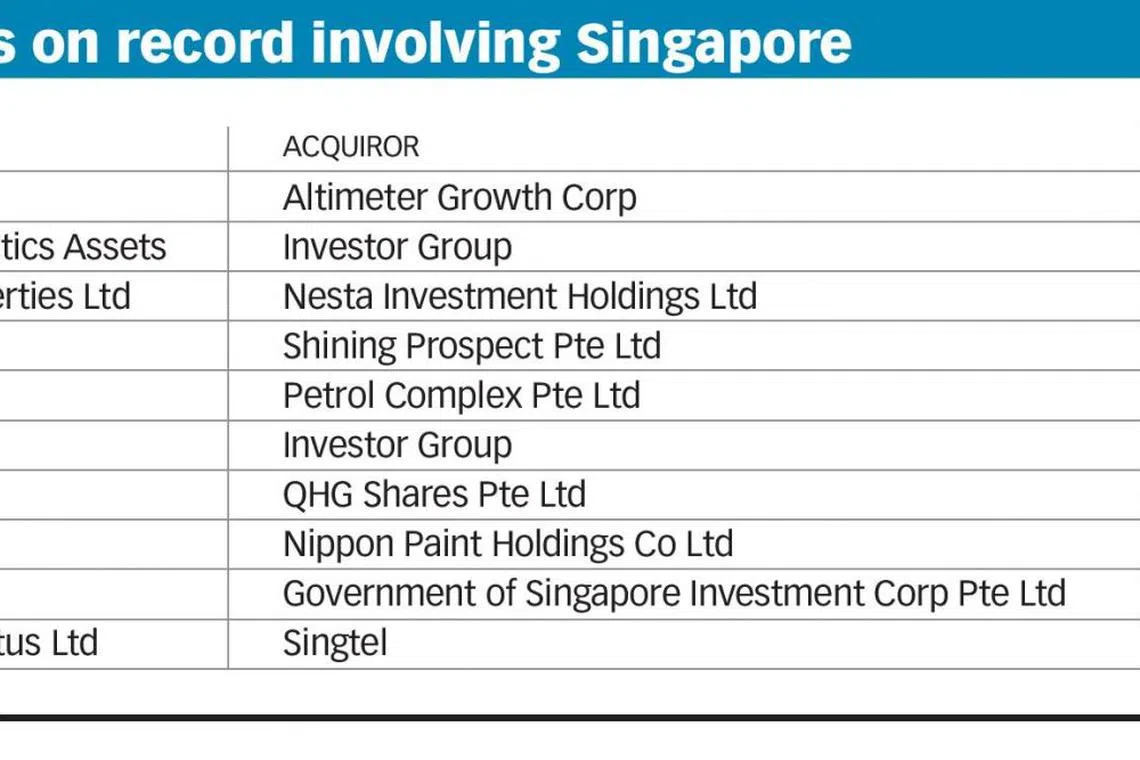
Globally, US$2.4 trillion (S$3.2 trillion) worth of M&A deals were announced, as at end-May - the highest level recorded over the first five months of the year, according to data from Refinitiv. In the Asia-Pacific, M&A announcements increased 78 per cent year-on-year to an all-time high of US$433.7 billion as at end-May.
Deals involving a Singapore target totalled US$43.9 billion year-to-date across 160 deals, exceeding 2020's US$38.9 billion in deal value across 311 deals, data from Dealogic showed.
And the year saw a wide variety of deals being made. For example:
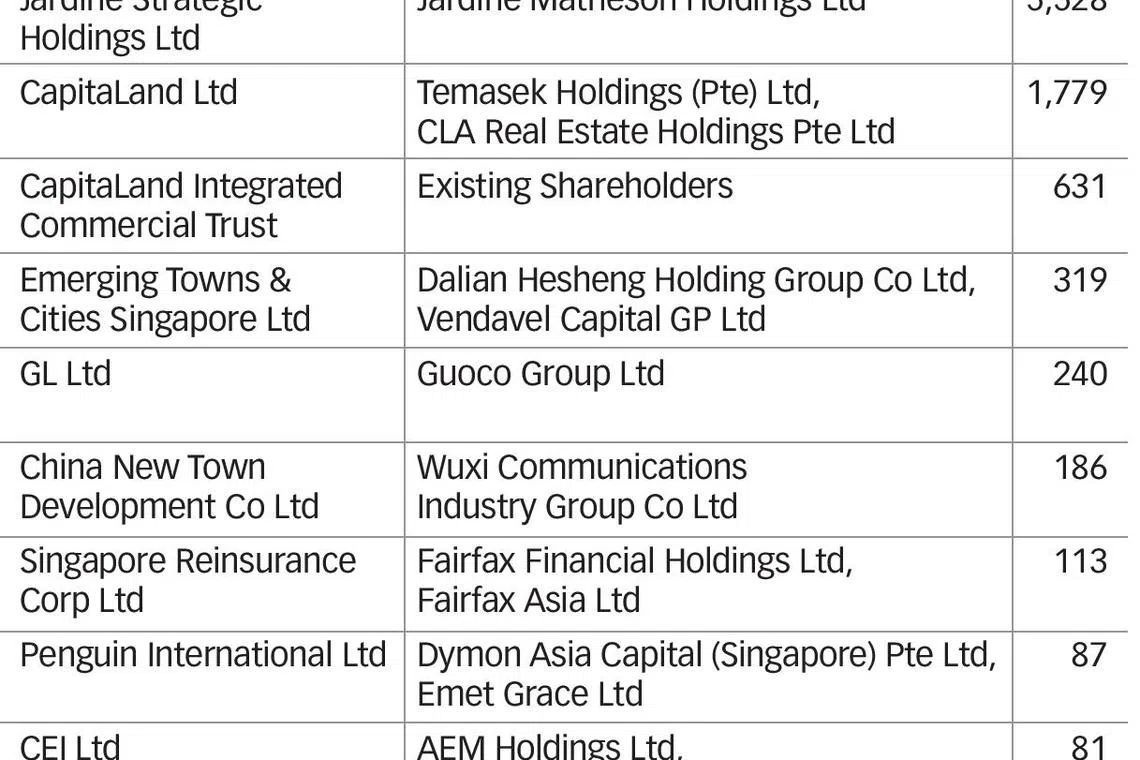
- Jardine Matheson Holdings' acquisition of the 15 per cent of Jardine Strategic Holdings it did not already own - valued at some US$5.5 billion - which was part of its plans to simplify the parent company structure of the group;
- DBS Group's proposed acquisition of a 13 per cent stake in Shenzhen Rural Commercial Bank for 5,286 million yuan (S$1.10 billion), which typifies an "acquisition for growth" M&A deal;
- Mapletree Industrial Trust's manager's proposed US$1.32 billion acquisition of 29 data centres in the United States, which was among the sizable number of deals this year involving real estate investment trusts acquiring real estate properties or hard assets; and
- Deals at the other end of the size spectrum, such as Advanced Systems Automation's plans to buy a video gaming company, Excelgames Interactive Asia Holdings, for a base consideration of S$120 million in a transaction that will constitute a reverse takeover upon completion; and Incredible Holdings' decision to buy a Danish company selling watches, gold, silver and other jewellery - which was incorporated just six months ago - in an all-cash deal of around DKK5.20 million (S$1.13 million).
With such a wide variety of M&A transactions and deal structures available, how would one know if a potential investment is a beneficial and accretive one? How would one differentiate between a good opportunity and an opportunistic one, when caught up in the euphoria of an active market?
Because, let's face it, not all deals are created equal; some have raised eyebrows - and indeed, queries from market regulators like the Singapore Exchange (SGX) - while others have raised the spectre of whether they have been promoted merely to serve someone's avarice.
With lots of dry powder remaining in private equity, potential targets - especially distressed ones, in which it can be tougher to suss out their true attributes - will continue to be actively hawked.
Associate Professor of Law at the National University of Singapore, Lan Luh Luh, who specialises in company law, corporate finance law and corporate governance, warns against a "mass buying herd mentality" here, with investors and buyers spoilt for choice and also afraid to lose out on good deals, "even when the prospective target may not really fit into the overall corporate strategy - it is like our GSS (Great Singapore Sale) where purchases are made with no good rationale".
It's important, therefore, for potential investors - and stakeholders involved in potential deals - to acquaint themselves with some of the fundamental characteristics of a successful and accretive M&A deal.
Whatever the structure, Prof Lan said, it is key for the investor or buyer to have a strategic rationale or reason for the investment or purchase, as well as a plan on how the new investment or purchase fits into the overall short- and long-term strategies or growth plan of the company.
"Buying or investing in a company should be like getting another piece in the company's bigger jigsaw puzzle picture. There should be proper planning: careful due diligence conducted on the target, good integration or synergy plans made prior to purchase, clear targets to assess whether the M&A is considered successful from the company's point of view, and also exit plans should the M&A fail to achieve the intended objectives," she said.
The importance of doing one's homework, ie, proper due diligence, cannot be overstated, and the absence of such due process - as well as the lack of communication on the process undertaken - should raise alarm bells.
Incredible Holdings is a case in point - its proposed acquisition of the Danish retailer invited a slew of queries from SGX. The Exchange asked the company to provide further information on, among other things: the historical track record and financial performance of the Danish company, which was incorporated only six months ago; why the buyer had not conducted any valuation of its target and how it then arrived at the purchase price of S$1.13 million, which would result in goodwill of approximately S$1.10 million; and how Incredible Holdings' executive director, Christian Kwok-Leun Yau Heilesen, would be "able to devote sufficient time and attention to all his engagements" as the proposed director of the target company, and also as the executive director of Ntegrator International and a director of "about 25 other private companies".
The company's responses, thus far, have been wanting. For example, in explaining why no valuation was conducted, Incredible Holdings said it "did not consider the valuation to be necessary as the target has yet to start operations and, therefore, there is no historical track record to form the basis of the valuation".
Commenting on this, Prof Lan said: "The acquisition should be properly valued - there are many ways of valuation and historical valuation is not the only way. We trust that the purchase price of S$1.13 million was not given at random and it is based on some objective criteria, and the latter should be made known to the shareholders."
Deals, in general, that are poorly planned or poorly researched also run the risk of developing integration or takeover issues further down the line - and the cost of these can sometimes overwhelm the value or the price placed on the target.
"M&A deals are costly and buyers should not rush into the deal," Prof Lan said. "One should not be persuaded by price alone. As the saying goes, if the deal is too good to be true, it probably is."
And, with the cost of poor decisions being borne not just by the company, but also by its shareholders, the need to differentiate between good opportunities and opportunistic ones, especially in a market inebriated on deal fever, cannot be emphasised enough.
READ MORE: