From machinery maker to solutions partner: Why Hitachi Construction Machinery is changing its name
From April 2027 it will become LANDCROS, as the Japanese manufacturer aims to work alongside customers to solve worksite challenges, while keeping high-quality machinery as the foundation of its business
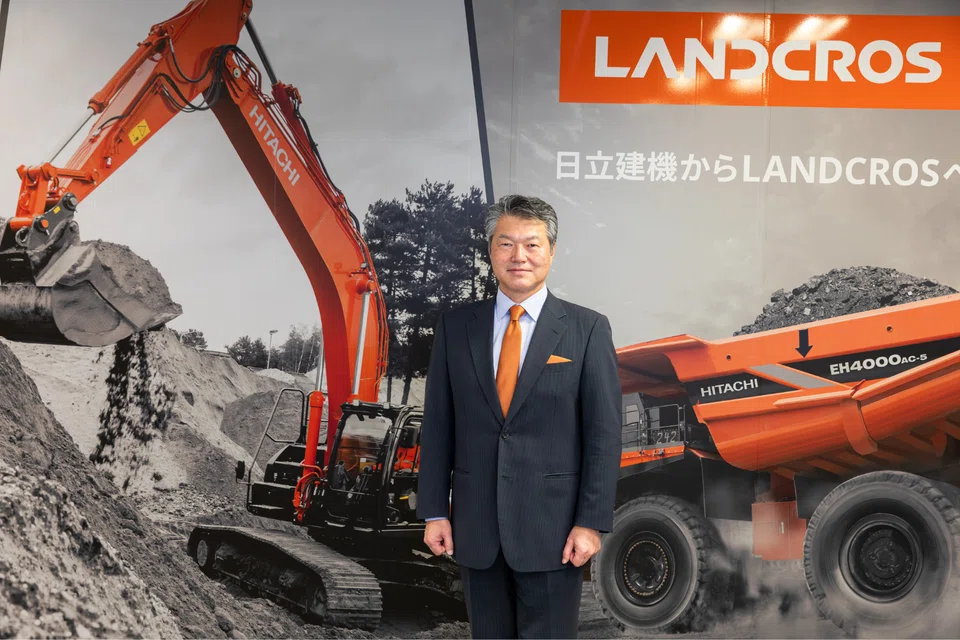
IN THE near future, more construction sites in Singapore and beyond could tap on smarter and greener equipment with a big assist from one of the world’s largest construction machinery firms.
Hitachi Construction Machinery, whose orange machines are a common sight in worksites across Singapore and throughout South-east Asia, will change its name to LANDCROS from April 2027, and shift from simply selling and servicing equipment to creating comprehensive, high-tech and sustainable solutions for customers.
To raise awareness of its new corporate name, LANDCROS, and deepen understanding of the brand’s vision and the value it delivers, the company will launch its global brand campaign, “Solutions Beyond Machinery”. The campaign will be rolled out across the countries and regions where the company operates around the world.
The Japanese company is currently the eighth-largest construction machinery manufacturer worldwide by sales, and aims to become one of the top three manufacturers in the industry by 2030. Its new name combines “LAND”, representing its vision of a prosperous land and cities for the future, and “CROS”, which stands for “Customer”, “Reliable”, “Open” and “Solutions”, all valued by the company.
Masafumi Senzaki, its president and executive officer, says: “We intend to place particular emphasis on being open, in terms of our willingness to work with partners to respond quickly and flexibly to the needs of our customers. This will enable us to earn even greater trust and increase the value we deliver to our customers.
“Developing and offering high-quality, high-performance machinery will continue to be our business’ foundation, but we also want to become a one-stop solutions provider that identifies challenges at customers’ worksites and works alongside them to solve these issues.”
From Singapore to rest of South-east Asia
Businesses that deploy construction machinery have different expectations today, explains Junji Fukagawa, president of Hitachi Construction Machinery Asia and Pacific, a wholly owned subsidiary of Hitachi Construction Machinery. Headquartered in Singapore, it serves as the company’s regional headquarters for South-east Asia. “In the past, when it came to hydraulic excavators for example, the focus was on the machines’ own performance, such as digging capability, durability and fuel efficiency,” he says.
“Today, our customers face a range of challenges, from operator shortages to the need to reduce carbon emissions. In this environment, the value a machine delivers throughout its entire lifecycle, including fuel efficiency, ease of maintenance and recovery time in the event of a breakdown, is just as important as its initial purchase price.”
Moreover, Fukagawa says an increasing number of customers want a one-stop solution through which they can purchase not only hydraulic excavators, but also other required machinery from a single dealer. They also want a trusted provider they can rely on for the maintenance and condition management of all their onsite equipment.
Singapore will serve as a strategic hub for driving this transformation in South-east Asia. Fukagawa notes the Republic’s strengths in finance, information technology, logistics, highly skilled talent and global networks: “We aim to make Singapore a launchpad for creating new business models in South-east Asia and scaling them.”
The company has long maintained strong market shares in Singapore, Indonesia and Malaysia – providing a solid foundation for its goal of achieving further growth in Asia by 2030 – and its Singapore operation adapts its global strategy to the characteristics of each national market, including by selecting the products, business models and partners to introduce.
One example is WIXIM, its new brand for emerging markets, which was first launched in South-east Asia, with plans to expand into other emerging markets. Through partnerships, the company is broadening its product line-up to meet customers’ increasingly diverse needs.
Rather than competing on price alone, Hitachi Construction Machinery Group employees and dealers also handle everything, from supplying products, including those from partner companies, to providing after-sales service and maintenance. The aim is to provide solutions that support customers’ entire worksites.
“We don’t need to develop every product and service on our own. By working with other companies worldwide that have outstanding products and technologies, we can offer customers more choices much more quickly,” Senzaki highlights.
Using partnerships to accelerate innovation
With an eye on the future, the company also organises events – including those held in North America in 2024, Australia in 2025, and this year in Europe – which challenge start-ups to pitch ideas aligned with selected themes, such as connected construction machinery, mining, and next-generation construction and quarrying.
“This way, we can work with start-ups to accelerate development of new technologies, or find complementary business partners. It’s also in other companies’ interests to join forces with us – we have a 75-year history, our market share, including in Asia, is quite significant, and our clients have told us they prefer to buy from a trusted company like ours,” says Senzaki.
The business is also partnering with others that are leaders in their fields to speed up research and development too. It has invested in Rithmik Solutions, a Canadian company specialising in performance analytics for mobile mining equipment, to provide artificial intelligence-powered systems that remotely monitor the conditions of machines, helping to identify potential problems earlier, reducing downtime and maintenance costs. The company also provides consulting services to optimise mining operations.
Another strategic partnership with Pronto, a US-based pioneer in autonomous haulage systems, will deliver innovations to retrofit existing dump trucks so that these do not require operators. “Our goal is to realise open mine automation solutions that can be flexibly introduced at individual mines,” says Senzaki.
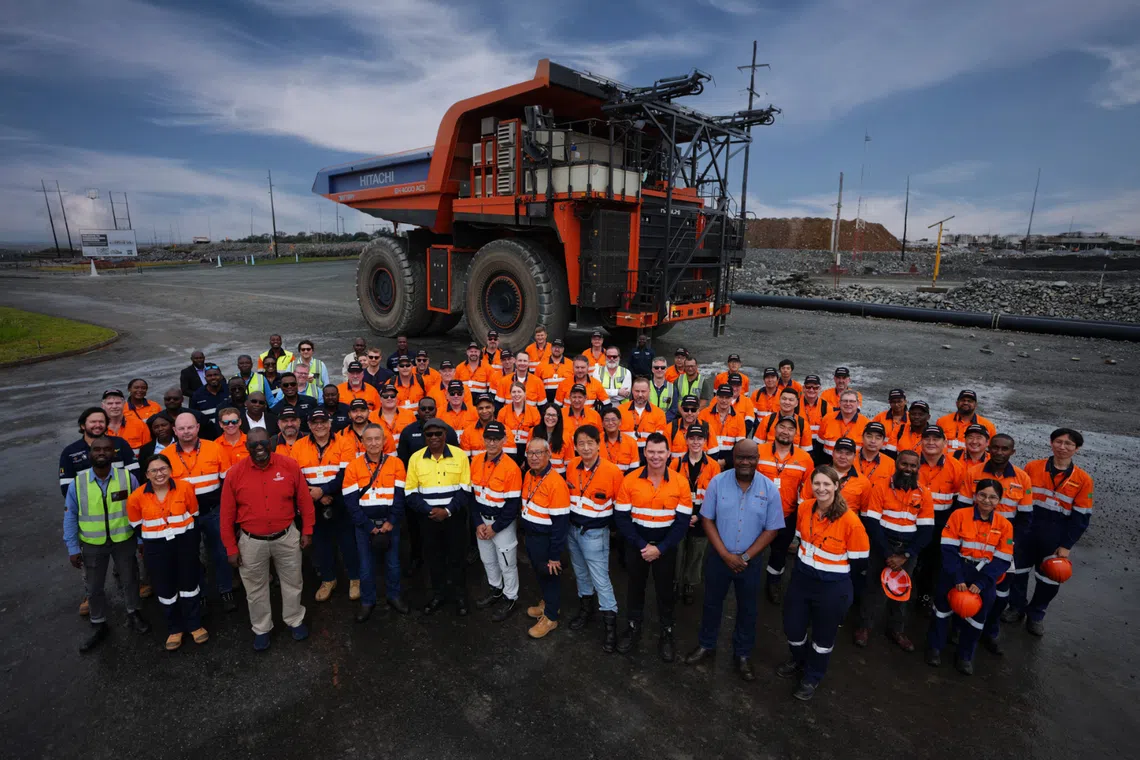
As part of Hitachi Construction Machinery’s environmental drive, the company has also created a Full Battery Dump Truck and run field tests in Zambia from June 2024 to August 2025, before demonstrating it to potential customers. The company is currently refining the dump truck, including by making it easier to maintain, and plans to commercialise it in the 2027 financial year.
Four growth pillars – and a key promise
To achieve its 2030 goals, Hitachi Construction Machinery will concentrate on four growth drivers: strengthening its presence in North America and Latin America, expanding its mining business, and growing its parts and services operations. In North America, the company aims to increase its market share by broadening its product line-up, while in Latin America, it will strengthen its sales structure, particularly in the mining sector. Across its mining business, Hitachi Construction Machinery will also expand its core product offerings and business scope, focusing on North America, Latin America, and Africa.
In parallel, it will expand its parts and services business. “Mining products are used in harsh conditions and require a high level of safety. As a result, customers are likely to choose highly reliable parts and related products and services, making this an area in which we can secure high profitability,” explains Senzaki.
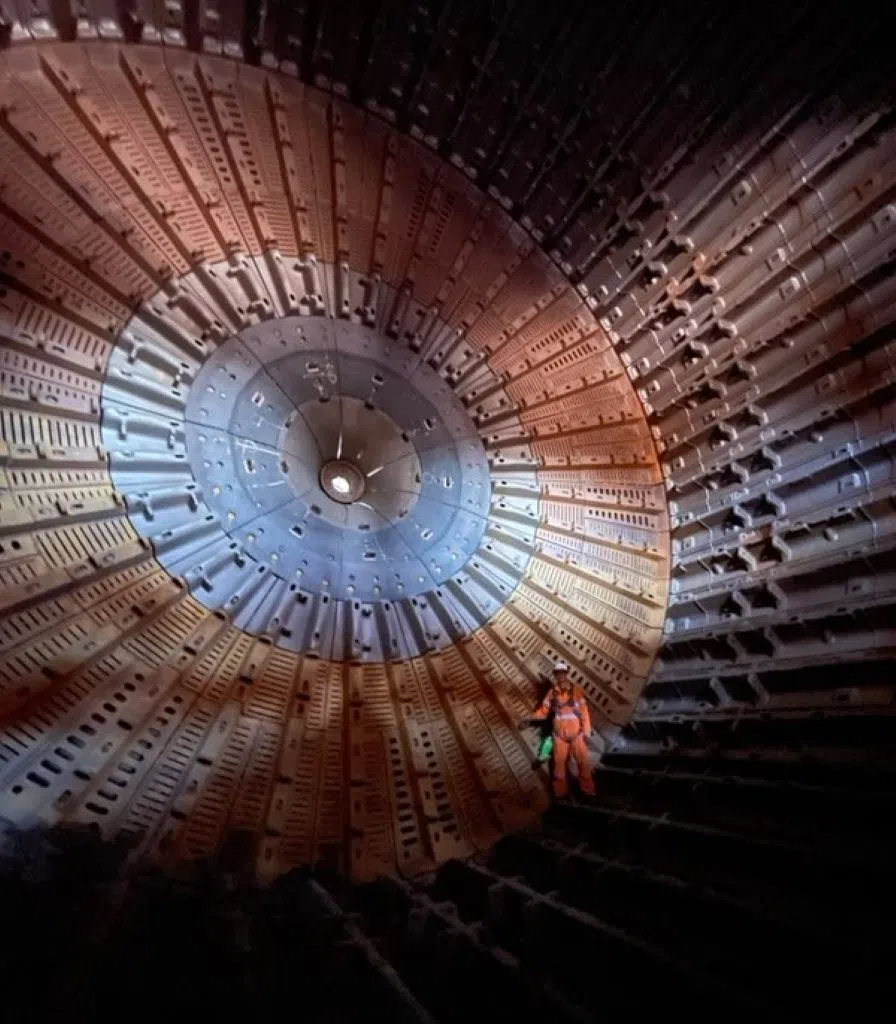
It has already established a mill liner plant in Chilca, Peru, to produce internal wall parts for ore-grinding mills, and will open a parts warehouse in Miami in the US in 2027. “We will leverage our customer touchpoints through about 300 dealers and 9,000 mechanics worldwide to gather feedback from worksites for the development of new products and services,” he adds.
Despite the company’s new name, its key promise will remain the same. Senzaki emphasises: “We focus on our customers, make great equipment and machinery, and pride ourselves on delivering value to those who use our products – this commitment will not change.”
Learn more about LANDCROS here.

Decoding Asia newsletter: your guide to navigating Asia in a new global order. Sign up here to get Decoding Asia newsletter. Delivered to your inbox. Free.
Share with us your feedback on BT's products and services