

Making an organic expansion to paediatrics
Although Singapore O&G's paediatrics segment is making losses, its CEO believes revenue growth will increase within a few years.
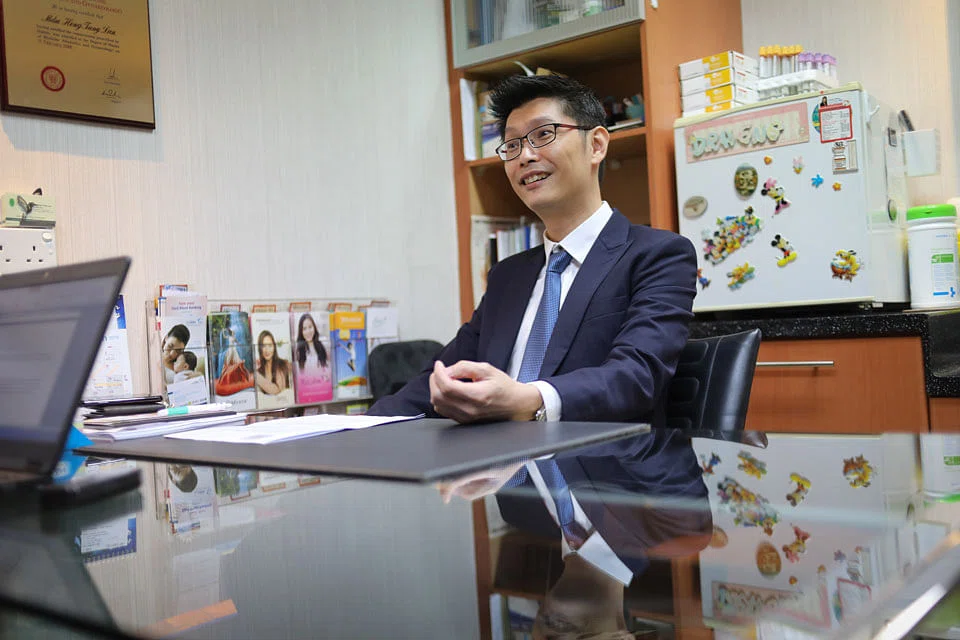
ABOUT two years after diversifying into paediatrics, Singapore O&G is still making losses in the segment. But chief executive Ivan Lau says it is normal for new businesses to take a couple of years to break even. He believes that moving forward, the anticipated growth of the paediatrics segment will "shift the pie" of the group's revenue mix.
In an interview with The Business Times, Dr Lau, appointed CEO last May, says: "You will find that after a while, the pie will grow bigger and in terms of the proportions, there may be some shifts. Obstetrics and gynaecology (O&G) will still form the core, because that's how the organisation started, and that's our passion. We are still focused on women and children care for sure."
In FY18, the group's net profit rose 7.5 per cent to S$9.1 million, on the back of a 16 per cent increase in revenue to S$34.7 million. O&G still contributed the bulk - three-fifths - of its total revenue at S$21 million. Dermatology made up 22 per cent or S$8 million; cancer-related conditions at 15 per cent or S$5 million; and paediatrics was the smallest at 3 per cent or about S$1 million.
In terms of bottom line, its paediatrics segment made slight operational losses of S$487,000 in FY18. Dr Lau says: "There's always a gestation period for the new paediatricians and the new business to grow. It is really more of an organic growth kind of strategy... We expect that within two to three years, the segment will have a much bigger revenue contribution."
Dr Lau says pregnancy is a precious journey for a woman, and the company's goal is to make it as pleasant, pain-free and complication-free as possible. The reason why it has also extended into other complementary vertical offerings such as paediatrics is to extend the level of care to the children post-delivery as well.
The group is also looking at expanding its other core business segments in O&G, dermatology and cancer-related conditions to boost market share. In terms of birth deliveries, the company has a current market share of just under one-tenth of the private market. He believes there is a lot more potential for growth, and hopes to increase both its number of doctors and clinics over time from the current 15 each.
Meanwhile, it has not ruled out overseas expansion either. Singapore O&G is also considering expertise transfer through joint ventures and acquisitions of related healthcare businesses, such as maternity confinement homes.
Previous CEO Victor Ng had named countries such as Myanmar, Vietnam and China as examples of where the group hopes to expand into. Dr Ng resigned in January last year to "pursue other interests", for reasons that are "personal in nature".
Still, the company's listing in 2015 has enabled it to expand more quickly by attracting like-minded specialists to join the group, thereby strengthening its suite of healthcare services and specialties and allowing for cross-references of expertise and referral of patients within the group.
In the last six months, it has added two more paediatricians and one dermatologist to its growing team of doctors. Dr Lau says the co-founders of the business, Lee Keen Whye and Heng Tung Lan, both medical doctors, saw a need to expand the group to provide more affordable care in the private sector.
The company appears to be right on track. Last year, when the Ministry of Health (MOH) published benchmarks for private sector professional fees for common surgical procedures, to guide private-sector healthcare providers in terms of appropriate charges, Dr Lau notes that not only did Singapore O&G's prices fall within the benchmarks, but some of its services were also cheaper than the benchmarks.
He believes that as MOH sharpens the focus of public hospitals on accessible care for Singaporeans, it may redirect attention to the private segments of public hospitals, which may then siphon patients seeking private care to private hospitals instead.
"This could provide a potential growth opportunity for the private healthcare market, especially with respect to obstetric care."
In terms of dealing with disruptive forces in the healthcare sector, Dr Lau reckons Singapore O&G is ready. Citing the example of telemedicine - the use of telecommunication and IT to provide clinical healthcare remotely - he says: "We really need to look at it, how much value such a technology may bring to our patients, whether it can improve our service standards, whether it can reduce complications or operation risks. Other private hospitals are also looking into it."
It is something the group cannot afford to ignore, especially for follow-up post-procedure monitoring, he adds.
TRENDING NOW

Singapore tech stocks plunge as Nasdaq bloodbath spills into region

S$3 billion money laundering case: Rare Pateks and Rolexes, diamond-covered Hermes and more head to auction

OCBC wealth clients turn defensive amid market volatility as Q3 profit rises 3%

From legacy to launch: Francis Yeoh and Yeoh Pei Xien on family unity and YTL’s next‑gen ventures

