
👋 Making friends at work: how close is too close?

- Find out more and sign up for Thrive at bt.sg/thrive
👀 Stranger danger
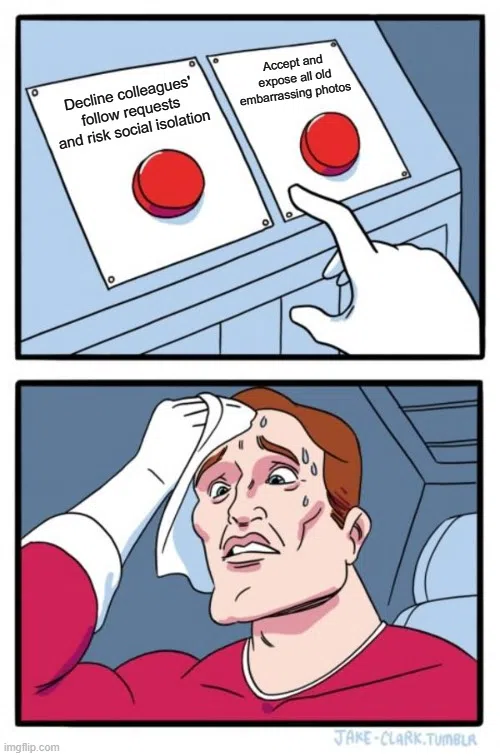
Eager to find your work bestie 💁 on Day 1? You might want to slow down there, pal. Take some time to observe first, instead of rushing into things (such as adding your whole team on social media). It might be better to understand a new work landscape before making any moves.
Richard Bradshaw, managing director of for Asia at executive recruitment firm Ethos BeathChapman, says that it seems best to “start small and proceed slowly” in a new work environment.
“Following your gut and learning to use your intuition (comes in handy) in these situations,” he says. “Ultimately, it is important to maintain your personal boundaries, and be cautious around those who do not respect them, or tend to be unnecessarily judgmental.”
Here are some 🚩 red flags to look out for:
- Blurred lines, making it difficult to distinguish being formal or informal, professional or personal
- Constant sharing of office gossip
- Sharing too much about one’s private life or sensitive information, such as pay, especially when you’ve only known them for only a short period
- Enabler of bad behaviour (such as leveraging each other to delay deadlines or abusing expense accounts)
- Repeatedly asking for favours and resources from you with zero reciprocation
- Any relationship which hinders your output, happiness and well-being at work
So… ice everyone out? 🥶
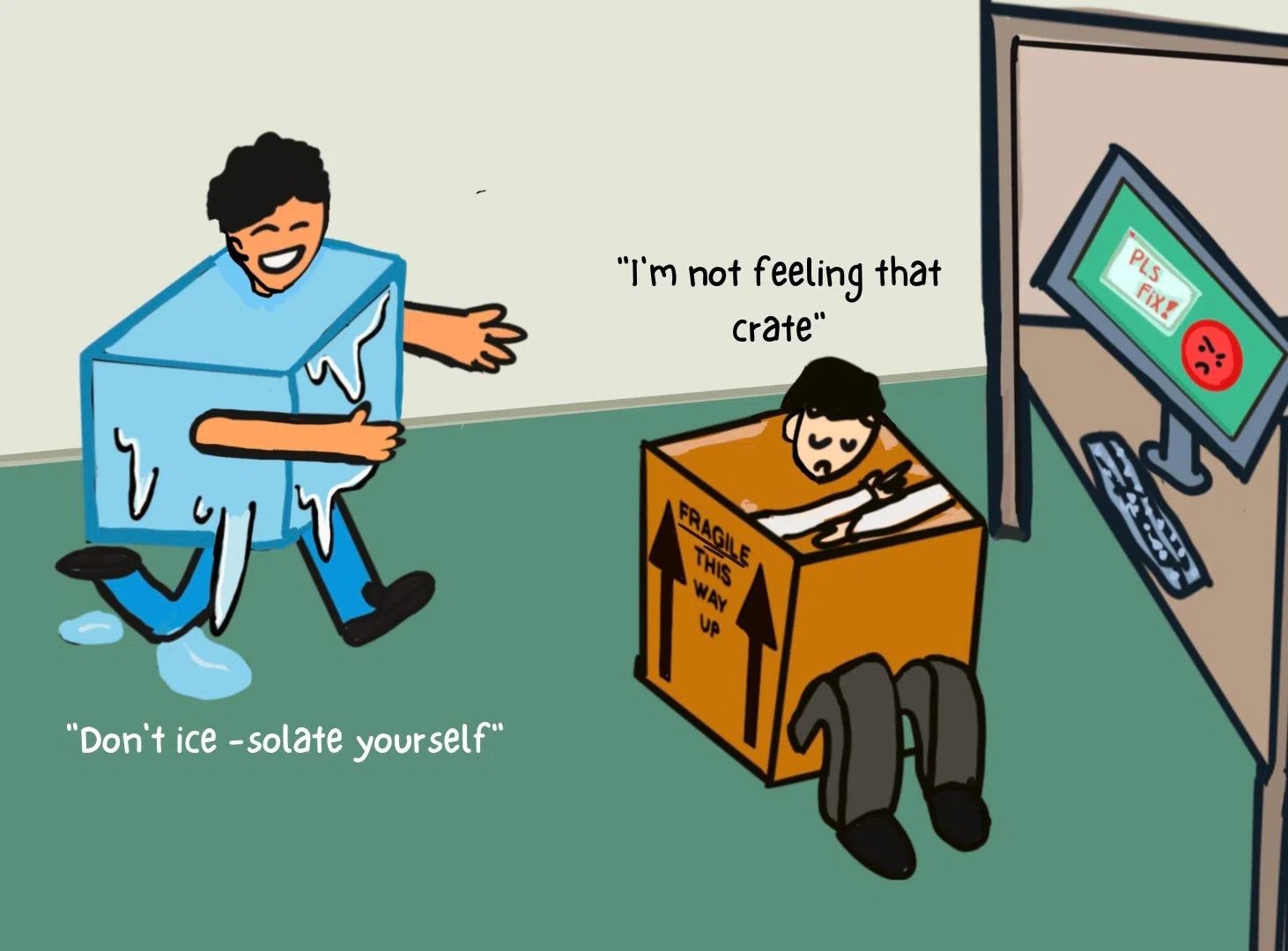
No, not so fast. That probably isn’t the best idea for you as well, mainly because it won’t be quite so sustainable. Completely isolating or boxing yourself in can have damaging ramifications for you at the workplace, as you’re more likely to be perceived by others as overly distant or even hostile. That’s self-sabotage right there.

“(It is definitely important to) be part of the business and not appear separate or fragmented,” says Bradshaw, adding that being approachable and open to others at the workplace is one of the key hallmarks to establishing healthy work relationships.
Besides, while you don’t have to have friends at work, doing so can offer many benefits and become a significant part of maintaining a good work-life balance. We do, after all, spend one-third of our day at work (eat, sleep, work, repeat…). By that measure, establishing positive professional working friendships in a healthy working environment would impact us significantly.
According to Gallup, having a best friend at work has a clear correlation to optimal business outcomes, such as increased profitability and employee retention rates.
Some ✅ green flags for office friendships to thrive are:
- Defined boundaries and a healthy amount of personal space
- Showing an appropriate level of support and encouragement at the workplace
- Displaying empathy and core work values ( 💡 Pro-tip: Office BFFs aren’t limited to your direct team or seating area!)
All in all, making friends at work is a good thing. With the right dose of support and respect, building positive relationships with colleagues shouldn’t feel like walking on thin ice.
And perhaps most importantly, you’ll want to be a good friend at work too. The last thing you’d want is for people to be wary… of you. 🌚 (#dontbetheredflag)
TL;DR:
- Watch, listen and observe your new colleagues first
- Maintain personal boundaries 🙅
- Beware of office gossip mongers, or anyone who makes work toxic 💀
- …but be open-minded and approachable as an employee
- Exemplify green-flag behaviour at work 😊
Copyright SPH Media. All rights reserved.
TRENDING NOW

He built the Vingroup empire. Now South-east Asia’s richest man is handing some key roles to his sons

Despite the de-dollarisation debate, demand for dollar liquidity in Asia is growing

Asean’s challenge is to become resilient against global geopolitics: former Indonesia trade minister

Floods compound Philippine growth woes from public-works scandal


