



Malaysia maintains 2.75% rate amid cooling inflation and economic growth
Tan Ai Leng
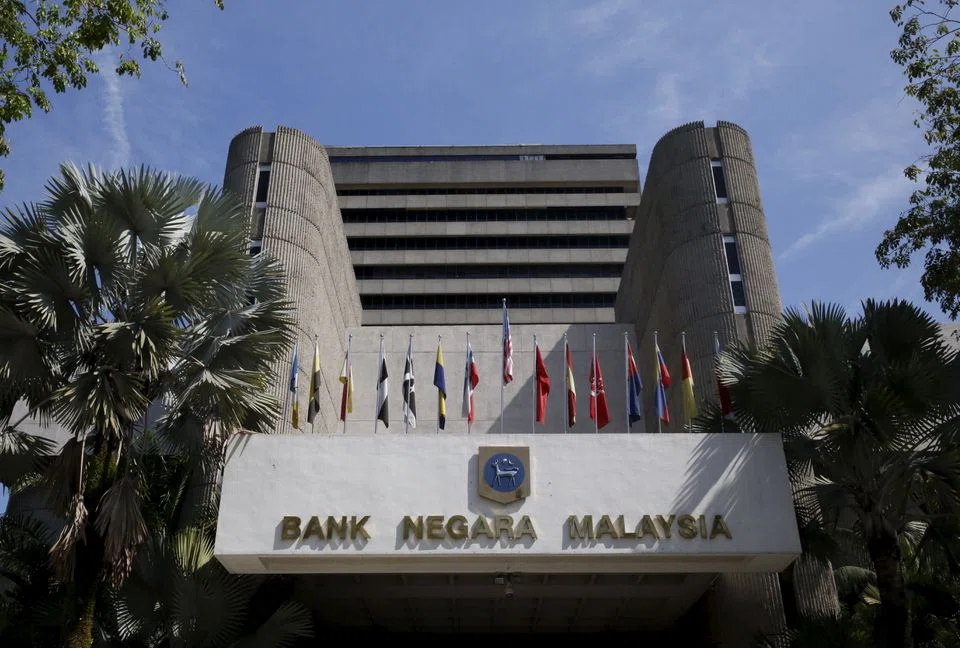
[KUALA LUMPUR] Malaysia’s central bank maintained its benchmark interest rates for a second successive meeting, a widely expected move with most analysts of the view that the country is in the final cycle of rate hikes.
With Bank Negara still assessing the effects of last year’s monetary tightening on economic growth and inflation, the decision was made on Thursday (Mar 9) to hold the overnight policy rate (OPR) at 2.75 per cent.
Sixteen out of 26 economists polled by Reuters earlier this week had expected the central bank to keep the OPR unchanged, while the rest projecting a rise of 25 basis points.
In a statement, Bank Negara said the current level “remains accommodative and supportive of economic growth”, adding that the Monetary Policy Committee (MPC) would continue to assess the impact of cumulative OPR adjustments and stay vigilant to cost factors.
The central bank said it would “continue to calibrate the monetary policy settings that balance the risks to domestic inflation and sustainable growth”.
In 2022, Bank Negara delivered a cumulative 100 basis points in rate hikes, pushing the OPR back up to its pre-pandemic level of 2.75 per cent.
Some analysts, however, do not rule out another OPR increase in May to avert the risks of potential high inflation and household debt.
The government expects inflation to average from 2.8 per cent to 3.8 per cent this year. Prime Minister Anwar Ibrahim cautioned last month that price pressures could rise if the uncertainty surrounding the global supply chain remains unresolved.
On Thursday, the central bank said the rate panel remains vigilant to cost factors that could affect the inflation outlook.
“Headline and core inflation are expected to moderate over the course of 2023, but will continue to be elevated amid lingering demand and cost factors,” Bank Negara said.
UOB Group senior economist Julia Goh said that while Bank Negara kept a positive tone on Malaysia’s economic outlook, there is always the possibility of “new shocks” that may derail the growth momentum this year.
“(Bank Negara) has signalled that there is some room for further normalisation. Hence, we keep our view for one more 25 --basis points hike at the next MPC meeting in May,” she told The Business Times.
In a report on Thursday, MIDF Research said it expects the central bank to restore its monetary bullets to pre-pandemic levels of 3 per cent in the first half of this year.
“The decision will be subjected to the stability of economic growth, the pace of price increases and further improvement in macroeconomic conditions, particularly a continued recovery in the labour market and growing domestic demand,” MIDF said.
Standard Chartered Global Research shared the same view, noting that the rate hike will be announced ahead of a targeted fuel subsidy which is expected to implement in the second half of this year.
“Based on the oil price assumption of US$80 per barrel (estimated by the Ministry of Finance), the removal of the fuel subsidy for the high-income group will add 0.5 percentage points to inflation annually.”
Bank Negara expects the headline and core inflation to moderate over the course of 2023, partly contained by existing price controls and fuel subsidies, but will continue to be elevated amid lingering demand and cost factors.
“The balance of risk to the inflation outlook is tilted to the upside and continues to be highly subject to any changes to domestic policy on subsidies and price controls, as well as global commodity price developments,” it said.
Bank Negara expects domestic demand will keep on supporting Malaysia’s economic growth with continued progress of multi-year infrastructure developments, sustained improvements in employment and income prospects as well as rising tourist arrivals.
The government’s forecast is for gross domestic product growth to slow to 4.5 per cent in 2023, down from the 8.7 per cent expansion last year.
TRENDING NOW

Once staunchly pro-China, Malaysian Chinese businesses are now distancing themselves from Beijing

‘How many will survive?’: Bubble fears arise as China’s humanoid robotics face reality check

Philippine power giant First Gen rebuffs foreign offers, plans up to US$2.6 billion in expansion

Indonesia imposes US$116 million in fines over manipulation of Sinar Mas, Prajogo-linked stocks

