
THE BANKER

Manage risks in commodity financing by bracing for constant uncertainty: UOB’s Lim Chen Chen 

Commodities have become more strategic than ever, says UOB’s group head of structured trade and commodity finance
Tan Nai Lun
Published Tue, Dec 10, 2024 · 05:00 AM
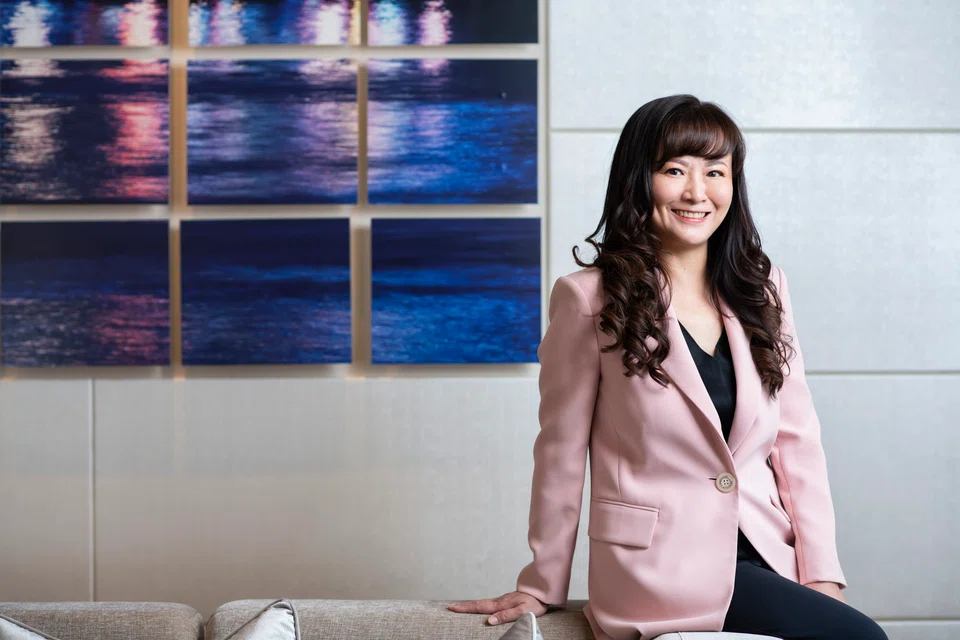
    • “You never know when something can break out or escalate; what we do know is that the world has a new disorder,” says Lim Chen Chen, UOB’s group head for structured trade and commodity finance.
    • “You never know when something can break out or escalate; what we do know is that the world has a new disorder,” says Lim Chen Chen, UOB’s group head for structured trade and commodity finance. PHOTO: UOB

    FOR Lim Chen Chen, UOB’s group head for structured trade and commodity finance, one thing is for certain: Nothing is really constant in this increasingly volatile world.

    That is why the veteran banker is always thinking about the worst-case scenarios and how to navigate her way out of them.

    “You never know when something can break out or escalate; what we do know is that the world has a new disorder,” said Lim, who has specialised in trade commodity financing for around two decades.

    Commenting on the volatility that Donald Trump might bring in his second term as US president, she said it likely “cannot get much worse” than what it is now, given that two wars have already broken out in the last few years.

    Lim said she would be interested to see how he would negotiate his way out of the prolonged wars. She also expects him to be more readable than Kamala Harris in his handling of US-China tensions, given that he has already been president once.

    “I don’t have a crystal ball, but I’m applying what I saw before and after,” she said.

    Lim said it is unlikely that Trump would be the only factor causing uncertainty, since there are several strong and powerful leaders around the world at this point.

    “We are not saying that we can predict the uncertainties, but the way we manage risks would have to be able to withstand that sort of shock,” she said.

    Here are some excerpts from her conversation with The Business Times:

    How did you end up in your role?

    Earlier in my career, I was exposed to other areas of banking, but I grew to love trade finance very much. Then, I wanted to learn a bit more about commodities, given their complexity.

    If you look back at the past 25 years, we have seen volatility. That is the interesting bit – to be very passionate in not just the upturns, but also the downturns.

    I’m excited about navigating through cycles, and being constantly on top of what’s going on in the world to ensure that we can navigate (our way out of them) and grow our portfolio in a stable and meaningful manner.

    What is a key trend that you see in your area?

    Commodities have become more strategic than ever. In the past, countries embraced open trade, but because of geopolitical tensions, commodities have become a tool for politics. With such tensions, prices have become more volatile.

    The Covid-19 pandemic added another lens to the possibility of supply-chain disruption.

    Cycles are also getting shorter. In the past, a crisis may have happened once every 10 or 15 years. But now, cycles are shorter than ever. For example, the ongoing China slowdown affects demand for commodities. In the past, you did not see all these too much.

    How does this affect your role?

    You need to be very well-versed in sanctions and compliance as a result of geopolitical tensions.

    With the risks of another pandemic, the logistics part of things can be disrupted, so you need to truly understand which part of the value chain might be affected.

    With shorter cycles, a bank that wants to do the business in the longer run needs to be able to have robust risk management.

    I picture the worst-case scenarios in my head all the time, because I do not have that crystal ball right to know what will happen in three to five years.

    So if anything were to escalate, the portfolio will be resilient against any volatility. We take a consistent view that things will change, and be pretty volatile. So our risk management and how we chart the entire portfolio is based on that.



