Manulife US Reit H2 distributable income falls 13.3%


Raphael Lim &
Michelle Zhu
MANULIFE US Real Estate Investment Trust (MUST) reported on Thursday (Feb 8) a 13.3 per cent decline in distributable income for the second half of FY2023, despite higher gross revenue and net property income (NPI).
No distribution was declared for the second half ended December 2023 – unchanged from the first half – as the Reit manager will be halting distributions until end-2025 following the Reit’s recapitalisation plan that unitholders approved last year.
Revenue for H2 FY2023 grew 6.2 per cent to US$108.5 million, while NPI improved by 6.7 per cent year on year to US$59.2 million.
The stronger numbers were mainly due to higher lease termination fees. However, these were partially offset by asset divestments, as well as lower rental and recoveries income, as a result of higher portfolio vacancy rate.
Distributable income fell 13.3 per cent to US$36.3 million, mainly due to higher finance expenses, as well as the manager’s base fee and property management fees for H2 2023 being payable in cash.
For the full year, revenue was up 2.7 per cent to US$208 million; NPI rose 1.3 per cent to US$114.6 million.
Full-year distributable income declined 15.5 per cent to US$74.3 million. This came as higher lease termination fees and car park income in FY2023 were more than offset by lower rental and recoveries income amid higher vacancies and increased property expenses.
Portfolio occupancy stood at 84.4 per cent as at the end of 2023, with 740,000 square feet of leases – around 14.7 per cent of portfolio net lettable area – executed last year.
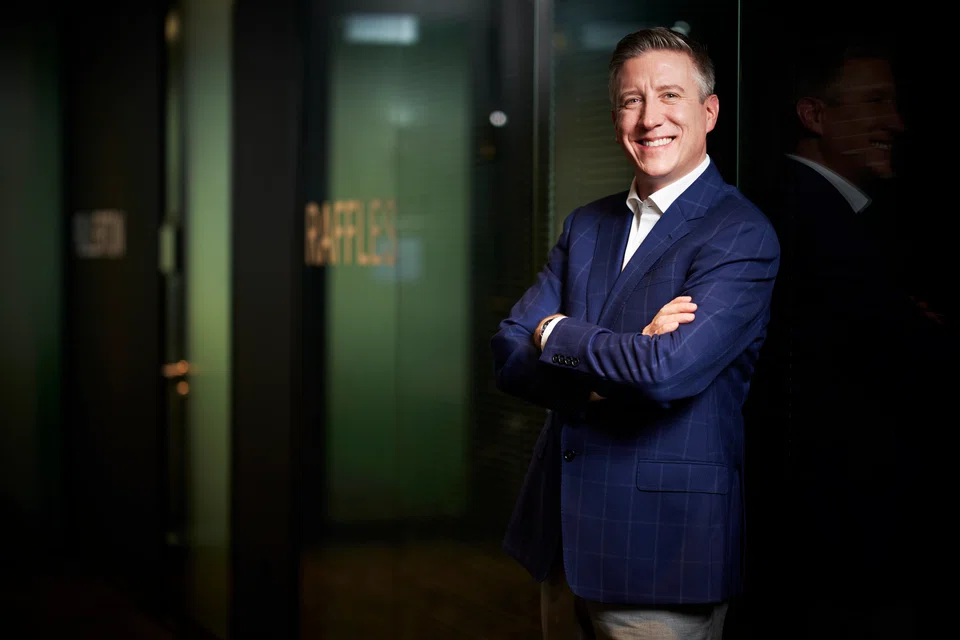
Tripp Gantt, chief executive of the manager, said during a results briefing that 2023 was a “relatively good” year for leasing. “We’re encouraged by the momentum that we’re seeing in leasing. We executed several leases in the fourth quarter, and that momentum kind of carried over for us through the first quarter of this year,” he noted.
He added that the number of tenants who are out in the market looking for space has increased. However, many tenants are still downsizing, and those that come in need less space.
“I do think that in order to maintain occupancy and increase occupancy, we’re going to have to sign even more leases,” said Gantt. “We would certainly hope to hold occupancy with the kind of leasing momentum that we have now.”
As at Dec 31, 2023, the Reit’s aggregate leverage ratio stood at 58.3 per cent. Its earlier breach of financial covenant was waived upon execution of the Reit’s master restructuring agreement.
With MUST’s recapitalisation plan now approved by both lenders and unitholders, Gantt said that its priorities for 2024 would focus on asset dispositions and maximising proceeds to further reduce indebtedness and fund capital expenditure.
The manager is targeting asset disposals of about US$100 million by Q2 or Q3 2024.
Gantt noted that transactions are still not happening in the market, in the absence of lenders. However, the manager said that it is constantly weighing when it wants to sell its assets, and what the value recovery for assets may be.
“The assets that we think might be more delayed in their value recovery, it might make more sense, in some cases, to go ahead and sell those assets now, and redeploy that capital into another investment where we can get a higher rate of return,” said Gantt.
Portfolio valuation for the Reit fell to US$1.4 billion, down 8 per cent from six months earlier. Most of the decline came from Tranche 1 assets that the Reit wants to sell.
Gantt noted that a lot of the worst-case scenarios have already been priced in by valuers in terms of cap rates and assumptions of vacancies. “It feels to me like we are near the bottom, in terms of these valuations and assumptions that are being made.”
Looking ahead, the manager reminded all unitholders to continue submitting US withholding forms and certificates – as the Reit would “have to bear the burden” of withholding tax based on the proportion of unitholdings of those who fail to do so. “This would adversely impact (the Reit’s) income retained,” said the manager.
Marc Feliciano, chairman of the manager, said during the briefing that for MUST to ultimately grow its NPI and enhance value for existing unitholders, it would have to take advantage of opportunities in the coming years.
He added that 2024, 2025 and 2026 are “going to be some of the best vintage opportunities that we have seen in the real estate market in the United States in a very, very long time”. These opportunities could even be better than those during the global financial crisis, he noted.
To tap potential opportunities in the market, MUST would likely have to raise equity at some point.
Caroline Fong, deputy CEO of the manager, noted that the Reit would need to re-rate before that can take place. “To do any equity fundraising at this price is not possible,” she said. However, the manager expects that the unit price of the Reit could recover as it works on executing on its asset dispositions.
“When we’re able to execute, we’re able to show the market that we are here to deliver, hopefully, we get back the confidence of investors.” she added.
Units of Manulife US Reit were trading unchanged at US$0.059 as at 4.27 pm on Thursday.