

Manulife US Reit plans divestments, sponsor loan to fix covenant breaches; distributions still halted


Raphael Lim &
Vivienne Tay
MANULIFE US Real Estate Investment Trust (MUST) plans to raise funds through a mix of asset dispositions and a sponsor-lender loan to remedy its financial covenant breach, its manager said on Wednesday (Nov 29).
The recapitalisation plan – which requires unitholders to vote on three inter-conditional resolutions at an upcoming extraordinary general meeting (EGM) – seeks to “revitalise” the Reit, and provide more time for the manager to sell assets and realise value.
However, distributions would continue to be halted until December 2025. The distributions could resume if the Reit meets “early reinstatement conditions” which are similar to the regulatory leverage limits in Singapore.
In July, MUST breached existing financial covenants after portfolio valuations fell 14.6 per cent, affecting its ability to pay out distributions.
The Reit’s proportion of unencumbered debt to unencumbered assets exceeded the 60 per cent threshold, while its aggregate leverage also crossed the 50 per cent regulatory gearing limit.
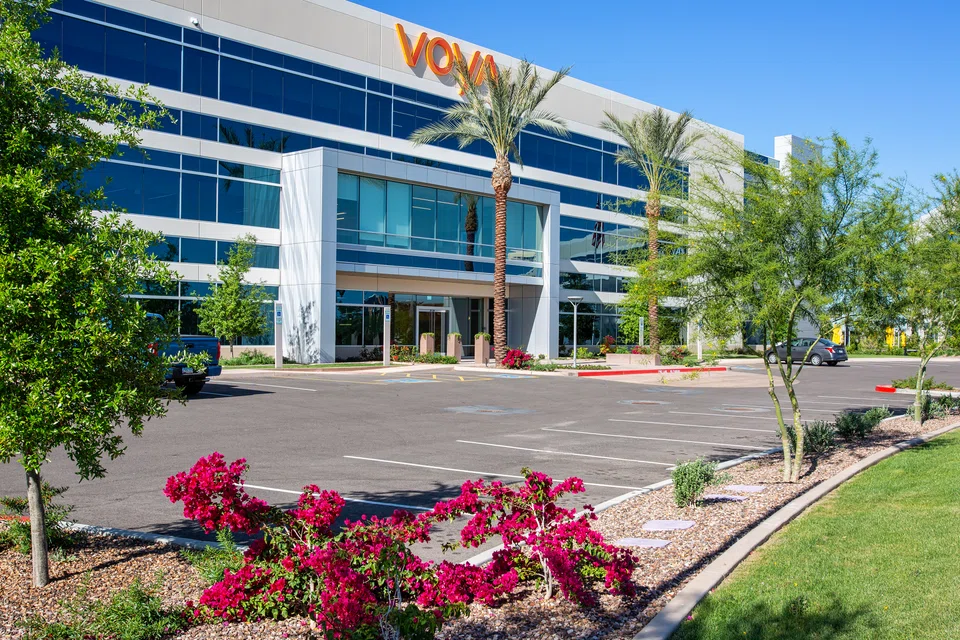
As part of its recapitalisation plan, the Reit will divest its Park Place property in Arizona to its sponsor for US$98.7 million, the manager said in a bourse filing.
Its sponsor will also grant a six-year US$137 million loan at an interest rate of 7.25 per cent, paid quarterly, with an exit premium of 21.16 per cent on maturity. This translates to an effective interest rate of 10 per cent per annum.
The move is different from earlier plans for the Reit to sell another asset – Phipps Tower – to the sponsor.
Marc Feliciano, chairman of MUST’s manager, said at a briefing on Wednesday that the sponsor and management team evaluated several options to solve the default as well as upcoming debt maturities.
“We very much believe that Phipps alone wasn’t sufficient to actually buy more time,” he noted. “In the context of things, we felt we should optimise for a larger quantum of proceeds that fits both the sponsor’s balance sheet.. and also for unitholders.”
Feliciano – who is also global head of real estate, private markets at the Reit’s sponsor Manulife Investment Management – added that the decision also followed negotiations with MUST’s 12 lenders who all had to agree with the proposals.
Tripp Gantt, chief executive of MUST’s manager, noted that the 10 per cent effective interest for the sponsor’s loan has been deemed by the independent financial adviser to be on normal commercial terms.
Feliciano added that there is currently no financing available for the US office market.
“Even if there is, you are often seeing alternative lenders asking for around 18 per cent, including some type of equity feature,” he said. “While it looks high relative to the current unsecured loans, to put it in the context of what’s out there in the market, or lack of, is another way to look at it.”
The funding obtained from the Reit’s sponsor through the property sale and loan, together with US$50 million of the Reit’s cash holdings, will be used to pay down around US$285 million in outstanding debt on a pari passu basis.
The manager noted that the Reit is paying down around 28 per cent of its existing balance to lenders, reducing their exposure.
As part of the plan, the lenders have also agreed to waive past and existing breaches, and have provided a temporary relaxation of financial covenants until December 2025.
MUST’s unencumbered gearing ratio requirements will be raised from 60 per cent to 80 per cent, while bank interest coverage ratio will be reduced from 2.0 times to 1.5 times. The loan maturity on existing facilities would also be extended by one year.
“The benefit of this restructuring is that we have in essence bought 19 months before we have to execute roughly US$329 million of (asset dispositions),” Feliciano said, adding that the lenders have behaved “rationally”.
Apart from deals with its sponsor, MUST’s recapitalisation strategy also involves a “disposition mandate” to allow for the disposal of any of its existing assets.
The Reit is seeking to raise net sale proceeds of at least US$328.7 million through asset dispositions. It is prioritising the sale of non-strategic assets that have higher occupancy risks and capital expenditure requirements, while having a lower total return potential.
Such “tranche 1 assets” include the Reit’s Centerpointe, Diablo, Figueroa and Penn properties, which comprise 28.4 per cent of the Reit’s portfolio by valuation.
The manager has also identified tranche 2 assets which it may explore selling, as well as tranche 3 assets – Phipps and Michelson – which are not the focus of the sale.
The manager noted that the mandate reduces administrative time and expenses incurred for asset dispositions, as an EGM is not needed each time.
Under the mandate, the trustee would commission an independent valuation before each disposition, and properties are to be sold at no less than 90 per cent of the independent valuation obtained.
The EGM seeking unitholders’ approval for the divestment of Park Place, the sponsor loan, and the disposition mandate will take place on Dec 14.
If any of the resolutions are not passed, the Reit’s existing facilities will remain in breach. This means lenders have the right to immediately accelerate the payment of around US$1 billion in loans.
That being said, as at Nov 29, not all of the Reit’s 12 lenders have obtained the necessary approvals when it comes to the restructuring of the existing facilities and waivers related to the breach. In the event they do not agree, the plan will not go ahead.
Lenders who have yet to obtain internal approval are still in the process of doing so based on their meeting schedules, the manager added.
On a pro forma basis, assuming the completion of the divestment, sponsor loan, and the disposal of the tranche 1 assets, gross borrowings – based on MUST’s latest first-half financial statements – will be reduced from US$1.02 billion to US$654.5 million, while aggregate leverage will decline from 56.5 per cent to 49.4 per cent.
Feliciano said that current market conditions of higher rates and lower valuations make it important for any borrower to deal with their existing financing. “There is still a lot of work that we collectively need to do, both management as well as sponsor. This, what we believe, is a very big first important step, and what we hope is stabilisation.”
The manager on Wednesday called for a trading halt before the market opened. MUST’s counter ended 2.2 per cent or US$0.002 lower at US$0.091 on Tuesday.
TRENDING NOW

Two Singapore-listed palm oil firms named in Greenpeace report on Indonesian plantation fires

Singapore Airlines flight returns to San Francisco after ‘unruly’ passenger incident

Singapore looking into which companies responsible for haze-causing fires: PM Wong

Deluge IPO 3.86 times subscribed ahead of SGX debut

