Manulife US Reit’s occupancy falls to 86.1% as top tenant gives up a quarter of leased space
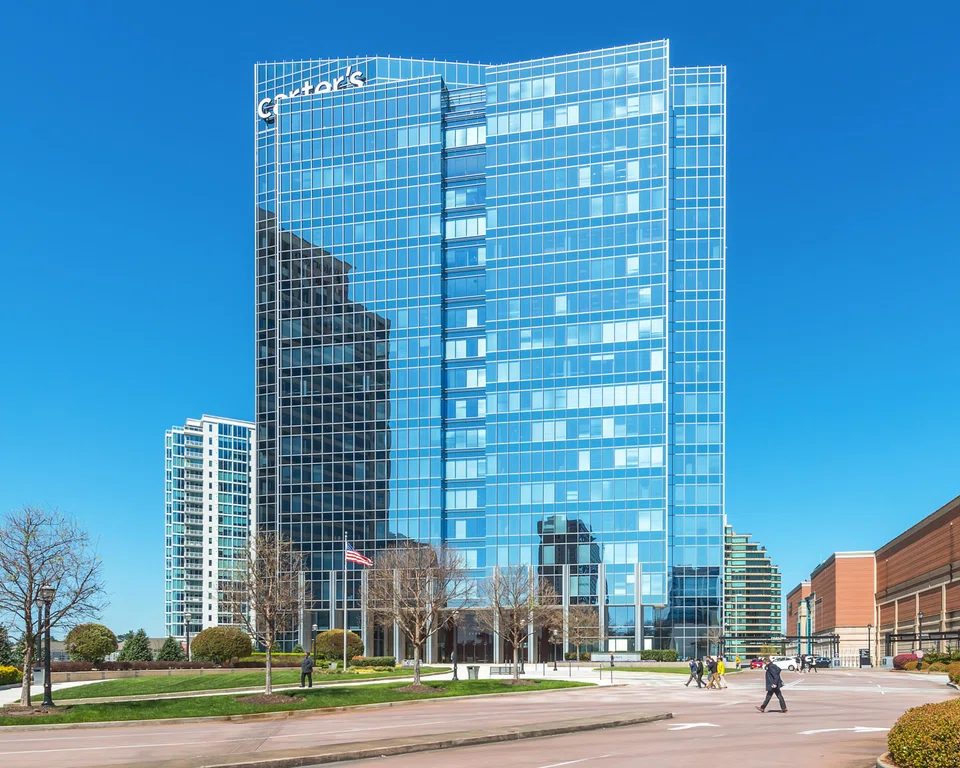
THE manager of Manulife US Reit announced on Thursday (May 11) that its portfolio occupancy has fallen to 86.1 per cent for the first quarter ended Mar 31, after top tenant The William Carter Company gave up close to a quarter of its space leased at the Phipps building in Atlanta.
Also known as Carter’s, the children’s apparel maker downsized its headquarters located in the building by 69,000 square feet (sq ft), the real estate investment trust (Reit) manager said.
It renewed its lease for the remaining 209,000 sq ft, extending the lease expiry to 2035, from 2030 previously.
“Carter’s had an early termination option coming up next year; we engaged them early to try to secure them as a long-term tenant in the building,” Tripp Gantt, chief executive officer of the manager of Manulife US Reit, said at a briefing accompanying the release of its Q1 operational update.
“We also were able to negotiate terms that are going to get us – starting in 2025 – about an 18 per cent positive rental reversion on Carter’s lease,” he added.
Carter’s is Manulife US Reit’s largest tenant by both net lettable area (NLA) and gross rental income (GRI).
Before its renewal and downsizing, Carter’s accounted for 5.7 per cent of Manulife US Reit’s GRI as at Dec 31, 2022. It now accounts for 4.5 per cent of the US office Reit’s GRI as at Mar 31.
Carter’s downsizing drove the drop of 1.9 percentage points in Manulife US Reit’s portfolio occupancy from 88 per cent as at end-December.
The sizeable renewal by Carter’s also bumped up Manulife US Reit’s executed leases in Q1 to about 348,000 sq ft, with an average positive rent reversion of 5 per cent.
Breaking down the leases by net lettable area, 86.2 per cent of the total leases were renewals, while 11.8 per cent were new leases. The remaining 2.1 per cent were for expansion.
With the Reit’s portfolio having a weighted average lease expiry of five years, its manager expects positive rental reversion for 2023.
Around 7.6 per cent of Manulife US Reit’s leases by gross rental income will expire this year. About half of its leases (50.2 per cent) will expire in 2028 and beyond.
As at Mar 31, the Reit’s gearing stood at 49.5 per cent. The quarter-on-quarter rise in gearing was mainly due to the payment of H2 2022 distributions in March 2023, said the manager.
The manager cited leasing challenges and the increasing cost of trust-level debt as some of the headwinds the Reit faces.
“I think the banking turmoil in the first quarter created more questions and more instability, and most people are thinking that it probably increases the chances of a recession here, maybe in the third or fourth quarter in the US,” Gantt said.
“What all this means for us is a few things. First, in terms of our leasing, our tenants were already going through a period where they’re trying to figure out their space needs,” he added. “The economic challenges that our tenants may be facing now complicates that even more, and perhaps, plays into their leasing decisions.”
Amid the challenges, the Reit manager disclosed on Thursday that it has “substantially completed” due diligence processes on its potential deal with Mirae Asset Global Investments.
As part of a strategic review, Manulife US Reit previously indicated that it was in talks with Mirae for the proposed sale of its manager.
The manager noted that it is currently negotiating key terms and targets the transaction to be completed around Q2 or Q3. It added that current sponsor Manulife will retain its 9.1 per cent stake.
“In the past, we’ve talked about wanting to pivot strategically into an asset class that has more secular tailwinds in growth markets, growth tenants, and really focusing on properties that have lower capex needs going forward. We’ve talked about the potential of logistics and industrial property in the US… And those are the kinds of properties that Mirae has in their portfolio currently,” Gantt said.
“The transaction itself, and the money that we would raise from it, is step one; it’s not a silver bullet to solve all the issues of the Reit,” he added. “Executing that pivot over time is something that we’re looking to do. But we obviously need the space – the financial space – and the strength and balance sheet in order to give us the time to execute that.”
Units of Manulife US Reit closed 4.7 per cent or US$0.007 lower at US$0.143 on Thursday.