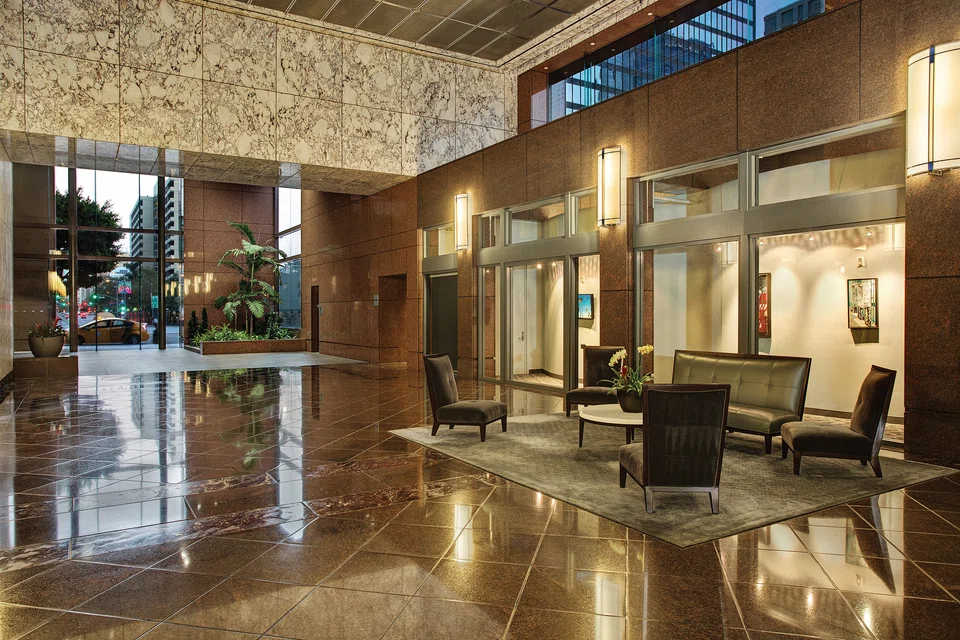
Manulife US Reit’s portfolio occupancy falls to 78.7% in Q1
The Reit manager views demand for the US office space as ‘on a recovery path’

MANULIFE US Real Estate Investment Trust (MUST) posted a portfolio occupancy of 78.7 per cent for the first quarter ended March, down from 84.4 per cent as at end-2023.
On Wednesday (May 8), the pure-play US office real estate investment trust’s (Reit) manager said this was largely due to its major tenant TCW Group’s lease expiry at the Figueroa asset in Los Angeles, which involved 189,000 square feet (sq ft) of space.
Notable leases executed over the quarter included motoring giant Hyundai’s expansion of 31,000 sq ft of space for an additional five years at Michelson in Irvine, and professional services group Deloitte’s executed new lease at Capitol (18,000 sq ft) in Sacramento for a period of 12 years.
At Plaza in Secaucus, New Jersey, apparel retailer The Children’s Place renewed its lease for 120,000 sq ft for 13 years, while French pharmaceutical group Pierre Fabre signed a new 12-year lease for 24,000 sq ft of space.
MUST’s manager said it had 1.4 million sq ft in its leasing pipeline and has achieved “good activity across various leasing stages”.
Mushtaque Ali, chief financial officer designate of the manager, said during a briefing that the manager has made “significant strides” in the first quarter to tackle expiring leases. Some 19.5 per cent of the portfolio’s net lettable area will face lease expiries this year.
“We are very confident that the lease activities that are in the pipeline, including all the negotiations that are going on, will help us address these 2024 expiries,” he said, adding that these would help stabilise and potentially increase the Reit’s occupancy.
The Reit’s portfolio weighted average lease expiry by net lettable area as at end-March was 4.3 years, with 71.2 per cent of in-place rental escalations by gross rental income having annual escalations of 2.6 per cent per annum.
Based on gross borrowings as a percentage of total assets, the Reit’s gearing stood at 56.7 per cent with an interest coverage ratio of 2.3 times.
The Reit manager views demand for the US office space as “on a recovery path”, though it also remarked that “challenges remain”.
MUST is in the middle of executing its recapitalisation plan to dispose of certain assets to pare down debt and fund capital expenditure.
Based on the master restructuring agreement signed, the Reit is to achieve minimum cumulative net sale proceeds of US$230 million from the aggregate sale of up to four of its assets across two tranches by end-2024, or else incur a fee.
The penalty is based on a formula and the maximum exposure would be around US$2.8 million.
The Reit aims to achieve at least US$328.7 million worth of cumulative asset disposals by June 2025.
“We don’t have a committed transaction at the moment, but I think we have had a number of conversations with potential buyers as well as brokers, so we are confident that a sale process would start imminently as we progress further into the year,” Ali said.
The manager has noted that deal activity in the US is slow at the moment, with low liquidity amid the high rate environment. However, there are improvements compared to a year ago.
Marc Feliciano, chairman of the manager, said that the market six to 12 months ago had an absence of liquidity in general, but there are now conversations taking place in pockets of the market with “liquidity at a price”.
“It may not be a great price, it might be a significant discount or some type of discount, but there seems to be a pickup of liquidity,” he said.
Ali added that the manager’s first priority is to sell US$230 million of assets by year end.
“We have a debt maturity of US$102 million in May 2025, which we are very mindful of, and we are making efforts towards creating liquidity in the portfolio to take care of that maturity,” Ali said.
Addressing questions from investors in its business update on Wednesday, MUST’s manager said it will determine the Reit’s updated portfolio valuation “closer to mid-year” as it monitors market conditions.
It highlighted that 96.5 per cent of the Reit’s loans are on fixed rates, or hedged to fixed rates with interest rate swaps, which it views will reduce MUST’s exposure to interest rate fluctuations in the short term.
“While inflation may drive up property expenses, some of the higher costs may be recovered from tenants. We will also continue to focus on improving leasing and driving income,” said the manager.
Units of MUST closed Tuesday flat at US$0.07.
TRENDING NOW
Grab CEO’s wife Chloe Tong on life with Anthony Tan and finding her purpose
Hwa Seng Builder, two China companies win S$1.2 billion Tuas Road Viaduct phase two contracts
Deal between tycoon friends sparks scrutiny of Philippine power sector
Canada is upping oil flows to Asia, but South-east Asia’s refineries aren’t ready to handle them yet