TOPLINE

Mapletree Industrial Trust banks on diversification, balance to deliver sustainable returns

It is not heading towards becoming a 100% data centre Reit; resilient Singapore industrial portfolio will continue to be a key area, says Lily Ler, CEO of the manager

Summarise
Kalpana Rashiwala
Published Sun, Mar 30, 2025 · 06:00 PM
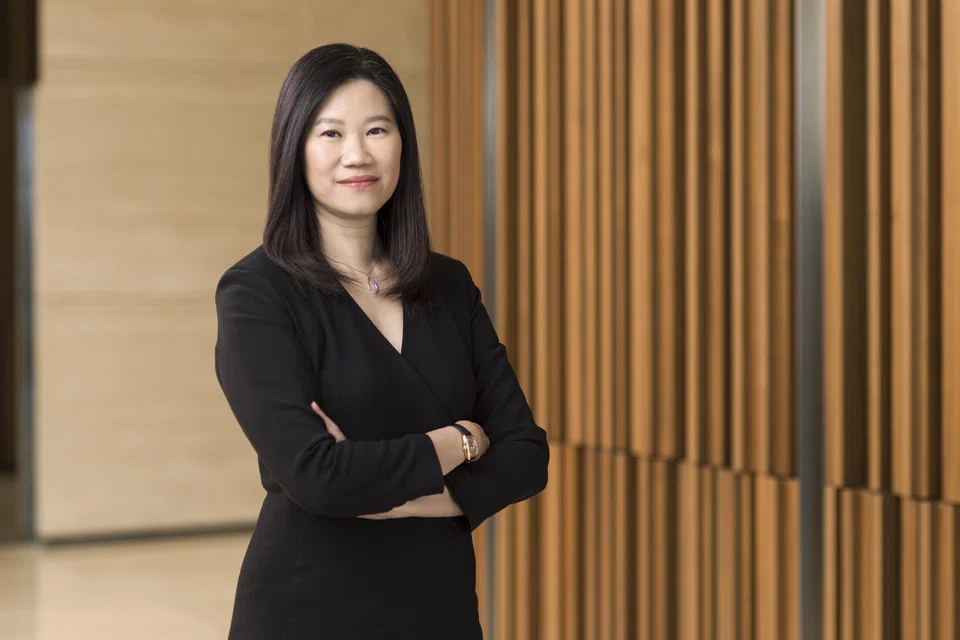
    • Lily Ler, CEO of the manager of MIT, hopes to grow both the hyperscaler and colocation-provider tenants in the trust's data centre business. This points to shrinkage in the share of enterprise tenants.
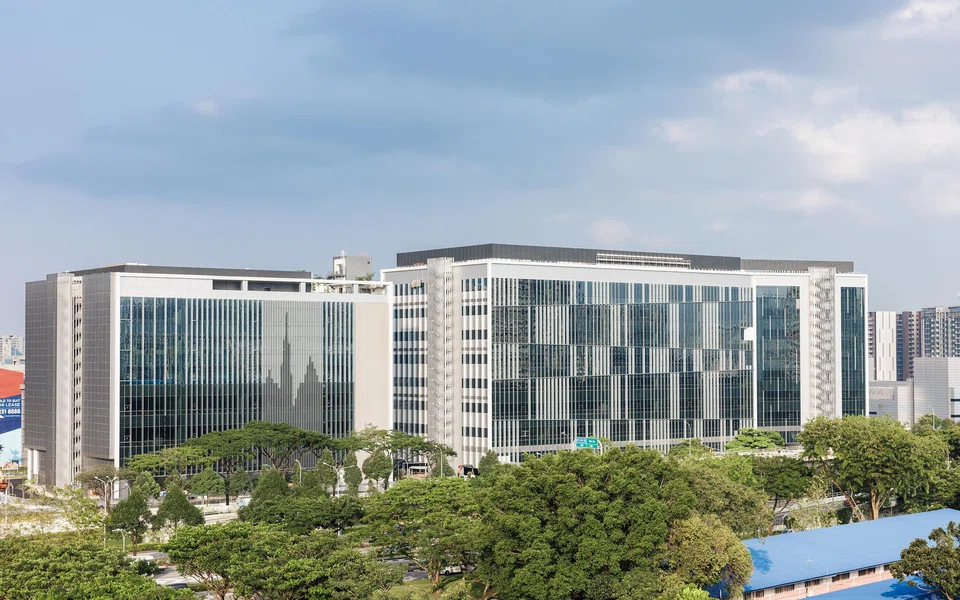
    • Mapletree Hi-Tech Park @ Kallang Way comprises a seven-storey build-to-suit block that is fully leased to Biotronik, and two nine-storey blocks that MIT is in the midst of filling up.
    • Lily Ler, CEO of the manager of MIT, hopes to grow both the hyperscaler and colocation-provider tenants in the trust's data centre business. This points to shrinkage in the share of enterprise tenants. PHOTO: MIT
    • Mapletree Hi-Tech Park @ Kallang Way comprises a seven-storey build-to-suit block that is fully leased to Biotronik, and two nine-storey blocks that MIT is in the midst of filling up. PHOTO: MIT

    [SINGAPORE] Diversification and balance are at the left, right, and centre of Mapletree Industrial Trust ’s (MIT) strategy.

    At its initial public offering in 2010, the real estate investment trust’s (Reit) entire S$2.1 billion assets under management (AUM) was in Singapore industrial properties such as flatted factories, business-park buildings, ramp-up buildings and light industrial properties. As at Dec 31, 2024, only 44.1 per cent of the trust’s S$9.2 billion AUM was in Singapore industrial properties. The other 55.9 per cent was in 62 data centres (55 in the United States, one in Canada, two in Japan and four in Singapore).

    “Generally for the data centre market as a whole, the demand is definitely there and is definitely growing – with all the usage of AI (artificial intelligence), machine learning, edge computing, etc,” said Lily Ler, the chief executive officer of the manager of MIT.


    That said, MIT is not heading towards becoming a 100 per cent data centre Reit. “We are still looking to keep our Singapore industrial business, which provides us a stable base with some growth,” she added.

    In the October to December 2024 quarter, MIT’s flatted factories were 98.1 per cent occupied. The occupancy figure for its stack-up/ramp-up buildings was 96.7 per cent; its three business-park buildings had a relatively high occupancy averaging 80.1 per cent compared with the overall 77.9 per cent for Singapore business parks.

    “Our Singapore industrial portfolio continues to be a key area that we would like to continue, because of its resilience. It has seen us through quite a number of cycles since listing and we believe it will continue to do that,” Ler said in a recent interview with The Business Times.

    Mapletree Hi-Tech Park @ Kallang Way comprises a seven-storey build-to-suit block that is fully leased to Biotronik, and two nine-storey blocks that MIT is in the midst of filling up. PHOTO: MIT

    Wider geograhical spread for data centre acquisitions

    Growth in the next couple of years is likely to come from more data centre acquisitions, but there will be a wider geographical spread. MIT is looking at key data centre markets in Europe – Frankfurt, London, Amsterdam, Paris and Dublin – and is also open to secondary markets such as Milan and Madrid, said Ler.

    In Asia, target markets include Japan, South Korea and Australia. The trust remains keen on more data centres in Singapore, though there are limitations to develop new ones amid power constraints.

    There is also potential for MIT to increase its exposure to the US.

    MIT has the right of first refusal to its sponsor and parent Mapletree Investments’ 50 per cent interest in Mapletree Rosewood Data Centre Trust, which owns 10 powered shell data centres (where just the building shell is provided and the tenant has to do the interior fit-out) and holds 80 per cent interest in three fully fitted hyperscale data centres. The remaining 20 per cent interest in the three hyperscale data centres is held by Digital Realty.

    A hyperscale data centre can handle larger-scale workloads, such as cloud computing and AI.

    Ler does not have a target size for MIT’s data centre portfolio. “The quality of the portfolio is what we want to look at; it must be able to deliver sustainable returns.”

    Recycling capital

    “As time goes by, certain properties may no longer be so relevant, such as data centres with lower power capacity. So we might look at divesting them and recycling the capital to acquire, say, a hyperscale data centre with big-boy tenants of very good quality, and taking long leases.” This will add value to the trust’s portfolio. MIT did not identify its hyperscale provider tenants, also known as hyperscalers. Generally these would be the likes of Meta, AWS, Google Cloud and Microsoft Azure.

    As at Dec 31, 2024, cloud/hyperscale providers accounted for 20.1 per cent of MIT’s data centre portfolio, by gross rental income (GRI).

    Ler hopes to grow this segment of tenants as well as that of colocation providers, in yet another reflection of MIT’s balanced approach. Businesses can rent space at a colocation data centre for their IT infrastructure such as servers and network equipment, instead of owning or managing their own data centre.

    Colocation providers’ share of MIT’s data centre portfolio was 43.9 per cent as at Dec 31, 2024. Tenants in this segment include Centersquare, Equinix and Digital Realty.

    Enterprise or end-user tenants account for 29 per cent of MIT’s data centre portfolio.

    “While hyperscalers have very good credit standing and take long leases, given the scale of their investments in the data centre, rental escalations tend to be flattish as they have stronger bargaining power,” Ler noted.

    Colocation providers, being smaller, provide data centre landlords such as MIT with the rental growth, she added.

    Increased exposure to both hyperscaler and colocation-provider tenants means that the share of end-user/enterprise tenants will shrink, said Ler.

    One of MIT’s enterprise tenants, AT&T, has a lease at the trust’s data centre at 7337 Trade Street, San Diego, ending in May 2026 after being extended twice by 12 months and 17 months. As at Dec 31, 2024, AT&T accounted for about 3 per cent of MIT’s overall portfolio by GRI. There has been concern among some analysts on the impact on MIT if AT&T does not renew its lease.

    Putting things in perspective, Ler observed that many cases of non-renewal of data centre leases involve enterprise/end-user tenants. “The reason behind them not continuing has to do with certain corporate decisions rather than with reference to the particular data centre.”

    Managing lease expiries is part and parcel of a real estate landlord’s business and MIT has in place proactive strategies for its portfolio, including its US data centres. One is to encourage tenants to extend their leases ahead of time.

    An exiting data centre tenant can be replaced with another, or the space re-let for other uses. Following the expiry of AT&T’s lease at another MIT-owned data centre, in Brentwood, Tennessee, in November 2023, the trust inked a 30-year lease with Vanderbilt University Medical Center for the entire asset in June 2024.

    Other options include redeveloping, say, a data centre with low power capacity into one with a bigger capacity.

    Blessing in disguise

    A tenant departure may also provide an opportunity for the trust to rebalance its portfolio by divesting a non-core property or one that is fully optimised.

    When it comes to growing its Singapore industrial property portfolio, a key challenge MIT faces is the shorter land tenures issued for industrial sites by the authorities – mostly 23 years and 33 years – compared with up to 60 years in the past.

    This leaves less time for a developer to recoup its investment. “As the land tenure reduces, the valuation declines, which can be hard for a Reit like us,” noted Ler.

    That said, MIT has some assets in its portfolio with relatively longer balance land leases which it has redeveloped from flatted factories to hi-tech buildings.

    In 2017, it completed a build-to-suit (BTS) facility in the Depot Road area for HP Singapore with a gross floor area (GFA) of 824,576 square feet (sq ft), almost double what was previously on the site.

    In March 2023, MIT completed Mapletree Hi-Tech Park @ Kallang Way, achieving a 70 per cent increase in GFA over the previous flatted factory cluster on site, to 865,687 sq ft. The project comprises a seven-storey BTS block fully leased to Biotronik, and two nine-storey blocks, which MIT is in the midst of filling up. The committed occupancy for the overall project is about 60 per cent.

    Since its listing, the Reit has divested five assets, the most recent of which was the S$50.6 million sale of a cluster of two flatted factories in Tanglin Halt last year.