

Mapletree Industrial Trust to divest up to S$600 million of assets over next two years
The manager will also acquire new assets in Europe and Asia

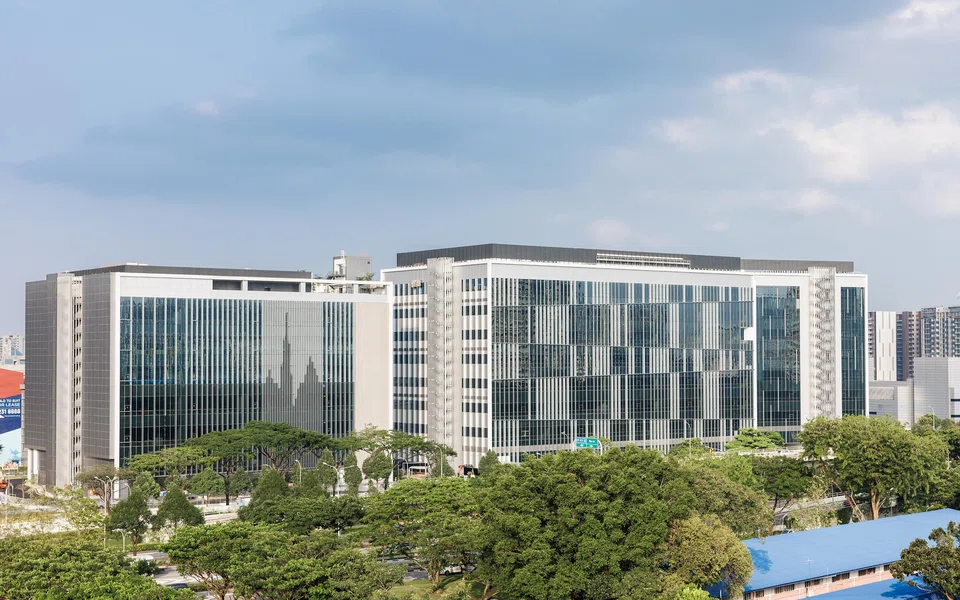
[SINGAPORE] The manager of Mapletree Industrial Trust (MIT) plans to divest between S$500 million and S$600 million worth of assets over the next two years, with a focus on its North American portfolio.
For a start, the trust intends to divest up to S$200 million of assets in FY2025, said Lily Ler, chief executive officer of MIT’s manager. She was speaking at the trust’s second-quarter financial results briefing on Thursday (Oct 30).
Ler said the manager’s divestment approach would depend on which option provides the “best value”. In response to a question on whether the manager intends to divest its North American assets as a group, she noted: “The moment you group (the assets) up, it becomes pretty sizeable. So it may not be that easy to sell.”
Moreover, the assets are geographically spread out, which may make individual sales easier for some assets, she added.
Over half of MIT’s portfolio is in data centres, with the remainder broadly split between industrial buildings and business parks. Geographically, 47.2 per cent of its assets under management are in North America, 45.2 per cent in Singapore and 7.6 per cent in Japan.
The trust has divested about S$550.6 million worth of assets this year. These assets include a data centre in the United States as well as three properties in Singapore.
Acquisitions and portfolio strategy
With divestments providing greater debt headroom, MIT plans to focus on acquiring new assets in Europe and Asia, particularly Japan.
Ler estimates the yield spread for European assets to be around 2 to 3 per cent, while that for Japan assets is between 1 and 2 per cent. The manager expects transaction sizes for data centre assets to range from S$100 million to S$1 billion.
Vijay Natarajan, an analyst at RHB, noted that increasing MIT’s exposure to Europe and the rest of Asia, without any new acquisitions in Singapore, could reduce its Singapore exposure to around 30 per cent.
Asked if the manager was comfortable with this exposure level, Ler said the trust would “love to be able to add on more” to its Singapore portfolio.
However, acquisition opportunities in Singapore remain “quite limited” due to the tight market and government regulations on power allocation for data centres. Land tenure for industrial properties is also short, she added.
“I think that makes our decision (to acquire) much harder, because the moment you buy (a property) with a 25-year underlying lease, in five years’ time you will start to see the valuation of the property dropping, simply because of the short land tenure,” said Ler.
To address this, the manager will consider build-to-suit projects, where buildings are customised for specific tenants, or redevelop existing properties in Singapore. “These are some of the things which we hope to execute, and we will continue to scan the market for such opportunities,” she said.
Financial performance
On Wednesday, MIT posted a distribution per unit of S$0.0318 for the second fiscal quarter ended Sep 30, 2025, down 5.6 per cent from S$0.0337 in the corresponding period last year.
Revenue for Q2 fell 6.2 per cent year on year to S$170.2 million, from S$181.4 million previously, while net property income shrank 7.8 per cent to S$124 million from S$134.5 million.
These declines mainly reflected lower income from the portfolio divestment of three Singapore industrial properties in August 2025, as well as reduced contributions from the North American portfolio, which has been impacted by non-renewal of leases and the depreciation of the US dollar against the Singapore dollar.
TRENDING NOW

Ex-Nvidia CEO Jensen Huang carried a secret for more than a year. It led to his downfall

South-east Asia has lost Nvidia’s best salesman

Demand, tech capabilities position Apac and AI as Skyscanner’s next growth frontiers: CEO Bryan Batista

Jensen Huang discusses comeback as Nvidia CEO with allies: report

