Mapletree planning up to 2 Reit listings in next five years
The group currently has private funds and balance sheet assets in student housing, data centres, logistics facilities, corporate housing and offices overseas
Singapore
MAPLETREE Investments is planning to launch up to two more real estate investment trusts (Reits) in the next five years, amid what it perceives to be still-healthy demand for Reit initial public offerings (IPOs) on the Singapore bourse.
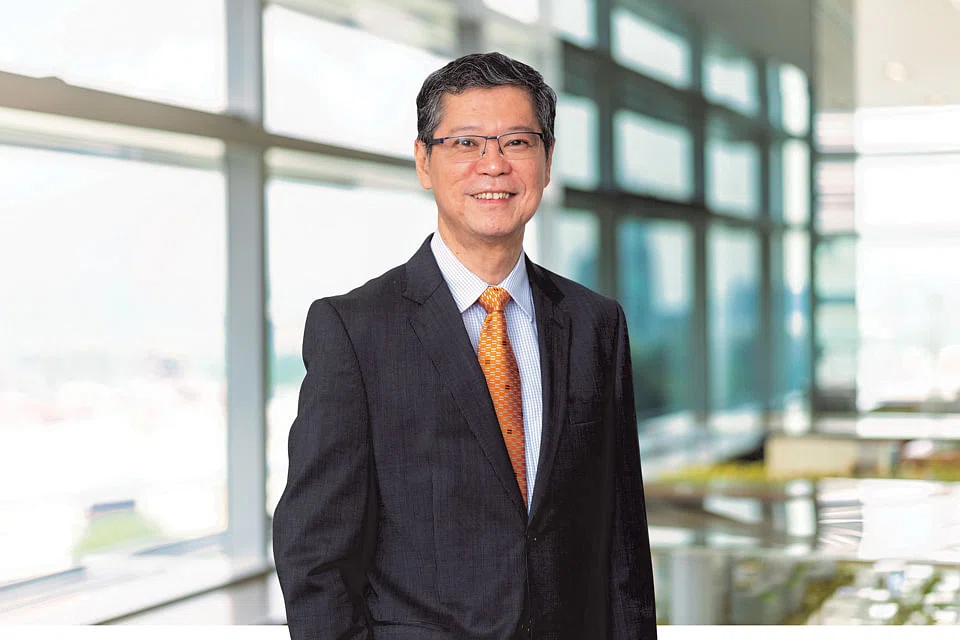
While Mapletree Group CEO Hiew Yoon Khong did not specify what asset classes or geographies these Reits would focus on, he said Mapletree has established itself in student accommodation in the United Kingdom (UK) and the United States (US), data centres in the US, logistics facilities in Europe and the US, corporate housing in the US, as well as the European office sector. (see amendment note)
These five sectors will remain the group's key focus in the next five years, and assets could eventually be migrated over to the public platform at the right configuration and price, he said.
"One of the things that we focus on in terms of how we migrate our product is that we look at the possibility of initially forming a private platform. At the end of the platform's (lifespan), if the portfolio is suitable and the value is correct, one option is that we can divest the assets to return the capital and profit to investors, or maybe monetise them using a public platform - so that's an option that's available, but it's not something that we have decided," he said in an interview with The Business Times.
Mapletree, which is wholly-owned by Singapore state investor Temasek, currently manages four Singapore-listed Reits as well as six private equity real estate funds, all of which hold assets in Asia-Pacific, Europe, and the US.
The four Reits are Mapletree Industrial Trust, Mapletree Commercial Trust, Mapletree Logistics Trust and Mapletree North Asia Commercial Trust.
Its six existing private funds focus on logistics development in Japan; student accommodation in the UK and US; logistics properties in Europe and the US; offices and mixed developments in China and India; and commercial and residential real estate in Malaysia.
As at March 31, 2019, Mapletree owns and manages S$55.7 billion of office, retail, logistics, industrial, residential and lodging properties.
Mr Hiew notes that the four Singapore-listed Reits have performed strongly so far, with total returns since IPO ranging from 14 per cent to 26 per cent per annum, and total return over the past five years ranging from 15 per cent to 21 per cent per annum.
For Mapletree, it is very clear that a Reit's portfolio should be "very stable" given that it is a yield instrument.
Asked if right now, the assets in its existing private funds can be injected into Reits of similar mandates at the point of exit, Mr Hiew says: "The flexibility that we have for private funds is that while the returns expectations are higher, a lot of the investors don't mind if the returns come from capital value appreciation rather than pure (recurring) yield.
"So, the maturity and profile of these assets are actually slightly different (from those of Reits). For Reits, the focus is very much on just the yield much more than the capital value (appreciation)."
That said, the private fund platform can play an instrumental role in helping to gauge investors' demand for a product prior to listing.
"That's why we don't bypass the private fund stage and go straight into the Reit... Selectively, when we engage some institutions, some of these Asian institutions in particular may have appetite for, say, a European portfolio, although not that many of them. So it's about balancing the demand for this type of product."
He adds: "For the time being, we don't see any immediate prospects yet. Obviously, the Reit landscape in Singapore remains very healthy, with significant amount of investor interest (for IPO listings), so that's obviously an interesting avenue for us to consider to possibly launch one or two Reit products in the next five years."
Since 2017, the biggest IPOs have tended to be Reits and business trusts, for example: Cromwell European Reit, Keppel-KBS US Reit and Netlink NBN Trust in 2017; Sasseur Reit in 2018; and ARA US Hospitality Trust and Eagle Hospitality Trust in 2019.
While their post-IPO performances have varied, most have failed to trade above their IPO prices, although market watchers say this is symptomatic of weakness in the broader market and not just limited to the new listing entrants.
Meanwhile, Mapletree also has concrete plans to strengthen its capital management business on the private fund side. Mr Hiew says: "We are very well-positioned in terms of some of the preparation work that has been done to accumulate some specialised portfolios that's quite ready for syndication. In other words, you will see us intensifying our capital management business by seeding and launching more private funds in the next five years."
Among these is a pan-European private fund which it plans to launch soon. Conceptually, it will comprise properties in Warsaw, Poland; Dublin, Ireland; UK, Germany and perhaps a couple more European countries where Mapletree is still looking for assets to acquire.
There was news last month that it was close to signing a deal to buy Sorting Office, a seven-storey office building in Dublin's Docklands for 240 million euros (S$368.6 million). Mr Hiew says the acquisition is part of the group's plans to build this European fund.
There are also plans to broaden the funds' investor base to include more Middle Eastern, European and North American investors, as its investors still remain predominantly Asian institutions and corporates, he adds.
Against a backdrop of increasing geopolitical tensions, not just Sino-US but also in Britain, Mr Hiew says the group has become more prudent in investing in these affected geographies.
For instance, in the UK where uncertainty has been prolonged to about two years now due to the Brexit process, the group has "reset (its) interest" in growing its presence there, apart from student housing which it is still selectively investing in. It is holding out to allow the political situation to settle first before it re-enters.
Meanwhile, demand for logistics facilities in China has thankfully continued to grow because the booming e-commerce phenomenon has been driven by domestic rather than international consumption. Tenancies at the group's office properties in China have also remained stable without much significant adverse impact.
"But if the trade war continues for a long period of time, the negative effects could flow through a slowdown in the overall economic growth, which could then impact all these sectors. We are not seeing that impact yet, so hopefully there will be a resolution to the trade war soon," says Mr Hiew.
"Yet we are cognisant of the long-term impacts and will adjust our investment posture accordingly. For the time being, we are monitoring closely, and don't see ourselves being aggressive in the US or Chinese markets."
China and US properties currently make up 11 and 17 per cent of its total owned and managed real estate assets, respectively.
Amendment note: We earlier reported that Mapletree holds student housing, data centres, logistics facilities, corporate housing and overseas office assets in its private funds. Mapletree has clarified that some of these assets are also on its balance sheet.