

As Marina Bay Sands enters its teens, an elevation towards new era of luxury hospitality
Chief operating officer Paul Town is hopeful the Singapore market will continue to be buoyant in the coming years

Lee U-Wen
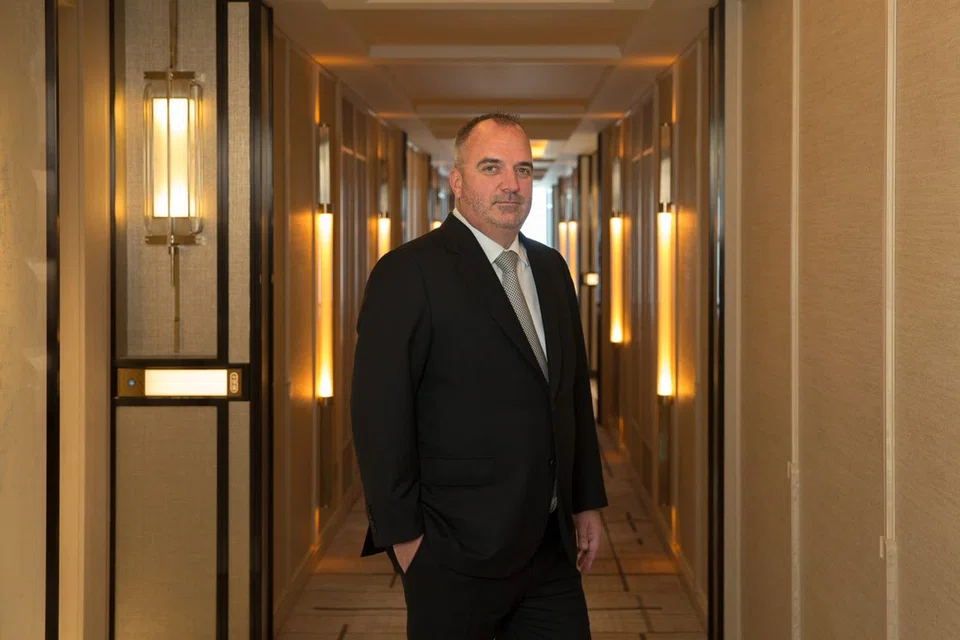
A MAJOR transformation is under way at Marina Bay Sands (MBS), having begun during the pandemic as part of a US$1 billion push to elevate the integrated resort (IR) towards a much higher level of luxury.
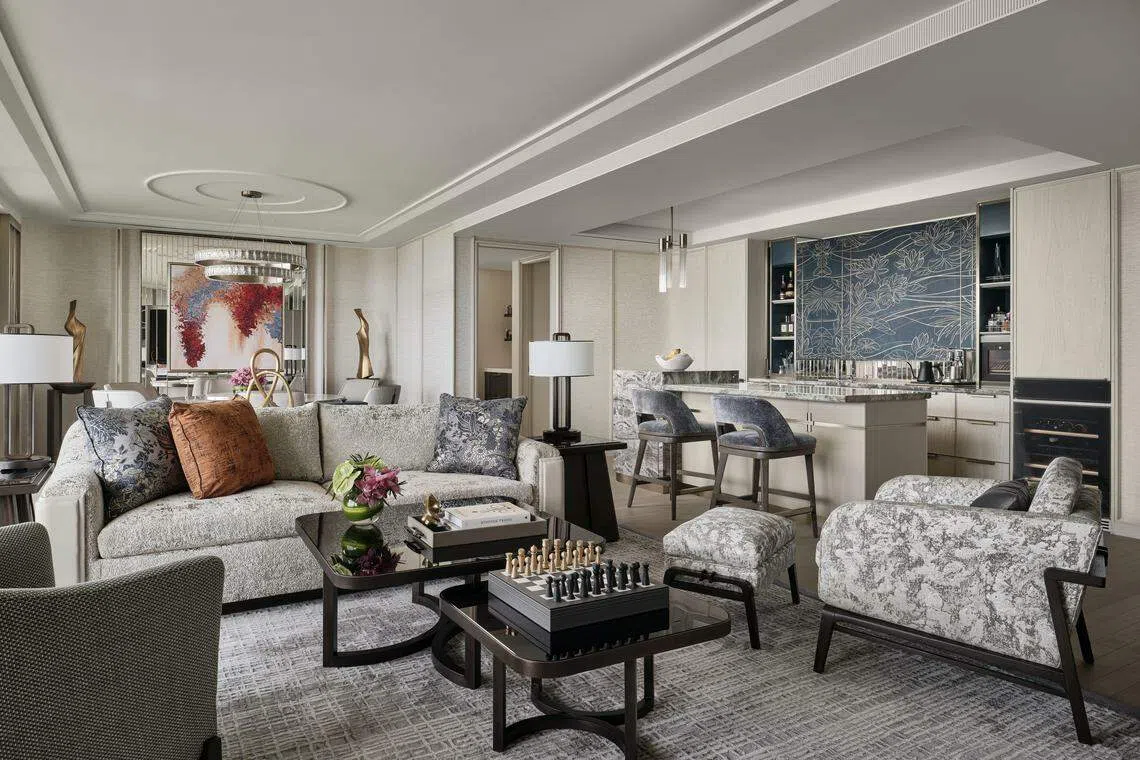
A sizeable chunk of that budget went to giving the hotel rooms a complete makeover. More than 850 rooms in Towers 1 and 2 have been completed, accounting for about two-thirds of the 1,282 rooms that will result from this phase of renovation at these two towers.
More suites are being created within these two towers too – 422 in all, up from 137 previously – to meet the growing demand for this level of luxury accommodation.
The renewal will continue on the rooms in Tower 3, as well as the hotel lobby and the SkyPark on the 57th floor, with details to be announced at a later date. Elsewhere on the massive US$5.6 billion property, there will be upgrades to almost every customer touchpoint including the casino, restaurants and wellness offerings.
Its top executive in Singapore, chief operating officer Paul Town, told The Business Times that the profile and preferences of the IR’s high-value guests have changed in recent years, and definitely since MBS first thrust open its doors to much fanfare on this very day – Apr 27 – 13 years ago.
These big spenders – many of whom hail from key markets like China, the US, Australia and South-east Asia – are looking for a “total lifestyle experience”, both within MBS and even away from the property too, he said.
There is a concerted effort to see to their every request, and that could mean bringing them out for a round of golf or on a yachting trip, and even to visit places like Mandai, Sentosa or a hawker centre.
What this also means for MBS is that it needs much more manpower – dedicated lifestyle teams to handle these off-property activities, butlers to tend to the greater number of suites, and more staff in F&B, housekeeping, security and elsewhere, said Town.
MBS is already one of Singapore’s largest employers with around 11,000 people on its payroll, and the IR is actively looking to hire another thousand people in the coming months.
“Singapore is enjoying such a high recovery market share, and that’s because Singapore is now seen as a really attractive destination, which has been well enhanced post-Covid,” said Town during the interview, which took place in one of the spanking new suites on the 41st storey of Tower 2.
“(MBS) is a big part of this destination and we appreciate that, and we hope we can deliver on that expectation and responsibility.”
This was the 49-year-old New Zealander’s first meeting with BT since he was appointed to his current role in July 2021, having joined MBS in Nov 2019 as senior vice-president of resort operations. As chief operating officer, he oversees both gaming and non-gaming operations.
The interview took place on Monday (Apr 24), four days after MBS reported strong earnings in the first quarter of 2023. Net revenues more than doubled to US$848 million from US$399 million a year ago. About 70 per cent of this came from the casino operations, with hotel rooms, F&B, the shopping mall and other segments accounting for the rest.
Room revenue hit US$97 million, a 155 per cent jump from the same quarter last year. Hotel occupancy for the first three months was 97.6 per cent – from 83.8 per cent for the same quarter in 2022 – with the average daily rate at US$594. MBS’ luxury mall, called The Shoppes, saw revenues of US$53 million, with tenant sales per square foot reaching US$2,809.
These stellar numbers were “a little bit above expectations”, said Town, citing China’s abrupt decision to reopen its borders in early-January as one of the key factors.
“We didn’t expect the news from China quite so soon. We’ve started to see the first green shoots of the recovery in the China market, even though the current (flight capacity) is quite low at around 40 per cent of 2019 levels. Still, we saw good visitation numbers from China in Q1,” he said.
“Compared to other Asean countries, Singapore had a much greater share of China outbound travellers. Covid may not be top-of-mind for us right now as we are a year into the recovery, but with China just emerging, they are looking for safe destinations to service their hospitality needs. And Singapore can do that very well.”
Even as MBS presses on with its US$1 billion reinvestment programme, attention will soon turn to the IR’s US$4.5 billion expansion project called IR2 that must commence by April 2024 and be completed by April 2028.
Among the plans are an ultra-luxury hotel tower with about 1,000 rooms, a 15,000-seater entertainment area, a sky roof with a pool and restaurant, shops and new Mice (meetings, incentives, conventions, exhibitions) space.
Town, who could not comment on this particular topic during the interview, wrote in MBS’ latest annual review that was released earlier this month: “The intent is to create a different experience. While IR1 is about vibrancy and action, IR2 will feel a little bit more intimate and more exclusive. We continue to work through various aspects of the expansion project with the Singapore government and are making good progress.”
Overall, Town remains upbeat about the outlook for Singapore’s tourism and hospitality industry, even though there are concerns over a slowing global economy and higher inflation.
“Obviously there are some macro and geopolitical headwinds, but Singapore has positioned itself very well among all of this. This is why we are currently enjoying some very good times in Singapore, and it’s not just us, but the entire hospitality industry,” he told BT. “We are hopeful the Singapore market will continue to be quite buoyant.”






