

Market cap of Singapore stocks down 4.8% in August as China woes, weak data bite

Yong Jun Yuan
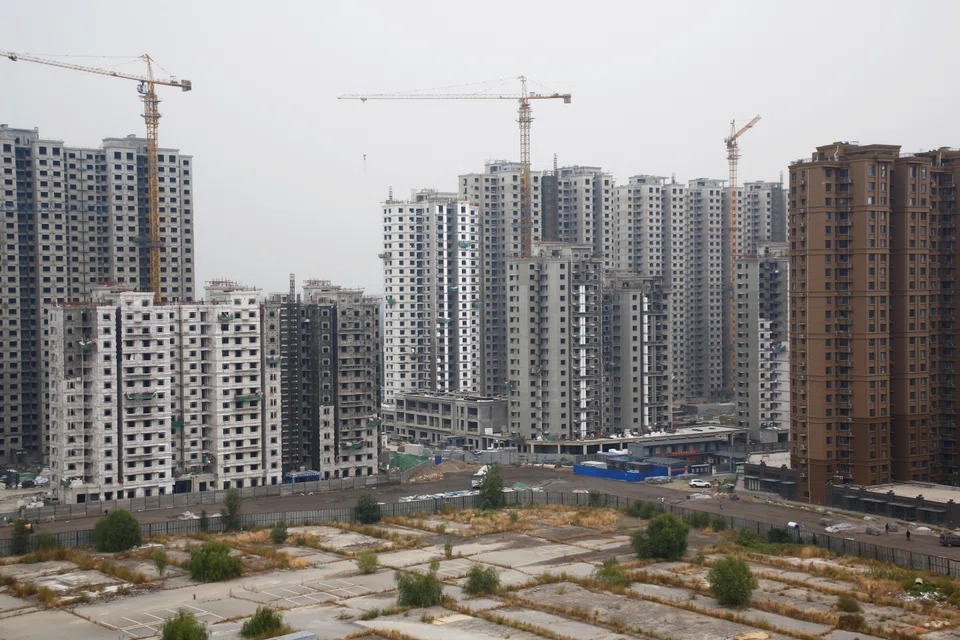
THE total market capitalisation of Singapore stocks shed 4.8 per cent in August, amid a slowdown in China’s recovery and weaker economic data.
Data compiled by The Business Times showed that the market cap of the overall Singapore bourse stood at S$800.8 billion, down from S$841.6 billion as at end-July.
Meanwhile, the market cap of the benchmark Straits Times Index shed 4.2 per cent to S$536.8 billion.
Of the 622 companies listed on the Singapore Exchange (SGX), losers beat gainers 337 to 141. Since end-July, two companies have been delisted.
SGX market strategist Geoff Howie said regional declines were observed in the first three weeks of August due to the slower outlook for Chinese growth.
He noted the International Monetary Fund on Wednesday (Aug 30) warned that an abrupt global slowdown or recession, including in China, is a key risk.
Similarly, Phillip Securities Research research manager Peggy Mak said China’s economic recovery waned in the second quarter of this year and continued to decelerate into the third quarter.
She added that property activities in China fell sharply after a notable rebound in the first quarter, while the government also scrapped the disclosure of the country’s youth unemployment rate.
Mak also noted that there has been a spillover effect on Singapore-listed property companies from Chinese developer Country Garden’s potential debt default.
By sector, the construction sector booked the largest month-on-month decline, followed by the manufacturing sector and the transport, storage and communications sector.
Maybank Securities head of equity research Thilan Wickramasinghe noted that the Ministry of Trade and Industry also downgraded its gross domestic product expectations to 0.5 per cent to 1.5 per cent, from 0.5 per cent to 2.5 per cent, in August.
“This fragile growth outlook impacted market sentiment, especially for external demand-driven sectors such as manufacturing,” he said.
Phillip’s Mak said construction companies’ bottom lines were hit by low-margin legacy projects, rising costs and job delays. She added that several such companies are at risk of being wound up, such as Tiong Aik Construction, which is a subsidiary of TA Corp.
“This has a ripple effect on the subcontractors and other service providers in the food chain.”
Meanwhile, RHB analyst Shekhar Jaiswal noted that Singtel’s share price was impacted by broker downgrades in early August, and has remained weak throughout the month.
Citi analyst Arthur Pineda downgraded Singtel to “neutral” from “buy”, and cut its target price to S$2.68 from S$3.13 as he expects weaker contributions from the group’s key growth drivers.
Still, SGX’s Howie noted that institutions and retail investors were net buyers of Singapore stocks in August, with market makers and active traders bridging the difference between net institutional and net retail fund flows.
He added that the stock sectors which saw the most net retail inflows were real estate investment trusts, telecommunications and technology counters.
Looking out ahead
As for the month ahead, RHB’s Jaiswal said that he will be closely watching factors such as Singapore’s industrial production and non-oil domestic exports, tourist arrival numbers, especially those from China, as well as the inflation outlook amid the risk of a strong El Nino.
El Nino refers to the warm phase of a climate pattern across the tropical Pacific and is generally associated with warmer temperatures.
Maybank’s Wickramasinghe said weaker-than-expected US job numbers may give investors some confidence about a pause in the Federal Reserve’s rate-hike cycle.
Still, Mak believes there could be another 25-basis-point hike, as US job openings fell to their lowest level in two years in July. More clarity could be gleaned from the next jobs report for August, which will be released on Friday, she added.
As for China, she expects additional policy support measures, further fiscal expansion to boost infrastructure investment, and possibly more rate cuts by the People’s Bank of China.
TRENDING NOW

Vietnam’s northern provinces, not Hanoi or Ho Chi Minh City, are powering near 10% GDP growth

VietJet hit with global asset freeze in FitzWalter dispute

Gridlock or growth? The Asean Power Grid faces a critical window of opportunity

LNG, stronger regional power links key to Asean’s energy resilience: Shell

