

Market keeps watch on S-Reits’ debt levels as rising interest rates crush confidence

THE likelihood of a higher-for-longer interest rate environment has gutted investor sentiment towards real estate investment trusts (Reits).
“The latest projected pace of rate hike (in the September meeting) was higher than market anticipated, which has resulted in heightened market uncertainty,” said RHB analyst Vijay Natarajan. He expects the US Federal Funds Rate to peak at close to 4.6 per cent by 2023.
The result has been a particularly bruising month for Singapore-listed Reits (S-Reits) in September.
DBS analysts noted that S-Reits were down close to 7.3 per cent month on month (m-o-m) in September – underperforming the benchmark Straits Times Index (STI), which fell close to 2.8 per cent m-o-m.
Reits have, in the past, outperformed during inflationary periods. But the present inflationary environment is also bringing with it sharply higher interest rates that limit access to capital for acquisitions.
There are also concerns that Reits with higher levels of unhedged or floating debt will be badly affected, which could lead to significant declines in distributions.
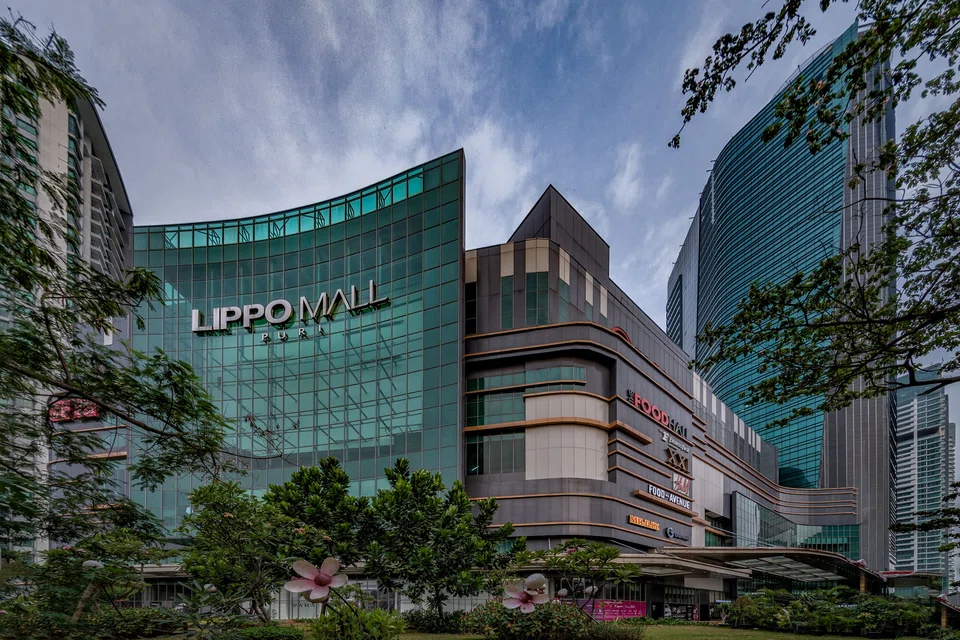
The market has already punished those S-Reits with the highest aggregated leverage. The four S-Reits with the highest gearing ratios – Lippo Malls Indonesia Retail Trust (LMIRT) , Ara US Hospitality Trust , Suntec Reit and Manulife US Reit (MUST) – are trading at steep discounts to their net asset value (NAV).
The quartet have aggregated leverage of between 42.4 per cent and 43.9 per cent, based on latest company filings extracted mid-August. In contrast, S-Reits had an average gearing ratio of 36.8 per cent.
These highly leveraged Reits were also trading at discounts of between 32 per cent and 65 per cent to book, Bloomberg data as at Oct 14 showed.
Nevertheless, investors are keeping an eye on more than just debt-to-asset ratios.
Take the case of LMIRT. The Indonesia-focused retail Reit’s cost of debt is among the highest cost in the S-Reit universe, at nearly 7 per cent.
Meanwhile, it has a low interest coverage ratio – which measures a company’s ability to meet required interest expense payments related to its outstanding debt obligations – of just 2.1 times.
As at Jun 30, LMIRT held a cash balance of S$120.1 million; and S$135 million in term loans and another S$7 million for a revolving loan facility will come due by the end of 2023.
Only 42.8 per cent of its borrowings is hedged to fixed interest rates – one of the lowest levels among the S-Reits. This means more than half of LMIRT’s borrowings will be affected by rising interest rates.
This confluence of factors has contributed to LMIRT being one of the worst performing S-Reits in the past year. The Reit has lost 45.8 per cent of its value in the 12 months to Oct 14, with a total return of negative 41.8 per cent.
On the other hand, Suntec Reit, which also has a high gearing ratio and low proportion of debt hedged to fixed interest rates, has performed significantly better.
While trading at a 32 per cent discount to book, it is the only one among the 10 Reits with the highest gearing ratios to generate a positive total return in the one-year period to Oct 14.
This could be attributable to optimism over Suntec Reit’s office portfolio, as well as recovery in the retail and convention segments amid the post-pandemic reopening.
Investors are also more likely to be soothed by Suntec Reit’s more comfortable interest coverage ratio of 2.7 times and relatively low cost of debt at about 2.5 per cent.
“Concerns over the impact of financing cost from rising interest rates are slightly overblown in our view, and we expect organic growth to outpace inflation,” RHB’s Natarajan said in an earlier report on Suntec Reit.
The way the DBS analysts see it, a potential drop in inflationary pressures – expected to peak in the second half of 2022 before tapering off in 2023 – will be a general positive for S-Reits as it will lift the overhang of cost and interest rate pressures on distributions.
“While we see that there are uncertainties regarding the S-Reits’ ability to continue delivering growth in the face of cost headwinds (such as interest rates and inflation), we believe that an improvement in margin trends starting in the third quarter of 2022 will provide stability for the sector,” the analysts said.
“While earnings risks are present, we believe a substantial part of the risk factors have been priced in at the current levels,” they added.






